

«Данное сообщение (материал) создано и (или) распространено иностранным средством массовой информации, выполняющим функции иностранного агента, и (или) российским юридическим лицом, выполняющим функции иностранного агента»
 Topic: Diplomacy Blog Brand: Silk Road Rivalries Region: Eurasia Tags: Armenia, Azerbaijan, European Union (EU), Georgia (country), Georgian Dream, Russia, Trump Route for International Peace and Prosperity (TRIPP), and United States Why the US Should Mend Ties with Georgia April 20, 2026 By: Stefano Arroque
Share
Georgia’s strategic location and infrastructure are indispensable for its South Caucasus and Black Sea policies.
Vice President JD Vance’s visit to Armenia and Azerbaijan in February had a significant but underappreciated consequence: it brought Georgia back into the spotlight, given its absence from the official itinerary.
Georgia, once the centerpiece of US South Caucasus policy, has supposedly “abandoned” the West. The reasoning, this narrative goes, is that the country’s sovereigntist domestic and foreign policy, adopted in the 2020s, puts it in league with Russia and China. Some have gone so far as to claim that the country’s regional strategic importance has shrunk as a result, and that this was a key motivator for Vance to give Tbilisi a miss. As a result, the argument goes, Georgia is now less attractive to Washington, which has replaced it with Armenia under Prime Minister Nikol Pashinyan, at the height of its newfound Euro-Atlantic zeal.
This is a fundamentally incorrect interpretation of the situation, given that the goal of Vance’s journey was to promote the Trump Route for International Peace and Prosperity (TRIPP) project, perhaps the crowning achievement of this administration’s dealmaking spree, rather than touring the South Caucasus as a whole. Nor did Vance’s visit, in any way, consolidate Armenia’s position as the new South Caucasian center of gravity—a notion that would almost certainly engender a furious reaction from Azerbaijan.
Nonetheless, this incorrect interpretation has gained significant ground in Europe and among certain foreign-policy circles in the United States. The limited pushback against even its most basic assumption—ie, that of a supposed pro-Russian approach by Tbilisi—has been detrimental to the elaboration of a coherent US Georgia policy.
The One-Sided Downgrading of US-Georgian Relations
It is true that relations between the United States and Georgia, once the backbone of Washington’s South Caucasus policy, have been lukewarm at best for nearly half a decade. This is not, however, due to any lack of interest on Georgia’s part, as Tbilisi’s repeated overtures to the Trump administration, formal and otherwise, have demonstrated. Nor is it caused by any supposed rapprochement with Moscow, which has been and remains a political and military red line for any Georgian government, despite what is repeated, often in hyperventilating tones, in Western and local opposition-leaning media outlets.
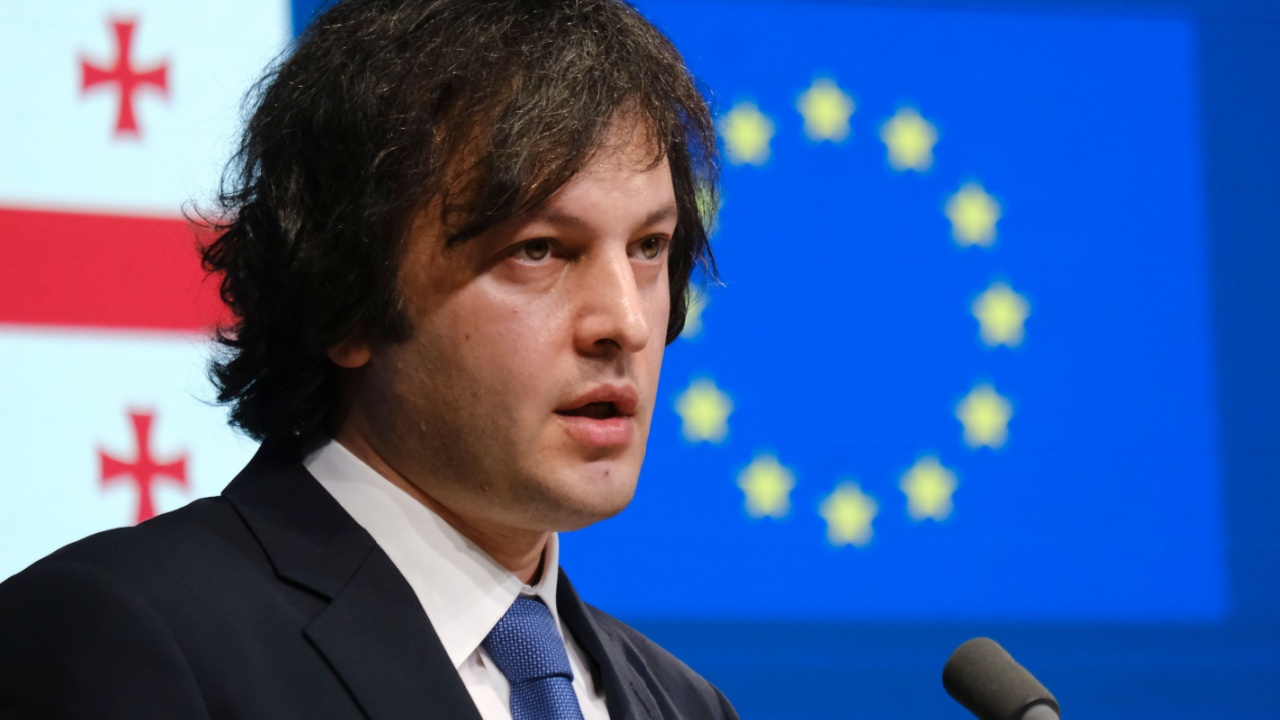
Last May, Prime Minister Irakli Kobakhidze wrote an open letter to President Donald Trump and Vice President JD Vance emphasizing the programmatic similarities between the Georgian government and the latter’s administration. In this letter, Kobakhidze complained to Trump about his administration’s treatment of Georgia, notwithstanding their political closeness and the common challenges faced by Tbilisi and Washington alike with non-governmental and international actors.
From a Georgian political perspective, the letter’s contents were logical. The undoing of US-Georgian ties came from Washington, not Tbilisi, and has taken place despite Trump and his cabinet.
In Washington and Brussels, antagonism towards Georgia is framed around its supposed ties to Russia and Iran, which are variously attributed to the state, the ruling party, or specific leaders within it. In Europe, and especially in Brussels, diplomats and politicians alike are more open about their motivations: Tbilisi’s opposition to liberal Western diktats on Ukraine, social issues—including LGBT policies—and the role of NGOs in domestic politics.
As a result, Georgia has come under increased financial and political pressure from Brussels. Over the past few months alone, the European Union (EU) has repeatedly tried to impose sanctions on Georgia, though Hungary and Slovakia have thus far vetoed all its efforts. In its most recent sanctions package, Brussels went so far as to propose sanctioning strategic infrastructure, such as the Port of Kulevi, which the Azerbaijani state-owned oil giant SOCAR uses for its Black Sea operations.
The EU has similarly suspended visa-free travel rights for “holders of Georgian diplomatic, service, and official passports” as a response to alleged “democratic backsliding” and other shortcomings in Tbilisi. These accusations ring hollow given the broadly positive assessment of Georgia by international institutions. The IMF, for example, praised the country last year for its sustained economic growth amid geopolitical challenges. Similarly, in terms of economic freedom, Georgia is ranked ahead of 17 EU Member States.
In Washington, similar attempts have been made by the informal coalition of Georgia hawks, whose best-known spokesman is Rep. Joe Wilson (R-SC). Wilson has sponsored the MEGOBARI Act, a bill proposing heavy sanctions on key Georgian government officials. The bill, approved in the House of Representatives, was stalled in the Senate by Majority Leader John Thune (R-SD).
The Case for US-Georgia Rapprochement
For the United States, mending ties with Georgia is the most sensible political choice. Georgia, in terms of policies and political programs, is the most closely aligned country in Central and Eastern Europe with the Trump administration’s ideological position. The case for renewing the US-Georgia alliance was made all the stronger by the administration’s 2025 National Security Strategy (NSS), which signals a shift away from an axiomatic vision of the liberal international order towards a “civilizational” approach to foreign policymaking.
The NSS correctly identifies Europe as the civilizational core of the Western world, which has found itself under US leadership since 1945. The preservation of this cultural heritage and, whenever possible, a political and demographic revival thereof are treated as a strategic imperative in Washington’s every policy towards its Western allies.
This framework is entirely congruent with the ruling Georgian Dream party’s own worldview, which holds Orthodox Christianity, Georgia’s national heritage, and the pursuit and defense of sovereignty within a European and Western civilizational space as its three main pillars. Tbilisi thus operates under a form of traditionalist conservatism that is at once quintessentially Georgian and aligned with Washington’s new civilizational priorities. And, unlike Brussels and Berlin, Trump’s Washington does not seem to hold these values in contempt.
Georgia’s track record as a US ally only further solidifies the argument for a more civilizational-oriented restart in bilateral relations. America’s image in the post-Soviet sphere is still shaped as much by its Cold War legacy as the “guarantor” of the Western, non-Communist world as it is by present circumstances. Strong relations with America are seen as vital for belonging in the “geopolitical West,” though Western promotion of liberal-progressive ideology over the past decade has partially damaged this reputation.
If anything, the Georgian government’s early embrace of traditionalist conservatism can be understood as an earnest pledge of allegiance to Georgian identity (ie, democratic self-determination) and to common European—and thus Western—values—even as they seemed to have been forgotten by their supposed protectors. The realignment provided by the NSS, however, opens the door to a political rapprochement, offering Washington an ideologically aligned European partner willing not just to revive this alliance but also to adapt it to contemporary realities.
The timing is favorable given the concurrent shift in US policy towards the South Caucasus. Russia’s preoccupation with the Ukraine War has reduced its capacity to manage the region, opening a limited strategic window that Washington has exploited through partial realignment of Armenia and Azerbaijan. Incorporating Georgia, with its strategic position on the eastern flank of the Black Sea, would consolidate that trajectory.
After all, the country plays a key role in the Trans-Caspian International Trade Route, best known as the Middle Corridor, which connects the Black Sea to the Caspian Sea and, from there, to China. Given the disruptions around the Strait of Hormuz and the Red Sea due to the Iran War, the Middle Corridor is the only remaining viable neutral land route (as the Northern Corridor goes through Russia, which is unacceptable to Washington).
There are commercial opportunities here if Washington can play its cards right. Georgia’s primary seaport, Poti, is a crucial part of the Black Sea transport infrastructure and a strategic imperative for the development of the Middle Corridor. In recent years, significant investment from Kazakhstan and Azerbaijan has poured into the majority Danish-owned port, alongside existing Georgian and foreign capital.
Likewise, Tbilisi is increasingly becoming a regional civil aviation hub. Last year alone, nearly 6 million passengers passed through Shota Rustaveli Airport, representing a 14 percent increase over 2024. Such is the growth that the airport has recently been earmarked for a major expansion. An additional 1.8 million passengers transited through Georgia’s second-largest airport in Kutaisi. Expanding US involvement in TRIPP and the Middle Corridor to include Georgia is thus only a matter of time.
In brief, any policy strategy for the South Caucasus that does not include Georgia is likely to incur more difficulties and shortcomings than it is to yield practical results, particularly in the long term. Georgia, an ancient Christian country with a conservative government, is a natural partner for an American administration conscious of the significance of historical and cultural ties to geopolitics and diplomacy.
Its strategic role in the Middle Corridor and fast-growing transport infrastructure further attest to the value of viewing Tbilisi as a partner. The timing for a reset in diplomatic relations is ideal for both parties. Washington should make the most of it.
About the Author: Stefano Arroque
Stefano Arroque is a visiting fellow at the Danube Institute, a Budapest-based think tank, who researches Central and Eastern European political and cultural affairs. He holds a Master of Arts in European Studies from KU Leuven and an Executive Master’s in European Public Affairs and Communication from IHECS. During his time in Brussels, he also worked as a public affairs consultant, bridging the gap between regional governments, private actors, and the European Institutions.
The post Why the US Should Mend Ties with Georgia appeared first on The National Interest.
Источник: nationalinterest.org