

«Данное сообщение (материал) создано и (или) распространено иностранным средством массовой информации, выполняющим функции иностранного агента, и (или) российским юридическим лицом, выполняющим функции иностранного агента»
 Topic: Air Warfare Blog Brand: The Buzz Region: Middle East Tags: Air Defense, Drones, Iran, Iran War, MQ-9 Reaper, Operation Epic Fury, United States, and US Air Force Why Has America Lost So Many MQ-9 Reaper Drones Against Iran? April 19, 2026 By: Harrison Kass
Share
Unlike the MQ-9’s previous targets during the 20-year War on Terror, Iran has the ability to shoot back.
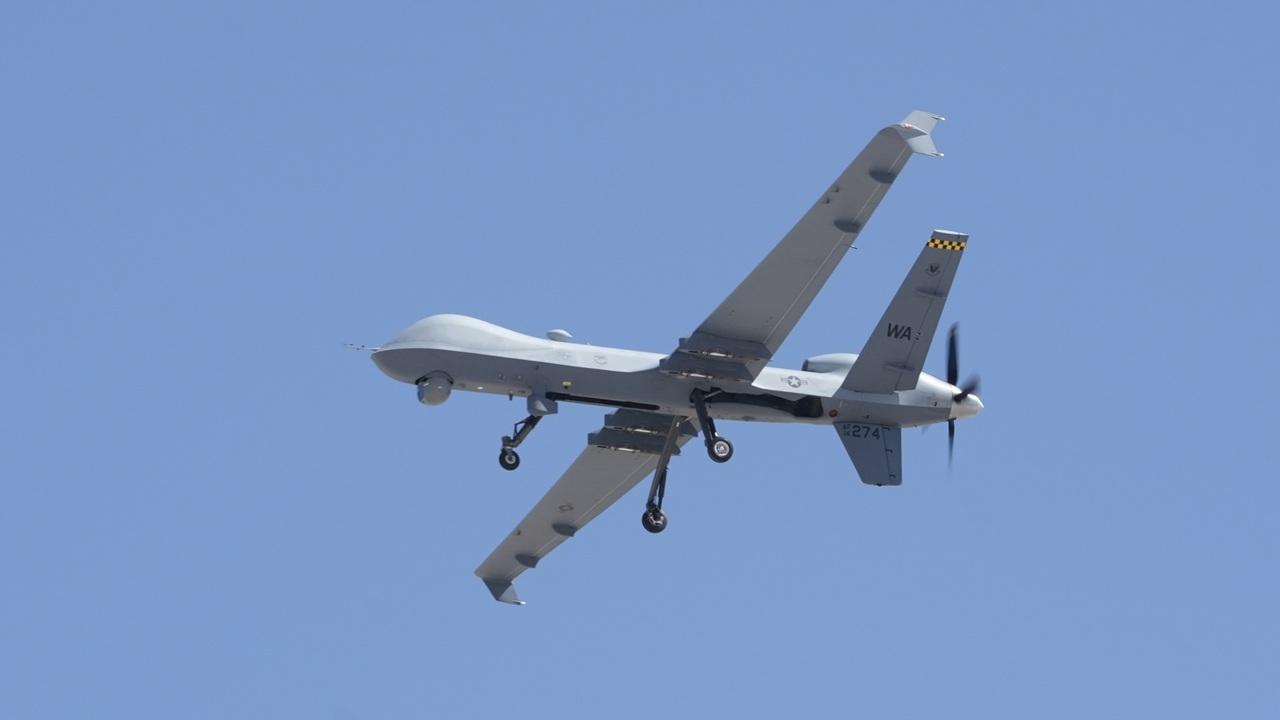
Operation Epic Fury has come with extraordinarily heavy UAV losses. The MQ-9 Reaper, once the pride of America’s drone fleet, has been especially affected; at least 24 drones have been shot down in the Middle East since the onset of the conflict. At a price tag of $30 million each, the cost of the lost Reaper drones to the US Air Force is roughly $720 million in total—higher than the cost of the E-3 Sentry destroyed on the ground, the high-end MQ-4C Triton drone lost in early April, or the multiple aircraft destroyed during the rescue of “Dude 44,” the pilot and weapons systems officer of the F-15E Strike Eagle shot down inside Iran.
Perhaps even more important than the fiscal cost of losing the drones is the attrition rate, which exposes the limits of legacy drones operating in hostile airspace—even in an environment in which the United States has largely achieved air superiority.
About the MQ-9 Reaper Drone
- Year Introduced: 2007
- Number Built: 300+
- Length: 36 ft 1 in (11 m)
- Wingspan: 65 ft 7 in (20 m)
- Weight: 10,494 lb (4,760 lb)
- Engines: One Honeywell TPE331-10 turboprop engine
- Top Speed: ~300 mph (482 km/h); typical cruising speed 194 mph (313 km/h)
- Range: 1,200 mi (1,900 km); up to 27 hours’ endurance, depending on payload
- Service Ceiling: 50,000 ft (15,240 m)
- Loadout: 7 hardpoints; 3,800 lb (1,723 kg) payload capacity
- Aircrew: Unmanned
The MQ-9 Reaper was first introduced to the US Air Force in 2007, with an emphasis on ISR and strike roles. It cut its teeth during the two-decade War on Terror, spending thousands of hours over the Middle East, Afghanistan, and Pakistan. Along with the MQ-1 Predator drone, it became emblematic of American drone strikes against suspected militant targets, a highly charged policy that remains a subject of debate today.
The Reaper is also equipped with a EO/IR targeting system and synthetic aperture radar. The satellite link allows for remote piloting. The purpose of the platform is to provide persistence and precision, and excels against targets without the ability to meaningfully fight back. However, as Epic Fury has indicated, the drone sorely lacks in survivability against modern air defense systems.
Why Reaper Drones Are Being Lost over Iran
The Reaper was designed for permissive environments where adversaries have no air defenses—a constant reality of the fight against Al-Qaeda in Afghanistan and Pakistan and ISIS in Iraq and Syria. Operating at low subsonic speeds of 300 miles per hour and below, the Reaper isn’t much faster than a Beechcraft, meaning the drone is easy to shoot down with a missile. In addition to being slow, the Reaper has an enormous radar signature, and it operates with a predictable flight profile, taking long loitering patterns over a given area. These factors, when paired against Iranian air defenses like SAM systems and electronic warfare assets, have created circumstances that made the visible, slow, and predictable Reaper extremely vulnerable.
The majority of the lost Reaper drones have been shot down by SAMs. Losses have so far been clustered over key cities like Isfahan, Shiraz, and Qeshm—obvious hubs for Iranian air defense capabilities. Additional losses were incurred during base strikes, electronic disruption, and in one instance, friendly fire. In all, the dozens of losses reflect a layered threat environment for which the Reaper is poorly suited.
Is the Reaper Drone Still Useful? Sort Of
Operationally, the Reaper’s inadequacies are a problem; the Reaper is still the backbone of persistent ISR efforts. The fleet degradation directly limits US surveillance coverage, reduces targeting capability, and increases reliance on other assets. The Reaper losses were disproportionate to the fleet size, representing over 60 percent of US air losses in the conflict. Naturally, the US ISR network was significantly degraded. Replacing the Reaper fleet won’t be easy or expedient, either (it will be easier than Tomahawk missile replenishment, but that’s a low bar to clear). The production timeline for a Reaper is two-three years. Constraints include the supply chain and a reduced procurement tempo. In the short-term, expect the Air Force to just draw from reserve fleets.
Is the Reaper still viable? Certainly—in low-threat, permissive environments. Though the War on Terror mostly came to an end with the US withdrawal from Afghanistan, various hostile militant groups continue to operate around the world, and the Reaper could continue to play a role against them. For instance, the drone has seen continued use against Al-Shabaab in Somalia, and could be brought into play against various Islamist extremist movements in West Africa.
However, Epic Fury demonstrates concretely that the Reaper is no longer viable in contested airspace or in a peer conflict. The platform simply lacks the required survivability, and must instead operate at standoff range. That means the Reaper’s role and niche is shrinking rapidly; its usefulness in prospective future conflicts against Russia or China would be slim to none.
In the future, expect the US to accelerate investment in cheaper, more expendable systems that offer volume over quality, or stealth for enhanced survivability. The Reaper was a dominant platform for a generation of US wars, but Epic Fury has exposed its limits.
About the Author: Harrison Kass
Harrison Kass is a writer and attorney focused on national security, technology, and political culture. His work has appeared in City Journal, The Hill, Quillette, The Spectator, and The Cipher Brief. He holds a JD from the University of Oregon and a master’s in Global & Joint Program Studies from NYU. More at harrisonkass.com.
The post Why Has America Lost So Many MQ-9 Reaper Drones Against Iran? appeared first on The National Interest.
Источник: nationalinterest.org