

«Данное сообщение (материал) создано и (или) распространено иностранным средством массовой информации, выполняющим функции иностранного агента, и (или) российским юридическим лицом, выполняющим функции иностранного агента»
 Topic: Air Warfare Blog Brand: The Buzz Region: Eurasia Tags: Aircraft, Defense Industry, Khabarovsk, Rostec, Russia, Russian Aerospace Forces, and Su-57 Felon Russian Su-57 Production Could Be Halted After Factory Fire April 16, 2026 By: Peter Suciu
Share
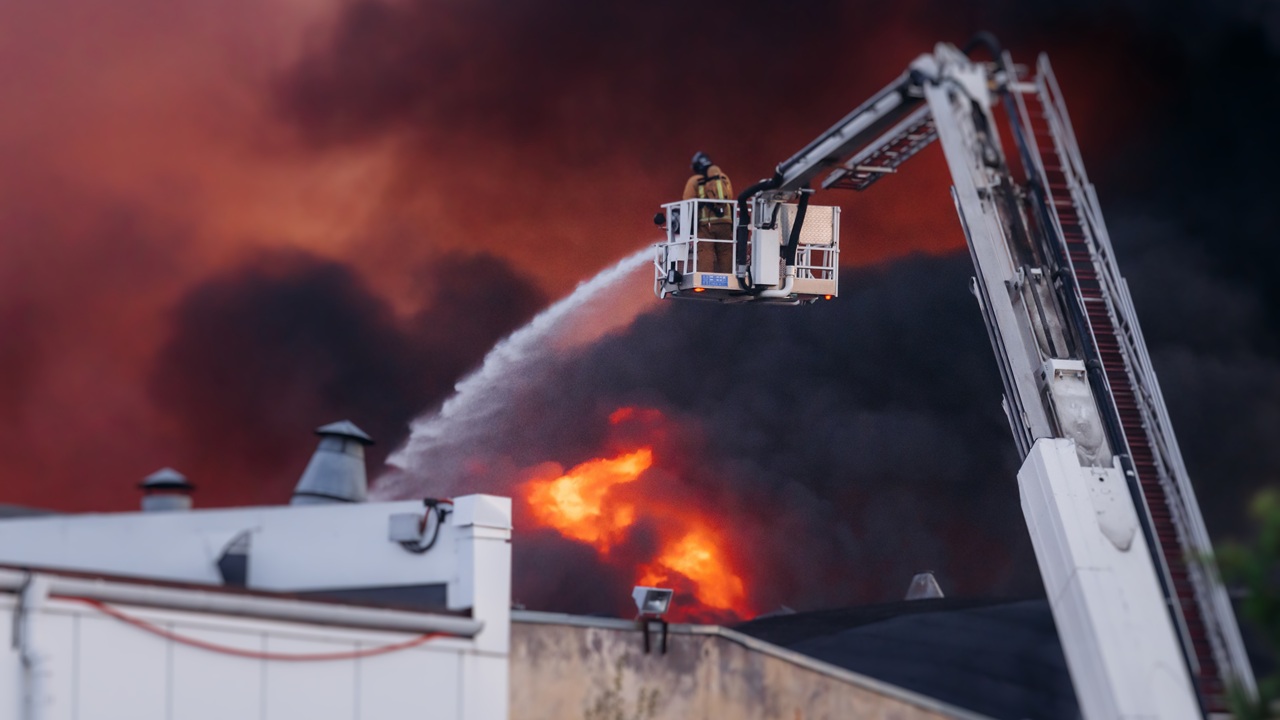
The fire at Russia’s KnAAZ factory burned out a workshop devoted to polymer composite construction—potentially making it impossible to build key components for the Su-57 fighter jet.
The United Aircraft Corporation (UAC), the aerospace manufacturing subsidiary of Russia’s Rostec military-industrial conglomerate, has struggled to produce more than a handful of its Sukhoi Su-57 (NATO reporting name “Felon”) fifth-generation multirole fighters each year. Manufacturing is likely to be slowed down even further after a major fire at the UAC’s Gagarin Komsomolsk-on-Amur Aircraft (KnAAZ) Plant in Russia’s far eastern Khabarovsk region.
The KnAAZ plant is the only serial-production site for the Su-57. The same facility also produces the Sukhoi Su-35S (NATO reporting name “Flanker-E”) and components for the Sukhoi Su-34 (NATO reporting name “Fullback”).
What We Know About the Russian Aerospace Factory Fire
Russian media hasn’t reported on the fire, and the Kremlin has yet to confirm the damage to the facility. However, open source intelligence and reports from foreign media indicate that a fire broke out in the facility’s Shop No. 46, where as many as 300 polymer composite components and key parts, including the aileron and flaperon panels for the Su-57, are produced. The workshop also manufactures floor structures, wing parts, and other crucial components for the Felon and the Su-35S.
“These components are highly specialized and cannot be quickly sourced from another domestic supplier, raising the possibility that serious damage to the facility could set production back by several years,” Military Watch Magazine reported.
The source of the fire is still unknown, but there is speculation that it could have been an act of sabotage aimed at disrupting Russia’s aerospace industry’s ability to produce combat aircraft. It is worth noting that several other Russian defense production facilities have mysteriously caught fire since the onset of the Ukraine conflict in early 2022—either as a result of Ukrainian sabotage, unsafe conditions, or simply disgruntled workers.
Damaged Russian Factory Equipment Can’t Be Easily Replaced
Satellite images posted to the Telegram social messaging app appeared to show that part of Shop No. 46’s roof had partially collapsed, which may indicate internal damage to the facility. It is still unclear if any of the specialized equipment used in the production of polymer components was impacted—which could be an even greater setback than the destruction of already-produced components or structural damage to the building.
Production at Shop No. 46 was “largely manual, with only partial automation,” according to the Defence Blog. “Reliance on skilled manual labor and specialized tooling means that even rebuilding the physical structure of the workshop [would] not automatically restore its manufacturing output.”
Due to the extensive Western sanctions that were imposed following Russia’s unprovoked invasion of Ukraine in February 2022, replacing any of the Western-made industrial equipment and machinery would be difficult, if not impossible. Russia could opt for domestically made equipment, but it is still unclear whether the Russian aerospace industry can produce everything it needs.
As a third possibility, Moscow may need to turn to China and other sources, but even in such a scenario, it is unlikely to restore production to its previous rate for the foreseeable future.
Beyond the damage to the facility and perhaps the unique equipment, the state of the workforce is a concern. The number of employees isn’t known, nor is it known whether any were at the facility at the time of the fire. The loss of skilled workers would be another setback for the Su-57 program.
Even if the workers weren’t impacted and suffered no injuries, it remains unclear if they can be moved to other roles in the meantime. An idle workforce at the KnAAZ Plant is far from ideal for Rostec.
About the Author: Peter Suciu
Peter Suciu has contributed to dozens of newspapers, magazines and websites over a 30-year career in journalism. He regularly writes about military hardware, firearms history, cybersecurity, politics, and international affairs. Peter is also a contributing writer for Forbes and Clearance Jobs. He is based in Michigan. You can follow him on Twitter: @PeterSuciu. You can email the author: Editor@nationalinterest.org.
The post Russian Su-57 Production Could Be Halted After Factory Fire appeared first on The National Interest.
Источник: nationalinterest.org