

«Данное сообщение (материал) создано и (или) распространено иностранным средством массовой информации, выполняющим функции иностранного агента, и (или) российским юридическим лицом, выполняющим функции иностранного агента»
 Topic: Digital Infrastructure, and Space Blog Brand: Techland Region: Americas, and Middle East Tags: China, Commercial Space, Federal Communications Commission (FCC), Iran, Iran War, Islamic Revolutionary Guard Corps (IRGC), Low-earth Orbit, North America, Russia, Satellites, and United States How LEO Satellite Internet Can Help Break Iran’s Blackout April 16, 2026 By: Ed Tarnowski
Share
The US should expand satellite internet access to bypass authoritarian blackouts, empower citizens, and counter state-controlled information suppression in Iran.
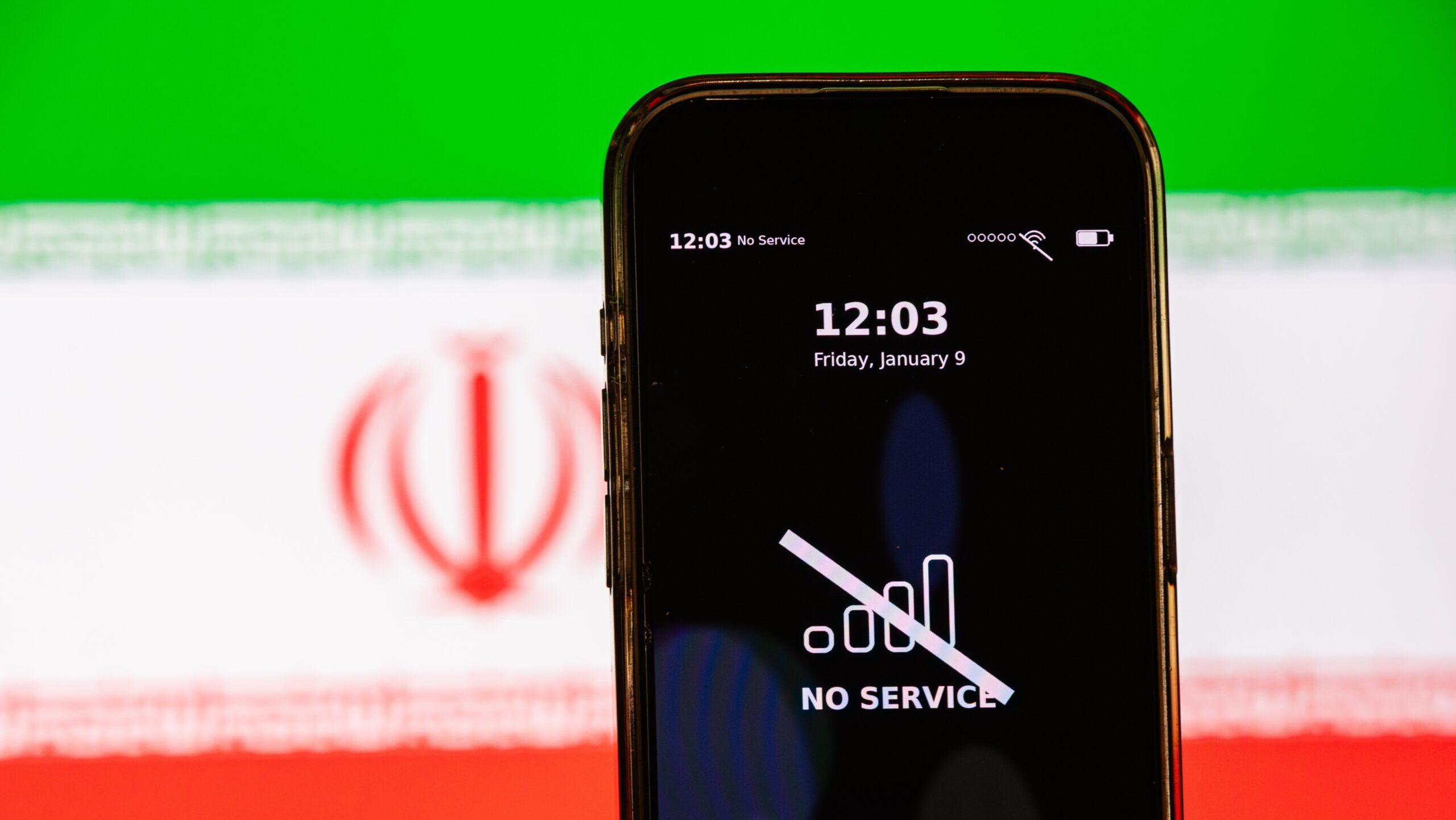
Iran’s internet blackout is now the longest nationwide shutdown on record in any country, now nearing 50 days, continuing even amid the Iran War ceasefire. Out of fear of its people and the exposure of its atrocities, the Islamic Republic is going to tremendous lengths, both logistically and economically, to prevent free information from getting in and out of the country. One of the only connections available to Iranians comes from the few Starlink terminals still online that the regime has not yet managed to jam or confiscate, but anyone caught using the service has been arrested. Still, SpaceX’s low-Earth-orbit (LEO) satellite internet service is a primary lifeline for Iranians hoping to send and receive communications freely and has been indispensable to the outside world to have eyes on the ground.
This has demonstrated two important conclusions.
Firstly, LEO satellite internet is critical national security infrastructure for the United States. Instead of sidelining it, America should embrace LEO internet technology.
Secondly, to empower Iranians with free communication and information, the United States should move to improve access to technology within Iran and autocracies everywhere.
The Human Impact of Iran’s Internet Blackout
One Iranian posting on X from inside Iran via Starlink describes the digital blackout as a “life-or-death crisis.” In another X post, they said, “Every single day I’m trying to push back against the tsunami of propaganda the regime and its supporters (both inside Iran and abroad) are pumping out…Because when almost nobody else can even get online, it starts to feel like the truth is resting on the shoulders of a handful of us who have to fight tooth and nail to still have signal.”
Another Iranian, wishing to remain anonymous, speaking with me from inside Iran—whose location this article has taken steps to verify—through an internet access channel this article will not disclose for the person’s safety, emphasized the digital blackout as having “more strain” on anyone they know “than the war itself.” “We cheer for the bombs and curse the [Islamic Republic] each time we open our phones or want to do something we can’t because of the blackout.”
On safe, reliable, and open communication between Iranians, this source noted it as “absolutely huge.” “Communication is key for organizing things. Each time we had an uprising they cut our communications. In January, they even cut phone lines for around hours in the night … we couldn’t even send text messages for the next two weeks or so.”
Asked about Western media coverage of Iran right now, which largely lacks access to authentic, unfiltered voices on the ground, this source is clear: Western media is “getting almost everything wrong.” “We aren’t afraid of the missiles … I mean, we are, but if we are hit by a missile, it’s one moment, and then we die. But if we are caught by these mf for something they don’t like, we will be arrested or tortured … or our loved ones will also face horrible treatment.”
The source added, “What we are really afraid of is this regime surviving this war.”
Starlink Direct-to-Cell and the Future of Satellite Connectivity in Iran
Enabling access to Starlink’s Direct to Cell (DTC) service could go a long way toward filling essential gaps. Rather than being dependent on physical terminals, DTC enables users to access satellite connectivity directly from their smartphones. Currently, DTC at least allows users to access features such as texting, international news articles, and even sending and receiving photos and phone calls in some cases. And with SpaceX launching more advanced satellites, features are regularly improving.
Notably, with recent breakthroughs, it could also unlock limited video calling and access to platforms such as X and other social media networks, tools Iranians use to organize and document protests, particularly in January, before the regime’s digital blackout took hold. This also opens communication between Iranians inside Iran and in the diaspora, a diaspora that has taken concrete action to aid those under the regime’s boot, from mounting at least 168 protests across 30 countries to helping members of the Iranian national women’s soccer team claim asylum in Australia. And perhaps most notably, January’s protest activity in Iran surged following exiled Crown Prince Reza Pahlavi’s public calls for demonstrations, according to Iran International.
Still, DTC has some constraints. Sending and receiving video content remains difficult or impossible at scale. Video content is essential for documenting and understanding the locations, tactics, and state of mind of regime forces. This is why, while DTC is necessary, it is a piece of a wider puzzle. If the United States is serious about connecting Iranians, it must deploy a layered strategy.
Traditional Starlink service still offers far more robust connectivity than DTC and would empower Iranians to reliably download, upload, and stream photos and video, hold phone calls, and enable a more stable connection generally. Still, it has its limitations. As of March 31, the Islamic regime claims to have confiscated at least 139 Starlink terminals, with 46 being arrested in a “single operation” targeting a black-market sales network. By law, they could all be arrested, or worse, hanged.
And if one does manage to tap into this market, at risk of execution, these terminals do not come cheaply. Last summer, in Iran, the cost of these terminals on the black market ranged from roughly $700 to $1,000 a piece, not far off from market rate in the West. By February, the price had surged to around $4,000. Digital rights groups estimate there are only about 50,000 Starlink terminals in Iran, in a country of 90 million people.
To avoid content surveillance, users are often dependent on Psiphon, a VPN designed for low-bandwidth environments that masks internet use as ordinary web browsing. Physical detection is a separate threat, and regime trucks are actively hunting terminal signals. But even terminals that evade these threats face military-grade GPS jamming equipment that the Islamic Republic has strengthened with the help of China and Russia.
US Policy Levers: FCC, Sanctions, and Expanding Internet Access in Authoritarian States
Circumventing the Islamic regime’s blackout is an uphill battle, but it’s not insurmountable. A multi-front strategy aimed at overwhelming its suppression tactics could put many more Iranians back online.
Firstly, enabling access to Starlink’s DTC in Iran is not primarily an engineering problem, but a regulatory one. The Federal Communications Commission (FCC) has the authority to issue emergency licenses for autocratic digital blackouts like this one. In conjunction with an Office of Foreign Assets Control (OFAC) sanctions carveout that already covers internet freedom tools for Iran, the Trump administration could authorize DTC in the country with the stroke of a pen. Once permitted, SpaceX could spring into action, something Elon Musk has already shown willingness to do.
Amid last June’s 12 Day War and ensuing digital blackout, Musk declared that the “beams are on” over Iran, signaling that SpaceX had positioned satellites to enable Starlink access in the country. He also waived service fees during the January anti-regime protests.
The same satellites that serve Starlink terminals also serve DTC, and Starlink is rapidly upgrading those capabilities. The company’s next-generation satellites, Gen2, are equipped with more powerful transmitters and different antenna configurations optimized for DTC. Starlink’s website also demonstrates how quickly this technology is evolving, with the company already achieving video calls from a dead zone in California’s Eastern Sierra Mountains.
Getting Iranians on DTC is a different process from what is required with terminals, as it usually operates through terrestrial carriers like T-Mobile, which is currently impossible in Iran. Instead, SpaceX could reach smartphones in Iran by serving as a de facto carrier, bypassing the state-controlled telecom chokepoint. Since smartphones are commonplace in the country, all SpaceX must do is resolve SIM and access barriers to connect tens of millions to the outside world without a single piece of hardware entering the country. And funding tools like Psiphon can add a layer of protection, helping users blend their traffic into ordinary web activity, reducing the risk of regime detection.
Still, while the technology is swiftly advancing, it will take time before capabilities such as video streaming are widely available across DTC-compatible devices, and the United States should also continue working with allies to expand the flow of Starlink terminals into Iran, enabling higher-capacity connectivity and supporting the full range of communications. While not everyone will be able to get their hands on these terminals, this multilayered strategy can inhibit the Islamic regime’s censorship architecture.
Scaling Satellite Internet to Undermine Iran’s Censorship and Surveillance Infrastructure
No single tool can fully sidestep the Islamic regime’s censorship infrastructure—but it is far from invincible. The regime is burning through both cash and manpower to sustain itself, and raising costs will make it increasingly difficult to maintain. Earlier this year, the Islamic regime’s own Minister of Communications admitted maintaining January’s digital blackout cost more than $35 million a day, and the number is likely higher.
The blackout is also dependent on men on the ground, with reports that the Islamic Revolutionary Guard Corps (IRGC) is conducting house-to-house raids in search of Starlink terminals, patrolling neighborhoods with signal-detection equipment, and manning trucks equipped with mobile jamming equipment. A regime that is now recruiting children as young as 12 to fill military roles, a war crime, is one that is running out of willing adults.
Facilitating DTC access in Iran while simultaneously scaling up efforts to smuggle in Starlink terminals will only further stress these costs. It empowers many Iranians with internet access via a device already in their pockets, expands the reach of high-capacity internet that terminals offer, and democratizes connectivity by drastically lowering costs.
Just as Starlink’s speeds quickly surpassed the FCC’s base broadband benchmarks, private-sector innovation can and will continue to shape the LEO-satellite internet sector’s capabilities faster than many realize. The service is already capable of video calls in some locations, and SpaceX’s goal is to scale a “truly broadband experience” through DTC. In the early days of Russia’s war in Ukraine, Starlink successfully outworked Russia’s jamming capabilities with a simple software update. While autocracies have learned and adjusted from this, America’s private sector, if unchained, can continue to outmaneuver them in response. And Starlink is no longer the only game in town. Amazon Leo is investing billions into its own commercial service, already launching satellites, with plans to offer high-speed service soon. Just this week, it announced it will acquire Globalstar to “bring direct-to-device (D2D) satellite connectivity to Amazon Leo.”
LEO Satellite Internet Is Critical to Global Internet Freedom
In 2026, the Islamic Republic revealed that Starlink’s beams overhead are worth suppressing at high cost. Regardless of the outcome of the ceasefire, that censorship architecture remains in place, coordinated with China, backed by Russian jamming systems, and enforced at gunpoint. The private LEO satellite internet sector has become indispensable in the defense of freedom-loving people everywhere, and America must allow it to do what it does best—outpace authoritarian suppression faster than any government program could.
America should act now—authorize DTC, fund Psiphon, and scale terminal distribution in Iran. The handful of Iranians fighting tooth and nail to maintain a signal to combat the propaganda machine cannot keep carrying it alone.
About the Author: Ed Tarnowski
Ed Tarnowski is a tech and innovation fellow and senior contributor at Young Voices, where he writes about technology, innovation, and foreign policy. His work has been published in National Review, The Spectator, Reason Magazine, RealClearPolitics, The Washington Examiner, Fox News, and others. He also serves as a policy and advocacy director at EdChoice, where he hosts the State of Choice Podcast. A graduate of the University of Rhode Island, he can be found on X @edtarnowski. The opinions expressed are strictly his own and do not reflect the views of his employer.
The post How LEO Satellite Internet Can Help Break Iran’s Blackout appeared first on The National Interest.
Источник: nationalinterest.org