

«Данное сообщение (материал) создано и (или) распространено иностранным средством массовой информации, выполняющим функции иностранного агента, и (или) российским юридическим лицом, выполняющим функции иностранного агента»
 Topic: Manufacturing Blog Brand: The Buzz Region: Americas Tags: Defense Industry, Department of Defense (DoD), Detroit, Ford, General Motors (GM), Michigan, North America, and United States Detroit Could Become the Center of Trump’s ‘Arsenal of Freedom’ April 20, 2026 By: Peter Suciu
Share
US carmakers—a major source of American industrial strength—largely exited the defense industry after the Cold War. Trump wants them to rejoin it.
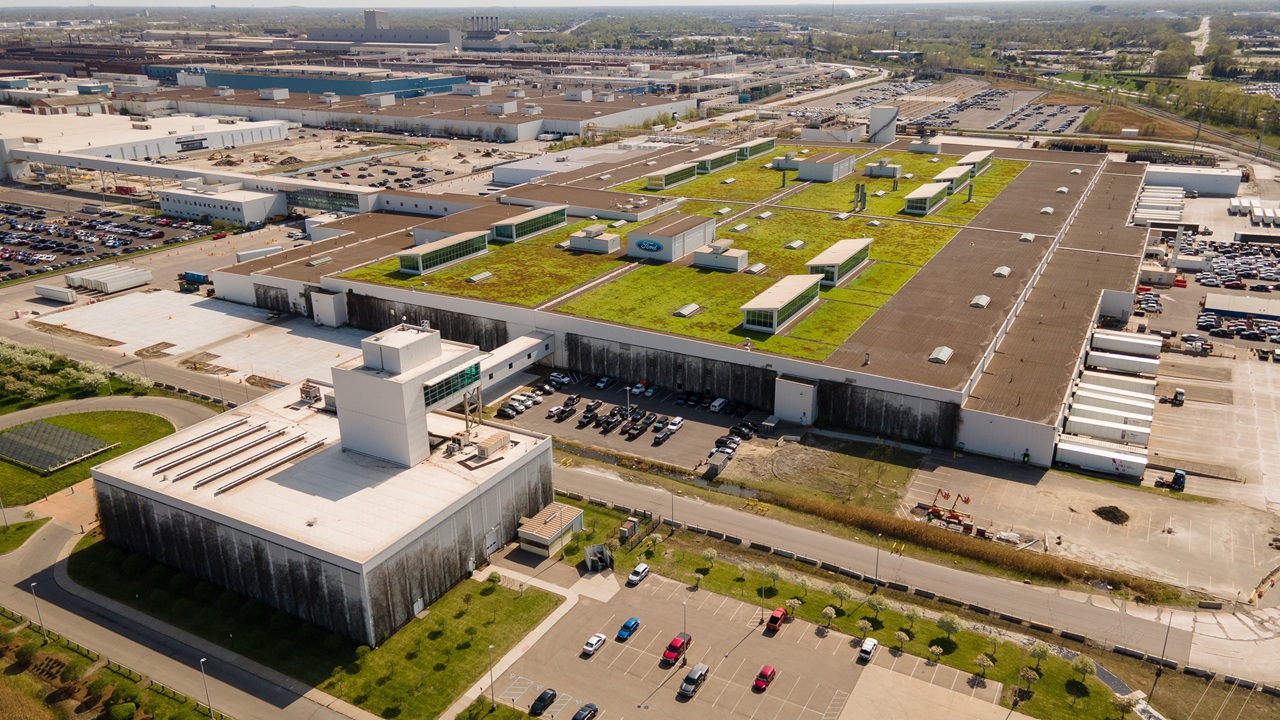
During World War II, manufacturing companies large and small found ways to support the war effort. Firms like IBM, Quality Hardware, and Rock-Ola (maker of jukeboxes) manufactured M1 carbines, and the Smith-Corona Typewriter Company produced more than a quarter of a million M1903A3 rifles. Detroit’s automakers, including Ford and General Motors (GM), were also major participants in the “Arsenal of Democracy,” producing tanks, armored vehicles, and other war material.
In the 21st century, senior US defense officials may once again turn to the automakers to support military weapons production, according to a new report from The Wall Street Journal. Executives from the two largest car makers met with Pentagon leaders as the Trump administration seeks ways to boost manufacturing to replenish US military stockpiles, which have been drained by the conflict in Ukraine, where the US has provided materiel aid, and in the ongoing war with Iran.
The request to Ford and GM was reportedly framed as a matter of national security, and discussions are still in the preliminary stages. No official contracts have been announced, and it is even unclear exactly what either automaker could provide.
Ford and GM Could Be the Backbone of the “Arsenal of Freedom”
The Trump administration has initiated its “Arsenal of Freedom” program, which aims to aggressively rebuild the US defense industrial base. The effort, championed by Secretary of Defense Pete Hegseth, calls for rapid innovation and manufacturing by eliminating bureaucratic processes.
Hegseth has called for moving away from what he has described as a “peacetime science fair” towards a “wartime arms race,” which aims to “out-innovate competitors.” However, the issue is how exactly this might be accomplished, and what roles Detroit’s auto industry could play.
The firms indeed played a significant role in the past, but none are positioned well for such a pivot today, even as some of the old infrastructure remains.
The Detroit Arsenal Tank Plant (DATP) in Warren, Michigan, was the first facility in the United States designed for the mass production of tanks. Chrysler operated it during World War II, where it produced the M3 Lee and M4 Sherman tanks. In the Cold War, it continued to produce armored vehicles, notably the M47 Patton and M60 tanks, and later produced components for the M1 Abrams.
The facility doesn’t build tanks today. Instead, it is focused on research and development and engineering programs. It is also the headquarters of the US Army CCDC Ground Vehicle Systems Center (GVSC) and TACOM Life Cycle Management Command, serving as a hub for acquisition and supply chain management. It is also no longer run by Chrysler, which sold its defense division to General Dynamics in March 1982 to allow the automaker to focus on its civilian market after facing bankruptcy. The rebranded General Dynamics Land Systems (GDLS) purchased GM’s defense divisions in 2003.
The automaker’s current GM Defense subsidiary was reestablished in 2017, and its major products have included the Infantry Squad Vehicle (ISV), a light tactical vehicle based on the Chevrolet Colorado ZR2, and the Suburban Shield, an armored SUV.
Ford Aerospace, the Ford Motor Company’s defense division, was also sold off in 1990 to Loral Corporation, and was later acquired by Lockheed Martin.
What Could Ford and GM Build for the Pentagon?
The goal of this effort could be to ease some of the burden on the nation’s defense contractors, which are all struggling to meet demand. However, the roles Ford and GM could play are unclear.
Each of the companies quickly pivoted during World War II, and more recently, the auto rivals collaborated on medical supplies and produced ventilators during the COVID-19 pandemic. It is possible they could pivot again, but the question is how quickly.
GM, which does produce the IUV, is well positioned to build similar vehicles. For Ford, the issue could be more complicated. Yet executives at both companies—and, no doubt, at the hundreds of suppliers in the Detroit area—understand that the Trump administration has proposed a $1.5 trillion Department of Defense (DoD) budget.
Few executives in the auto industry—particularly facing stiff competition from foreign, and increasingly Chinese, automakers—would pass up a chance to win lucrative military contracts, so perhaps the Motor City will again become a major arsenal for the Pentagon.
About the Author: Peter Suciu
Peter Suciu has contributed to dozens of newspapers, magazines and websites over a 30-year career in journalism. He regularly writes about military hardware, firearms history, cybersecurity, politics, and international affairs. Peter is also a contributing writer for Forbes and Clearance Jobs. He is based in Michigan. You can follow him on Twitter: @PeterSuciu. You can email the author: Editor@nationalinterest.org.
The post Detroit Could Become the Center of Trump’s ‘Arsenal of Freedom’ appeared first on The National Interest.
Источник: nationalinterest.org