

«Данное сообщение (материал) создано и (или) распространено иностранным средством массовой информации, выполняющим функции иностранного агента, и (или) российским юридическим лицом, выполняющим функции иностранного агента»
 Topic: Diplomacy Blog Brand: Middle East Watch Region: Asia, and Middle East Tags: Donald Trump, Iran, Iran War, MENA, Pakistan, Persian Gulf, South Asia, Strait of Hormuz, and United States Can Pakistan Still Mediate an End to the Iran War? April 16, 2026 By: Eldar Mamedov
Share
A deal is a long way off, but Islamabad still remains the only credible intermediary for Tehran and Washington.
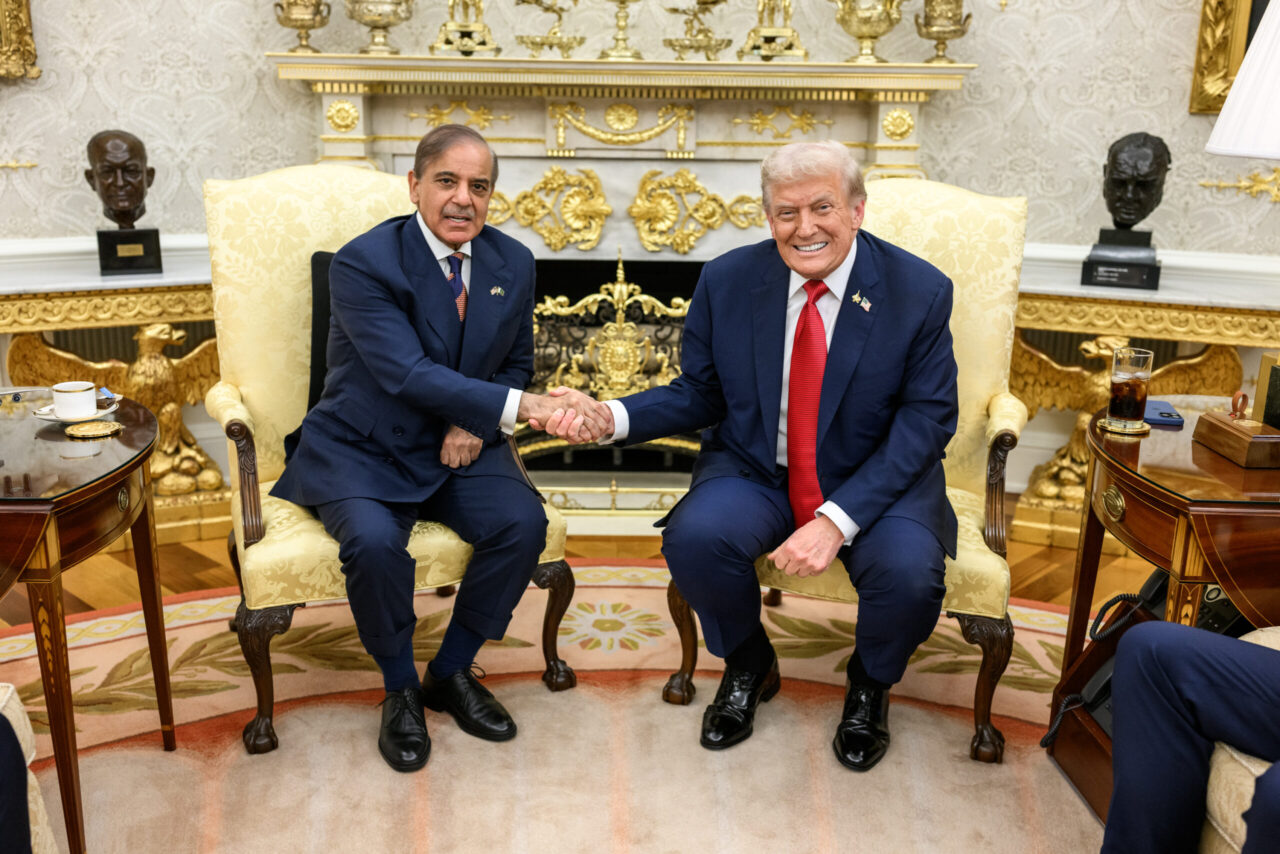
Following the failure to reach an agreement in Islamabad on April 12–13, the diplomatic track between Washington and Tehran did not collapse—but it moved from the public view. On April 16, President Trump announced that “…we have a lot of agreement with Iran” and that if a deal was confirmed, he might personally sign it in Islamabad.
No formal US-Iran talks are scheduled in the immediate term, contradicting earlier expectations of a rapid return to negotiations in Islamabad. Instead, the channel is being rerouted more quietly: through backchannel exchanges, with Pakistan once again at its center.
Tehran is hosting Pakistan’s army chief, Field Marshal Asim Munir, who is widely believed to be carrying messages from Washington.
Since the last, unsuccessful talks, Washington has escalated pressure, announcing a blockade of the Strait of Hormuz. At the same time, President Donald Trump has struck a more ambiguous tone. While publicly doubling down on coercion, he has also suggested in a recent interview that the war “may be over soon.” Meanwhile, reports indicate that discussions are underway to extend the current ceasefire beyond April 20.
These mixed signals reflect a familiar dual-track strategy: pressure paired with the search for an off-ramp.
The incentives for Washington and Tehran to engage diplomatically remain unchanged. The blockade of Hormuz is already showing cracks. A Chinese tanker, the Rich Starry, has transited the Strait to a port in the UAE, despite being previously sanctioned by the United States for cooperating with Iran.
Nor is Washington’s pressure campaign universally supported. Saudi Arabia is demanding that the United States lift the blockade and return to negotiations, reports The Wall Street Journal. Riyadh fears that the blockade could trigger a wider escalation, potentially affecting the Bab el-Mandeb Strait on the Red Sea. “If Iran really wants to close the Bab el-Mandeb Strait, the Houthis could become an instrument for that,” the Journal notes.
The closure of Hormuz by Iran, in response to the US-Israeli war, has already affected the world’s economic stability, given that around 20 percent of oil and liquefied natural gas usually transits this chokepoint. Trump‘s announcement of the US blockade has already sent the oil prices back to $100. And it’s not just about oil: about 10–12 percent of international maritime trade passes through Bab el-Mandeb, carrying essential goods. Its blockade would cause severe global economic disruption.
The blockade is unlikely to force Tehran’s concessions any more than the shooting war did. Additionally, the positions of US allies in the Gulf, such as Saudi Arabia, the prospects of a renewed global economic crisis, and Trump’s upcoming summit with Chinese President Xi Jinping all motivate Washington’s search for an off-ramp.
At the same time, Tehran is interested in a deal because it needs sanctions relief to rebuild after the war. This is where Pakistan re-enters the equation.
The first round of talks achieved something no other power has managed since 1979: direct, face-to-face negotiations on a very senior level between US Vice President JD Vance and Iranian Parliament Speaker Mohammad Bagher Ghalibaf. No European capital, no Gulf monarchy, and no multilateral forum produced such an encounter. Pakistan did.
Even more important is the timing. Pakistan managed to reactivate the diplomatic process that had stalled with the US-Israeli attack on Iran on February 28. And it did so at the most difficult juncture—when the conflict reached a crescendo with Trump’s threats to “destroy Iran’s civilization.”
Halting it at that stage was Islamabad’s achievement. Its role as a neutral and proactive facilitator—bringing both sides to the table in a highly tense environment—reflects its standing as a credible mediator. That earned Islamabad acknowledgments not only from Washington and Tehran but also from multiple other capitals. China, which Iran trusts as a potential guarantor, has closely coordinated with Islamabad. European nations, Canada, Australia, and Japan have publicly thanked Pakistan for its role in halting the war in a joint statement.
The absence of a final agreement is far from improbable. The US-Iran conflict spans five decades, marked by deep mistrust exacerbated by US and Israeli attacks during negotiations in June 2025 and February 2026. No single round of talks—however historic—is likely to produce a final settlement. Yet, despite prevailing skepticism, both sides seem to be leaving the door open to diplomacy.
The Islamabad talks should therefore be understood not as a failed one-off meeting, but as potentially the first phase of a prolonged process.
Pakistan has helped to open the direct channel between the old foes. It is one of the few states that can communicate with both Washington and Tehran without the message being dismissed as hostile or subservient. Islamabad did not over-promise; it delivered the meeting, not the outcome. That distinction matters.
With new talks possible, the United States and Iran will again need a credible intermediary. The final decisions remain the responsibility of Washington and Tehran. But the road still runs, for now, through Islamabad.
About the Author: Eldar Mamedov
Eldar Mamedov is a Brussels-based foreign policy expert. Since 2009, Mamedov has served as a political advisor to the Social Democrats in the European Parliament’s (EP) Foreign Affairs Committee and is in charge of the EP delegations for inter-parliamentary relations with Iran, Iraq, and the Arabian Peninsula. He has worked in the Ministry of Foreign Affairs of Latvia and as a diplomat in Latvian embassies in Washington and Madrid. He has degrees from the University of Latvia and the Diplomatic School in Madrid, Spain.
The post Can Pakistan Still Mediate an End to the Iran War? appeared first on The National Interest.
Источник: nationalinterest.org