

«Данное сообщение (материал) создано и (или) распространено иностранным средством массовой информации, выполняющим функции иностранного агента, и (или) российским юридическим лицом, выполняющим функции иностранного агента»
 Topic: Artificial Intelligence (AI), Congress, and Trade Blog Brand: Techland Region: Americas, and Asia Tags: Anthropic, China, Dario Amodei, Department of Defense (DoD), North America, OpenAI, Pentagon, Silicon Valley, and United States To Outpace China, America Must Break the AI Duopoly April 17, 2026 By: Anthony J. Constantini
Share
To ensure the future of AI reflects American values, the US must break up the OpenAI-Anthropic duopoly and advance open models.
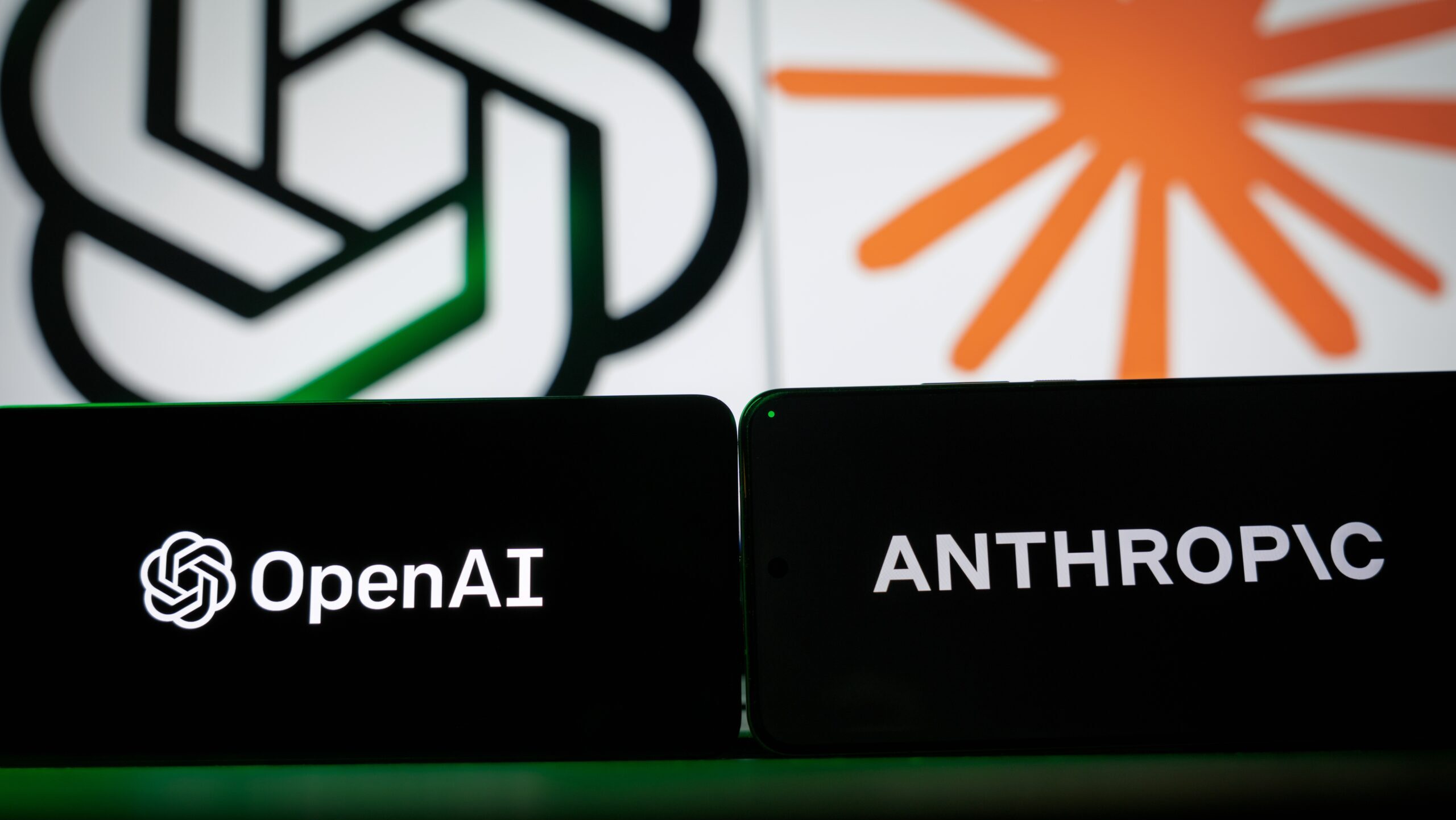
The fallout from Anthropic’s recent battle with Secretary of Defense Pete Hegseth is still continuing. Though Anthropic is challenging Hegseth’s decision to label the company as a supply chain risk, the Claude creator is already at risk of losing$60 billion in contracts—and has already lost the ability to contract with the government. As Anthropic has fallen, OpenAI, its chief competitor, has risen, happily signing the deal that Anthropic refused.
The ideological battle—over whether an outside company could have a veto over the Pentagon’s decision-making—is over, for now. But there is a second question that has emerged out of this fight: Is it a good thing that the Pentagon can only choose from two companies?
The OpenAI-Anthropic AI Duopoly Is Squeezing Out US Competition
To be clear, the relationship between Anthropic and OpenAI is nothing like some other duopolies, which only pretend to compete in order to keep prices artificially low. The two clearly do not like one another. To call their relationship acrimonious would be an understatement. Weeks after trading pointed Superbowl ads, where Anthropic bashed OpenAI for incorporating ads into ChatGPT’s answers, Anthropic’s Dario Amodei and OpenAI’s Sam Altman caused an international stir by refusing to hold hands on stage at the India AI Summit.
But the two nevertheless function as a duopoly, vacuuming up 85 percent of all artificial intelligence (AI) native start-up revenue—almost one trillion dollars in total. And both companies are about to get bigger, with plans to launch public offerings later this year. That gives them the means to absorb the best talent and crush new competitors by depriving other start-ups of oxygen. In short, OpenAI and Anthropic’s bitter rivalry covers a mutually beneficial relationship. And by cornering the market, the two firms are stunting America’s AI ecosystem and threatening our national security.
Closed AI Models Are Weakening US Innovation and Exposing IP to China
For all their self-styled differences, OpenAI and Anthropic both operate closed labs; their models, data, and training programs are all kept secret. There are varying reasons for this secrecy. Some argue that the work they do is too dangerous to be let out into the world, with many AI-related individuals comparing their work to a new Manhattan Project. This secrecy is, to an extent, understandable; plenty of companies keep what they do secret (the formula for Coke still has not leaked).
But their secrets are not exactly sitting in an impenetrable vault. In reality, our competitors, especially China, are already effectively stealing whatever they want: Anthropic has repeatedly accused Chinese hackers of mining Claude. And, as revealed in a detailed report from the House Select Committee on the Chinese Communist Party (CCP), the Chinese-produced DeepSeek was allegedly built on the back of stolen American data.
OpenAI’s and Anthropic’s closed-door secrecy does not prevent China from stealing their intellectual property. But it does put American labs at an existential disadvantage.
Pentagon AI Procurement Risks Grow as US Frontier Lab Options Shrink
Today, America’s entire AI market effectively hinges on the success of two companies. If a business wants to engage with AI, it essentially has two options. If the Pentagon needs to equip its warfighters with the latest AI-integrated technology and weaponry, it has basically two options. Now that the Pentagon has been forced to blacklist Anthropic due to the company’s refusal to act in our national interest, it only has one other major American frontier lab it can turn to.
The Chinese government does not have this problem. Beijing has made it a policy to encourage open-weight models, which have made DeepSeek and others more easily copyable, and helped popularize them across China’s allies and the Global South.
This dynamic will leave us with much worse than poorly made Chinese cars and consumer goods. AI isn’t just another cheap export: it’s the foundational layer of sovereign digital infrastructure, and it is designed by and around the values of those who build it. American AI models will therefore “think” differently from communist Chinese models. With American AI innovators boxed out, the spread of Chinese AI will spread Chinese values.
There is a reason that the internet, another product of American innovation, is open and interoperable with foundational protocols that any inventor can experiment with. It’s unthinkable that one or a handful of companies determine who can build what online. We ought to treat AI the same way.
Open AI Models Are Critical to US National Security and Global Leadership
The United States can chart a new course without adopting China’s policy of state control. The Trump administration, in last year’s AI Action Plan, called for ensuring that “America has leading open models founded on American values” and argued the federal government should “create a supportive environment for open models.” Doing so also saves money—one study found that open models are almost 90 percent as effective as closed ones while saving billions of dollars—and, of course, securing American values.
OpenAI and Anthropic don’t need Congress to tell them what to do: they could announce a change in their policies today. But they want to protect their profits and wall off competitors, so they won’t. Thus, the Trump administration must step in and encourage the development and exportation of US-based open AI models globally.
America cannot afford to let its digital future be dictated by a closed-door duopoly more concerned with quarterly valuations than national vitality. If we want AI that reflects American values and secures American leadership, we must break open the gates now, before Beijing’s vision fills the vacuum we allowed them to create.
About the Author: Anthony J. Constantini
Anthony J. Constantini is a policy director at the Bull Moose Project, a columnist at Brussels Signal, and a PhD candidate at the University of Vienna. His work, focusing on American foreign policy toward Europe, Russia, and the changing world order—along with reindustrialization and AI—has appeared in a variety of domestic and international publications. He previously recieved an MA from St. Petersburg State University and a BA from American University.
The post To Outpace China, America Must Break the AI Duopoly appeared first on The National Interest.
Источник: nationalinterest.org