

«Данное сообщение (материал) создано и (или) распространено иностранным средством массовой информации, выполняющим функции иностранного агента, и (или) российским юридическим лицом, выполняющим функции иностранного агента»
 Topic: History, Naval Warfare, and Trade Blog Brand: The Buzz Region: Asia, and Oceania Tags: Australia, Defense Industry, Frigates, Indo-Pacific, Japan, Mitsubishi, Mogami-Class, Royal Australian Navy, and Shipbuilding Japan Is Selling Three New Frigates to Australia April 22, 2026 By: Peter Suciu
Share
The deal between Mitsubishi and the Royal Australian Navy is likely to improve security ties between Australia and Japan, and further integrate Tokyo into an Indo-Pacific defense framework.
The Japanese government has eased restrictions on the export of defense systems—long a taboo in the East Asian country, which nominally renounced war in its constitution but has spent more than a decade building up a robust domestic defense industry as competition with China has heated up.
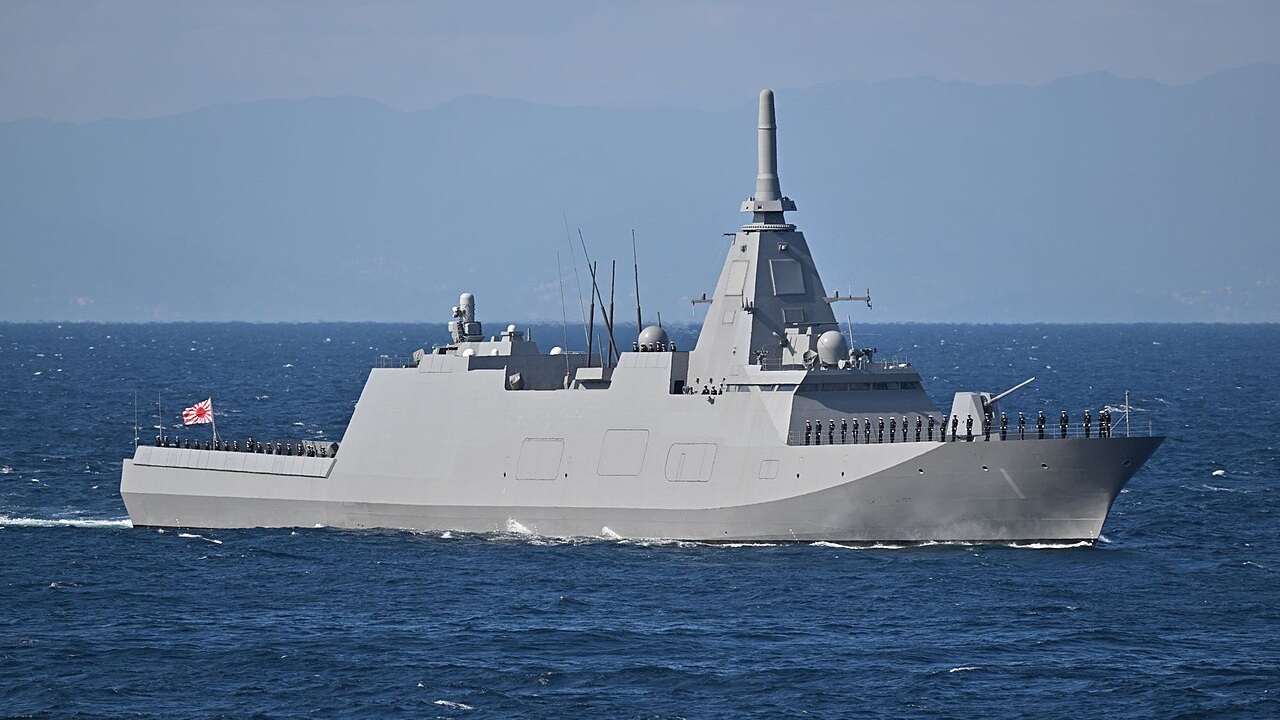
The policy change opens the door to overseas warship sales, presenting new opportunities for IHI Heavy Industries, Mitsubishi Heavy Industries (MHI), and other shipbuilders. Indeed, this week, MHI was awarded a contract to build the first three of a planned 11 Mogami-class frigates for the Royal Australian Navy (RAN) in a deal valued at AUD $10 billion (USD $6.5 billion). The remaining eight frigates will be built at a Western Australian state shipyard.
Japanese Defense Minister Shinjiro Koizumi and his Australian counterpart Richard Marles met aboard the Japanese Maritime Self-Defense Force (JMSDF) Mogami-class frigate JS Kumano in Melbourne on Saturday to sign the contracts.
The Japanese warships were selected by the Australian government for the RAN’s next generation of general-purpose frigates—edging out the German-made MEKO A-200, which Thyssen-Krupp Marine Systems builds.
“The timeframe that we’ve announced is the fastest acquisition of a surface combatant into service in the Royal Australian Navy ever, and so this is a very rapid timeframe,” Marles told reporters.
The first of the Mogami-class frigates is now set to be delivered to the RAN by 2029, and they will replace the aging ANZAC-class frigates that have been in service since the 1980s and which are considered especially vulnerable to modern anti-ship missiles and drones.
Japan Has a Long History in the Warship Trade
The first “modern” warship built for Japan was the Kōtetsu, an ironclad ram originally built in Bordeaux, France, for the Confederate States Navy during the American Civil War. It was sold to the Tokugawa Shogunate in 1867 and played a decisive role in the Battle of Hakodate Bay at the end of the Boshin War two years later.
In the 1880s, as Japan modernized, it purchased three San Kei-class cruisers from Paris, followed by the protected cruiser Unebi, built by Forges et Chantiers de la Gironde for the Imperial Japanese Navy. However, the Unebi was lost with all hands in a storm during her delivery voyage, which led the IJN to become reluctant to continue working with French shipyards. Although it did place another order for another French-designed warship, it was built by John Brown & Company in Scotland.
Over the following decades, Tokyo purchased numerous warships from British shipyards, including the Mikasa, the IJN’s flagship during the Russo-Japanese War. That battleship, built in Barrow-in-Furness, UK, was present at the Battle of Tsushima Strait, arguably the only truly decisive battleship-versus-battleship engagement in history. The Mikasa was turned into a museum ship shortly after the victory, and remains the oldest surviving battleship in the world.
The Kongo was the last major Japanese battleship built in the UK before Japan developed its own domestic shipbuilding industry. From the late 1910s onward, Japan invested significantly in shipbuilding, both military and civilian. The crowning achievements of its shipbuilding sector in the interwar period were its construction of the Yamato and the Musashi, the two largest battleships ever built—though neither survived the ensuing war.
From the ashes of World War II, Japan emerged as one of the world’s preeminent shipbuilders. Today, it is the third-largest shipbuilding nation in the world, after just China and South Korea. That is a decline, as Japan once accounted for nearly 50 percent of global shipbuilding output. As it seeks to regain its previous top spot, its newest opportunity could be in producing warships for export.
Today, Japan produces roughly 10 to 15 percent of the global shipbuilding market, with more than 1,000 shipyards. Its focus remains mainly on high-value bulk carriers, tankers, and container vessels—even as it faces several challenges, notably a shrinking workforce. To address that issue, Japan’s shipbuilders have invested in automation, as well as programs designed to bring in skilled foreign workers.
Japan Has Close Informal Security Ties with Australia
Beyond the opportunity it presents for MHI and Japan’s shipbuilding industry, which could likely seek other foreign buyers, it will bind the ties between Tokyo and Canberra.
The United States remains Japan’s only treaty ally, but Australia is considered to be an informal ally as well. The two nations are partners in the “Quad” security group, alongside the United States and India. Other valuable partners in the Indo-Pacific—and potential export destinations for future warships—include the Philippines and South Korea, two other US treaty allies.
About the Author: Peter Suciu
Peter Suciu has contributed to dozens of newspapers, magazines and websites over a 30-year career in journalism. He regularly writes about military hardware, firearms history, cybersecurity, politics, and international affairs. Peter is also a contributing writer for Forbes and Clearance Jobs. He is based in Michigan. You can follow him on Twitter: @PeterSuciu. You can email the author: Editor@nationalinterest.org.
The post Japan Is Selling Three New Frigates to Australia appeared first on The National Interest.
Источник: nationalinterest.org