

«Данное сообщение (материал) создано и (или) распространено иностранным средством массовой информации, выполняющим функции иностранного агента, и (или) российским юридическим лицом, выполняющим функции иностранного агента»
 Topic: Naval Warfare Blog Brand: The Buzz Region: Americas Tags: Constellation-Class Frigates, Fincantieri, Medium Landing Ships, North America, Shipbuilding, Ships, United States, and US Navy Fincantieri Gets Another US Navy Contract—Because the Last One Went So Well April 17, 2026 By: Peter Suciu
Share
Fincantieri Marinette Marine, the US subsidiary of Italian shipbuilding giant Fincantieri, was also in charge of the recently canceled Constellation-class frigate.
The United States Navy doesn’t have many options when it comes to awarding contracts for its various programs. That point was made clear when it issued a request for proposal (RFP) earlier this year for its Medium Landing Ship (LSM), which called for the construction of up to 35 vessels.
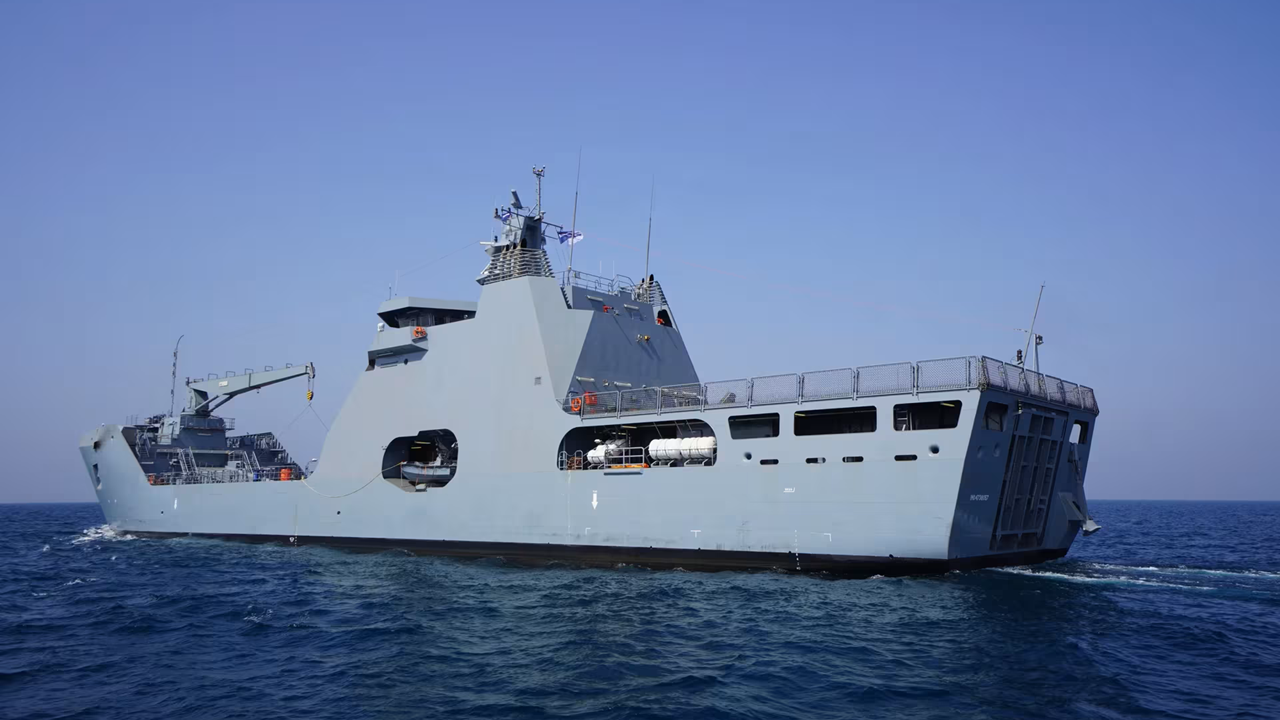
This week, Fincantieri Marine Group (FMG) confirmed that its US subsidiary had been awarded a $30 million contract for materials procurement and engineering activities related to the first four LSMs. Construction of the vessels could begin by early Q4 2026.
“The LSM program is a foundational element of the US Navy’s fleet and of the US Marine Corps’ force design, enabling distributed operations, enhanced littoral mobility, and the rapid maneuver and sustainment of forces in contested environments,” Fincantieri announced in a media release.
“Within the initial production phase, FMG is designated to build at least four vessels, reinforcing its role as a central industrial player in the program’s execution,” the release read.
As previously reported, the US Navy’s LSMs are seen as vital to addressing the capability gap between the service’s smaller “short-range” landing craft and its large amphibious warfare vessels. The LSM will enable “distributed operations” for the US Navy and USMC, enhance mobility in littoral waters, and allow for sustainment of forces in contested environments.
In other words, such vessels might be crucial in a conflict with a near-peer adversary such as China in the Indo-Pacific, including the South China Sea.
It is also a big win for Fincantieri.
“The award of this contract represents an important step in the evolution of our long-standing partnership with the US Navy,” said Pierroberto Folgiero, CEO and managing director of Fincantieri. “It reflects the confidence placed in the industrial capabilities built in the United States and in our ability to support complex naval programs with discipline, speed, and technical excellence. Through sustained investment, a skilled workforce, and a resilient industrial base, Fincantieri stands ready to support the Navy as they advance new operational concepts and future force requirements.”
Fincantieri Oversaw the Constellation-Class Fiasco—but It Wasn’t Its Fault
What makes this particular program noteworthy is that Fincantieri Marinette Marine, the US subsidiary of FMG, was awarded the contract in April 2020 to design and build the US Navy’s Constellation-class frigates—only for that program to be canceled last December.
The choice of FMG for the Constellation program was a logical one. The Constellation-class frigate was based on the European “FREMM” frigate design, which Fincantieri had already built in its shipyards in Italy. Indeed, the fact that similar vessels had already been built in Europe was a major selling point in the Constellation’s favor, eliminating the need for expensive redesigns; it was originally envisioned as a cheaper alternative to the expensive Littoral Combat Ship.
However, even after construction on the first vessel had already begun, the Navy repeatedly altered the Constellation class’ design in order to enhance its survivability and incorporate US systems, undermining the original selling point of the class and resulting in rapidly inflating costs. By the time the design was finalized, more than 85 percent of it had been changed from its original specifications. Not coincidentally, the frigates cost almost 80 percent as much as an equivalent destroyer, while delivering substantially less in the way of capability.
Ultimately, Secretary of Defense Pete Hegseth threw in the towel on the program in late 2025, reducing the order from 20 ships to the two already under construction; the first of the two is now scheduled for delivery in 2029.
Fincantieri Was Already Involved in the LSM Program
Separately from the Constellation saga, FMG was already one of the two shipyards awarded contracts to build the LSMs with Bollinger Shipyards in Mississippi, tasked with supporting long-lead-time procurement. Neither FMG nor Bollinger shipyards had been involved in the design work, however.
Last December, the US Navy and USMC jointly announced that the Dutch-designed Damen Naval LST 100 would serve as the “baseline to help rapidly field” the LSM.
“This strategy is designed to maximize commercial practices to accelerate delivery, improve cost discipline, and expand the US shipbuilding industrial base, with a contract award anticipated for mid-2026,” the US Navy explained.
It is hoped that the US Navy learned from its mistakes with the Constellation class!
About the Author: Peter Suciu
Peter Suciu has contributed to dozens of newspapers, magazines and websites over a 30-year career in journalism. He regularly writes about military hardware, firearms history, cybersecurity, politics, and international affairs. Peter is also a contributing writer for Forbes and Clearance Jobs. He is based in Michigan. You can follow him on Twitter: @PeterSuciu. You can email the author: Editor@nationalinterest.org.
The post Fincantieri Gets Another US Navy Contract—Because the Last One Went So Well appeared first on The National Interest.
Источник: nationalinterest.org