

«Данное сообщение (материал) создано и (или) распространено иностранным средством массовой информации, выполняющим функции иностранного агента, и (или) российским юридическим лицом, выполняющим функции иностранного агента»
 Topic: Air Warfare Blog Brand: The Buzz Region: Americas, and Middle East Tags: California, Drones, Iran War, K1000ULE, Kraus Hamdani, North America, Operation Epic Fury, United States, and US Air Force Could the Lightweight ‘K1000ULE’ Drone Take the Place of the MQ-9 Reaper? April 20, 2026 By: Harrison Kass
Share
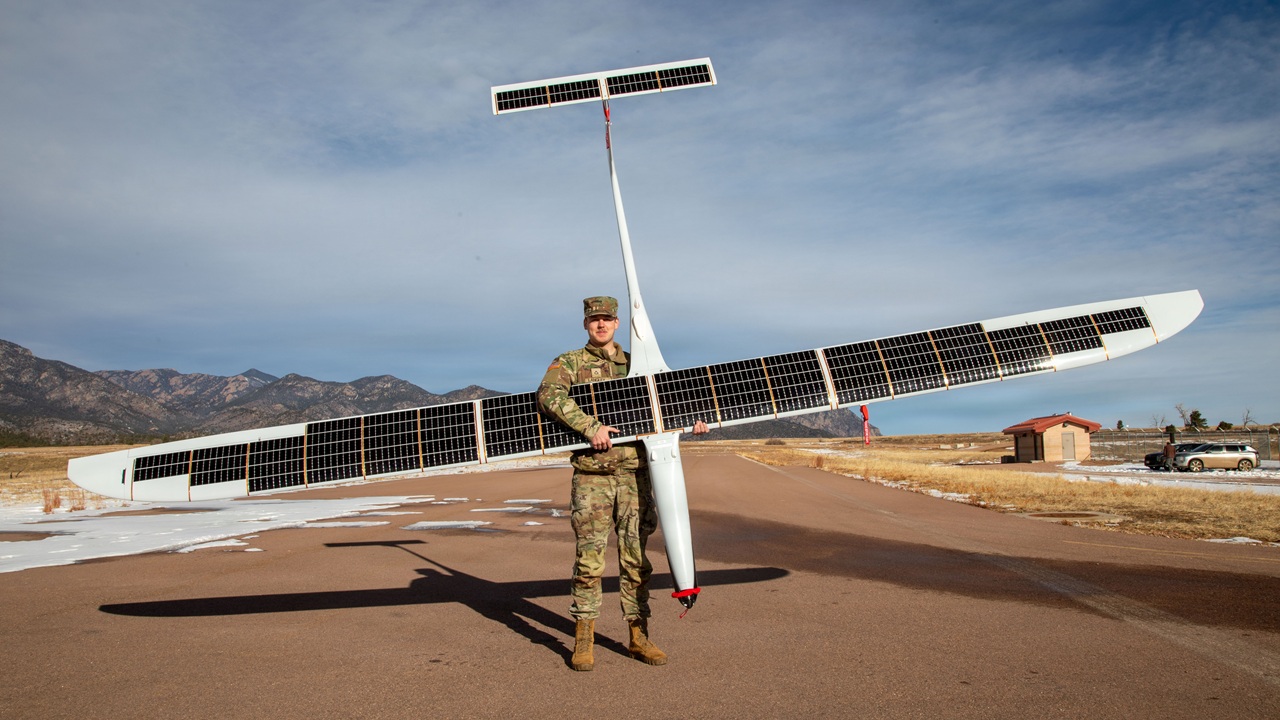
The K1000ULE drone can spend days in the air at a time, and costs less than most of the missiles that could shoot it down.
The Air Force is buying up to $270 million worth of K1000ULE drones under a new US Air Force contract.
The new contract was first announced in a press release last week by Kraus Hamdani, the California-based aerospace manufacturer that builds the K1000ULE. It was not initially clear how many of the aircraft were being sought as part of the tender.
During Operation Epic Fury—recognizing the realities of high drone attrition and the need for cheaper ISR in modern conflicts—the Pentagon is shifting towards low-cost, persistent, survivable, and attritable drone systems.
About the K100ULE Drone
- Year Introduced: Early 2020s
- Number Built: Unknown
- Length: 9.8 ft (3 m)
- Wingspan: 16–20 ft (4.9–6.1 m), depending on variant
- Weight: 42.5 lb (19.3 kg)
- Engines: Two propeller engines
- Top Speed: 46 mph (74 km/h)
- Range: Unknown; ~75 hrs endurance
- Service Ceiling: 20,000
- Loadout: 5.5 lb (2.5 kg) payload; can carry sensors, comms, electronic warfare equipment
- Aircrew: Unmanned
The K1000ULE is a Group 2 UAV capable of conducting ISR and communications relay. In essence, it serves as a “pseudo-satellite,” allowing for multi-day persistence without fuel. The drone is extremely portable, and can be deployed from an SUV. Obviously, the platform was designed for endurance and max flexibility, rather than speed or firepower.
The K1000ULE can perform more than 75 hours of continuous flight, enabled by solar panels and onboard batteries that keep its small propeller engines running. The drone also uses AI to detect and benefit from thermal currents in the air, mimicking a bird’s soaring pattern; this allows it to operate with its engine off up to 80 percent of the time. The autopilot system runs ArduPilot, which is open-source and has been updated with Ukraine combat data. Its service ceiling is a relatively 20,000 feet, allowing it to operate above weather and civilian traffic.
For communications, the K1000ULE relies on the ATNE++ system, which functions as an airborne network node and connects legacy systems with modern systems. The onboard equipment allows it to operate in contested environments. Indeed, the K1000ULE’s software and networking capabilities are more technically important than the airframe itself, reflecting trends in combat design philosophy.
Operationally, the K1000ULE is already used by the Army, Navy, and SOCOM and has been deployed in the Indo-Pacific, Middle East, and Africa. On the civilian side, the K1000ULE has been used in the oil industry for long-range monitoring. The point being this is a proven platform, not a science experiment.
The US Military Needs a New Kind of Drone Against Iran
The timing of the contract is important. More than 20 MQ-9 Reaper drones have been lost during Operation Epic Fury; Iranian air defenses and operational accidents have resulted in an astonishingly high MQ-9 attrition rate. The problem confronting the US Air Force, the MQ-9’s principal operator, is that the drone is both vulnerable and expensive. The K1000ULE is a far cheaper platform, with a per-unit cost roughly in the tens of thousands of dollars compared to the MQ-9’s price tag of $30 million. In fact, the K1000ULE is so cheap that the anti-air missiles used to bring it down are probably more expensive, increasing the incentive for cash-strapped ground forces to leave the drones alone.
From a strategic perspective, the move from the MQ-9 to the K1000ULE offers insights, namely the shift to low-cost ISR. More drones, more mass, and fewer exquisite assets appears to be the trend. Similarly, the Pentagon is increasingly pursuing persistence over firepower; its procurement decisions are being driven by constant surveillance, with less of a strike focus. Networks are becoming distributed, too, with mesh-based communications and decentralized operations. All of this is especially relevant for the Indo-Pacific, a geographic realm featuring long distances and limited basing.
In the future, expect ISR to be cheap, persistent, and networked, traits the K1000ULE embodies. The limitations of the platform are clear, of course; it has a small payload and no survivability whatsoever against kinetic threats. The K1000ULE is not an MQ-9 replacement—but the newer, smaller “pseudo-satellite” does reflect growing trends in procurement strategy.
About the Author: Harrison Kass
Harrison Kass is a writer and attorney focused on national security, technology, and political culture. His work has appeared in City Journal, The Hill, Quillette, The Spectator, and The Cipher Brief. He holds a JD from the University of Oregon and a master’s in Global & Joint Program Studies from NYU. More at harrisonkass.com.
The post Could the Lightweight ‘K1000ULE’ Drone Take the Place of the MQ-9 Reaper? appeared first on The National Interest.
Источник: nationalinterest.org