

«Данное сообщение (материал) создано и (или) распространено иностранным средством массовой информации, выполняющим функции иностранного агента, и (или) российским юридическим лицом, выполняющим функции иностранного агента»
 Topic: Diplomacy Blog Brand: Silk Road Rivalries Region: Eurasia Tags: Black Sea, Caspian Sea, Caucasus, Eastern Europe, Russia, and Ukraine War Black Sea-Caspian Region and the Eurasian Chessboard April 15, 2026 By: Inal Sherip, and Luke Coffey
Share
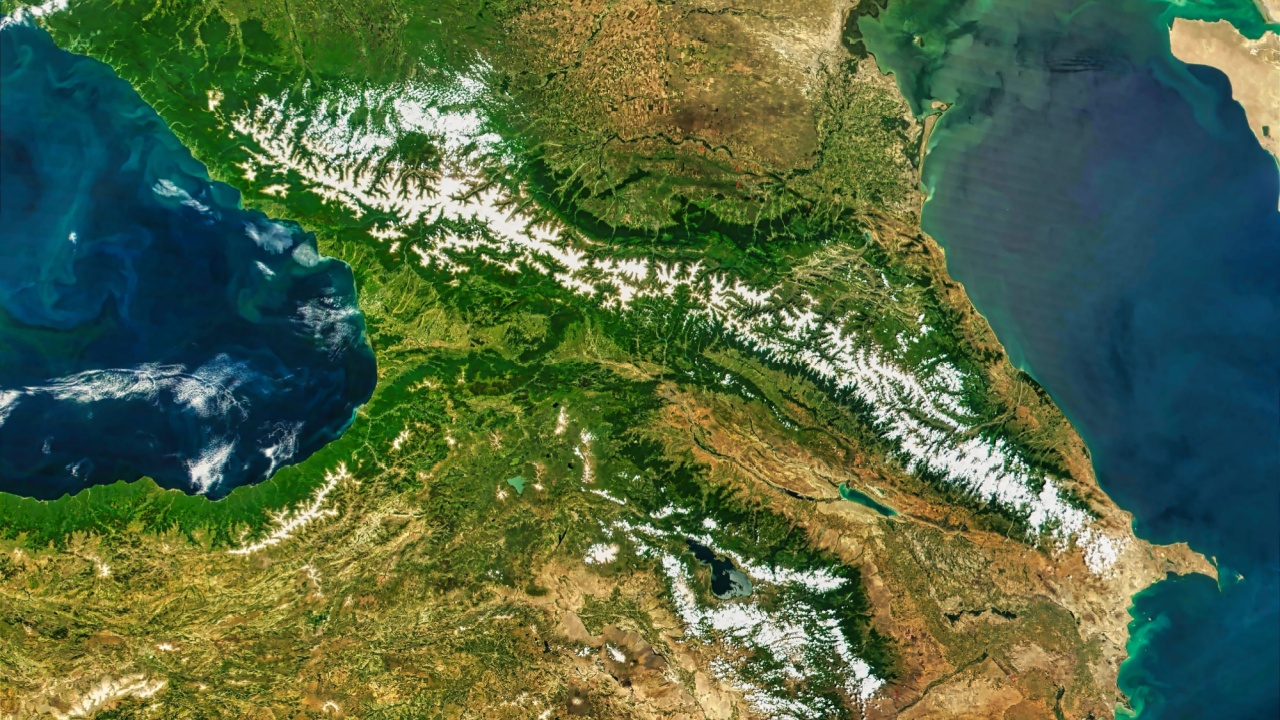
Washington should start viewing the Black Sea, the Caucasus, and the Caspian Sea as an integrated region.
The war launched by Russia against Ukraine in February 2022 has evolved far beyond a regional conflict. It is now a defining force reshaping the broader Eurasian security environment. Its duration and cascading secondary effects are forcing governments, markets, and militaries to operate on a longer strategic horizon—measured in years, not months. Insurance markets are recalibrating risk, logistics routes are shifting, supply chains are being reconfigured, and sanctions regimes are becoming more entrenched even as the methods used to evade them grow more sophisticated.
History suggests that wars of this magnitude rarely end with a simple restoration of the status quo ante. The aftermath of World War I produced the League of Nations; World War II gave rise to the United Nations and NATO. The end of the Cold War in 1991 redrew the map with new states in Europe, Central Asia, and the Caucasus emerging onto the scene. Today’s conflict is proving similarly transformative. It has exposed the inadequacy of the post-1991 European security framework and accelerated the emergence of a new geopolitical order. It is increasingly clear that treating the Black Sea, the Caucasus, and the Caspian Sea as separate strategic “folders” no longer reflects reality.
It is time that policymakers adopt a more useful framework: viewing this arc as a single interconnected system—the Black Sea-Caspian Region (BSCR). This is not about redrawing maps, but about using a more accurate analytical lens. Geography here is best understood not in terms of states, but as a network of nodes and corridors—ports, straits, pipelines, railways, digital cables, and mountain passes—whose functionality determines the resilience of Eurasian connectivity.
In classical geopolitical terms, this region forms a critical segment of the Eurasian Rimland, where control over chokepoints and transit corridors often shapes broader strategic competition. The BSCR is not peripheral. It is a hinge connecting Europe, Russia, Turkey, the Middle East, Central Asia, and increasingly China. Control over even a single node can have ripple effects far beyond the region, influencing regional security, global trade flows, and energy markets.
To understand why this matters, geography must be reconceived as an infrastructure system. The BSCR consists of three interlocking planes. The Black Sea is a maritime hub where naval dynamics, port infrastructure, and shipping risks intersect. The isthmus of the Caucasus serves as both a bridge and a barrier, shaping the routes of pipelines, railways, and data cables. The Caspian, though rich in oil and gas, depends heavily on external outlets for its economic viability.
Viewed separately, these elements obscure the systemic linkages that now define the region. Viewed together, they reveal where logistics break down, how risk premiums shift, and where leverage can be applied.
Within this system, the North Caucasus stands out as a critical—yet often overlooked—component. It is not simply a peripheral or internal Russian matter, but a structural “lock” within the BSCR. As long as the North Caucasus remains under Russian domination, the BSCR’s full potential cannot be realized. The geopolitical consequences of that control must be addressed. Three critical dynamics converge here: Russia’s ability to project power into the Black Sea, the linkage between the Caspian and the Azov-Black Sea basins via internal infrastructure, and Russia’s internal stability.
Western policymakers often dismiss the North Caucasus as an internal Russian issue. This is a mistake. Before Russia imposed full control in 1864, the North Caucasus had been governed, ruled, and shaped for millennia by its own local powers—Chechens, Circassians, Dagestanis, to name a few. Long before Moscow appeared, the region was also subject to overlapping Ottoman and Persian influence. In historical terms, Russian rule in the North Caucasus is not the norm—it is the anomaly. And if history is any guide, anomalies rarely last forever.
Russia’s current presence in the Black Sea remains a key factor in European security. From this theater, military capabilities translate directly into economic pressure—affecting shipping, insurance, and critical infrastructure. At the same time, Russia’s use of the Caspian Sea for strategic depth undermines Western interests. It has launched cruise missiles from the Caspian during its intervention in Syria in support of Bashar al-Assad and again in its war against Ukraine. The Caspian also serves as a vital transport link for resupply and assistance from Iran.
The isthmus of the Caucasus further underscores the imbalance. The southern range of the mountains functions as one of the most important trade and transit corridors on the Eurasian landmass, connecting Central Asia to European markets. The North Caucasus, by contrast, remains closed to reliable regional transit and is ruled by local leaders controlled by the Kremlin’s checkbook. It effectively hangs over the South Caucasus like a sword of Damocles, enabling Russia to disrupt or sever key routes at will.
The region is also a source of potential nonlinear political and societal change on a local level. In a crisis, shifts in governance, internal unrest, or resource constraints could rapidly alter the strategic landscape. Developments in the North Caucasus should therefore be treated as high-impact variables rather than peripheral concerns.
Emerging political initiatives in the region highlight this possibility. The growing political mobilization of North Caucasus actors is not hypothetical. In fact, it is already underway. A notable example is the third Congress of the Peoples of the North Caucasus, held on November 8, 2023, at the European Parliament in Brussels. Bringing together representatives from Circassian, Chechen, Dagestani, and Ingush groups, the congress sought to formalize a unified political platform to restore statehood in the region and advance the principle of self-determination. Participants explicitly invoked historical precedents, such as the short-lived Mountainous Republic of the Northern Caucasus (established in 1918 following the collapse of the Russian Empire). They grounded their claims in international legal frameworks and established a coordinating body—the Committee for the Restoration of the Statehood of the Peoples of the North Caucasus—to advance their cause diplomatically and politically.
Efforts to articulate frameworks for self-determination and regional governance may not yet translate into new institutions or concrete change on the ground. Still, they are shaping the language of future scenarios and could become increasingly relevant if the current order weakens.
Two broad scenarios illustrate what is at stake in the BSCR. In one, Russia maintains firm control over the North Caucasus and retains stable access to the Black Sea. In this case, it preserves its ability to project power, sustain logistical depth, and impose a persistent “risk surcharge” on regional connectivity, deterring investment and complicating long-term planning.
In the alternative, Russia’s control weakens significantly. This would reduce its ability to use the Black Sea as a strategic lever and diminish its influence over the broader region. Over time, it could shift Russia’s focus elsewhere, creating space for new actors and political arrangements. Ultimately, this could lead to increased calls for self-determination and local governance, particularly if central authority in Moscow weakens. Such a moment, on par with 1991 in geopolitical significance, would present a rare opportunity to reimagine the BSCR as a fully integrated system, free of the constraints currently inhibiting its development.
The war in Ukraine has accelerated the emergence of a new Eurasian order. In this environment, the ability to identify, secure, and integrate key nodes and corridors will determine not only regional resilience but the future of European and transatlantic security. In this context, policymakers need to start thinking about the region now and not delay any longer.
About the Authors: Inal Sherip and Luke Coffey
Inal Sherip serves as the minister of foreign affairs of the government of the Chechen Republic of Ichkeria in exile. He is a Belgium-based cultural studies scholar and film director. From 2011 to 2022, he served as vice prime minister for culture, education, and science.
Luke Coffey is a senior fellow at the Hudson Institute. Mr. Coffey was previously director of the Allison Center for Foreign Policy Studies at the Heritage Foundation from 2015 to 2022. From 2012 to 2015, he was the Margaret Thatcher fellow at Heritage. Before joining Heritage, Mr. Coffey served at the UK Ministry of Defence as senior special adviser to then-Defence Secretary Liam Fox.
The post Black Sea-Caspian Region and the Eurasian Chessboard appeared first on The National Interest.
Источник: nationalinterest.org