
«Данное сообщение (материал) создано и (или) распространено иностранным средством массовой информации, выполняющим функции иностранного агента, и (или) российским юридическим лицом, выполняющим функции иностранного агента»
 Topic: Terrorism Blog Brand: Silk Road Rivalries Region: Eurasia, and Middle East Tags: Afghanistan, Balochistan, Central Asia, Iran, ISIS-K, Pakistan, and United States How US Strikes on Iran Could Destabilize Pakistan February 6, 2026 By: Eldar Mamedov
Share
Pakistan is already facing an internal insurgency in Balochistan and terrorist attacks from within Afghanistan.
As the United States and Iran are engaged in 11th-hour diplomacy to avert war, a sobering reminder of the conflict’s devastating potential for regional stability emerged from Pakistan.
On January 31, the Balochistan Liberation Army (BLA) carried out coordinated multiple terrorist attacks across Pakistan’s southwestern Balochistan province, killing at least 33 military officers and civilians in one of the deadliest episodes of violence in recent years. The scale, coordination, and lethality of these attacks show how the threat emanating from Balochistan has evolved beyond episodic unrest into a sustained terrorist threat.
While Al Qaeda’s splinter group, Islamic State-Khorasan (ISIS-K), remains a threat on Pakistan’s northern border, as well as to Iran, Afghanistan, and Central Asia, the decades-old BLA—a larger and equally lethal organization—is exporting its activities beyond Pakistan and metastasizing into a serious threat.
The attacks are a grim preview of the chaos a US-Iran war could unleash, particularly as calls for Iran’s partition along ethnic lines gain traction in Washington and Jerusalem, with Baloch insurgents envisioned as a key instrument for executing such plans.
Already, the BLA activities have prompted its terrorist designation by Pakistan, the United Kingdom, China, and the United States. More concerning still, the BLA’s operational model, once dependent on territorial control, physical sanctuaries, and hierarchical command, is rapidly modernizing.
Conventional counterterrorism thinking has long assumed that terrorist groups seek modern “caliphates” characterized by territorial control, physical sanctuaries, and hierarchical organizations. After years of failed attempts, such as Al Qaeda in Afghanistan, ISIS in Syria and Iraq, and multiple groups in the African Sahel, recent attacks in Pakistan’s Balochistan province modify these assumptions. Despite ongoing security operations and the absence of insurgent territorial control, small, dispersed attacks continue at a steady rhythm.
As Pakistani lieutenant general Aamer Riaz (Retd), former director general of military operations and commander of IV Corps in Lahore, noted, “The BLA’s operational model has shifted from localized, area-linked activity into a decentralized, networked pattern of hit-and-run attacks, infrastructure sabotage, targeted killings and coordinated propaganda. Holding ground denies space, but it does not dismantle the wider ecosystem that sustains this violence.”
The BLA is part of an evolving model of terrorism characterized by decentralized structures and sensationalist violence. If future terrorist groups are less focused on defending or restoring territorial control, strategies designed to combat the Islamic State movement post-2014 may prove outdated. However, this does not mean such outfits would forgo territory if the opportunity arose; the destabilization or disintegration of a state like Iran would create precisely the lawless vacuum they would exploit to establish a lasting base.
Such a safe haven would enable terrorists to cross borders beyond Pakistan, potentially inspiring or enabling attacks against the United States and its partners. Central Asian nations, courted by the United States (Uzbekistan and Kazakhstan just joined President Donald Trump’s Board of Peace), would find themselves in a particularly vulnerable position, potentially endangering economic and transit corridors diversifying their economies away from Russia—a key US interest. While the United States has designated the BLA as a terrorist organization, more needs to be done to prevent this movement’s expansion beyond its borders.
“This is not a single front you can break. It is a web of small cells, facilitators, criminal enablers, and propagandists that deliberately exploits vast terrain, dispersed communities, and soft targets to create fear at low cost,” says Lt. Gen. Riaz.
Balochistan’s violence is often framed as a localized struggle rooted in economic marginalization and center-periphery tensions. While it is true that the region’s socio-economic grievances fuel the insurgency and need to be addressed strategically, this explanation is insufficient and in no way can justify terrorist activity. The Baloch population is dispersed across Pakistan, Iran, and Afghanistan, yet Pakistan bears the brunt of attacks.
In the Jaffar Express attack, BLA terrorists employed advanced weapons left behind after the US withdrawal from Afghanistan, illustrating how access to modern arms has raised the lethality of otherwise small, mobile units. There is little durable command, territorial consolidation, or sustained physical presence. Paradoxically, these very limitations enable persistence. In digitally ungoverned spaces—online platforms and communication ecosystems with weak moderation, diffuse attribution, and minimal accountability—isolated attacks are amplified, aggregated, and narrated as evidence of momentum.
The violence neither resembles a classic insurgency nor a jihadist project aimed at governance. The BLA operates today with fractured leadership and little capacity to hold ground, yet attacks persist. The central paradox of Balochistan is tactical weakness coexisting with strategic endurance.
Given these dynamics, US policymakers have tools beyond traditional military assistance. Washington can support digital governance initiatives to monitor and counter extremist narratives, including investments in AI-assisted tools to anticipate emerging threats. The United States can also assist Pakistan and regional partners in Central Asia in strengthening cross-border intelligence sharing and legal frameworks to disrupt financing and movement of decentralized networks. This is critical if Iranian instability facilitates transnational smuggling and cross-border operations.
The model for coordination could replicate the “joined up” infrastructure modelled on counter-terrorist cooperation with countries like Jordan. There, significant US funding has created a synchronized system between the intelligence, military, communications, and diplomatic communities. A novel approach could involve the US-facilitated trilateral engagement with Pakistan and Central Asian nations like Uzbekistan and Kazakhstan that share concerns about cross-border militancy and economic disruption.
Escalation in Iran heightens the urgency of these measures, as instability could empower Baloch terrorist groups, expand ungoverned spaces, and amplify transnational networks threatening the interests of Pakistan, the United States, and Central Asia.
Balochistan offers a glimpse of a phase of terrorism that the United States cannot afford to ignore. Decentralized networks, episodic violence, and sensational media and digital narratives already enable militants to operate across borders without necessarily seeking territory, rendering traditional strategies such as seizing territory, building “caliphates,” and creating armed militias to expand or defend territory insufficient on their own. Yet, gaining a territorial foothold resulting from Iran’s disintegration would likely amplify these capabilities.
While the United States and its allies are already assisting Pakistan’s military through diplomatic engagement, terrorist designation, and limited counterterrorism cooperation, this assistance must broaden to address the mounting threats presented by the BLA and its evolving strategy demonstrated so violently on January 31. Containing the terrorist blowback that could also directly threaten American lives and interests provides another compelling, urgent rationale for Washington to seek a diplomatic solution with Tehran.
About the Author: Eldar Mamedov
Eldar Mamedov is a Brussels-based foreign policy expert. He has degrees from the University of Latvia and the Diplomatic School in Madrid, Spain. He has worked in the Ministry of Foreign Affairs of Latvia and as a diplomat in Latvian embassies in Washington and Madrid. Since 2009, Mamedov has served as a political advisor for the Social Democrats in the Foreign Affairs Committee of the European Parliament (EP) and is in charge of the EP delegations for inter-parliamentary relations with Iran, Iraq, and the Arabian Peninsula. Find him on X: @EldarMamedov4.
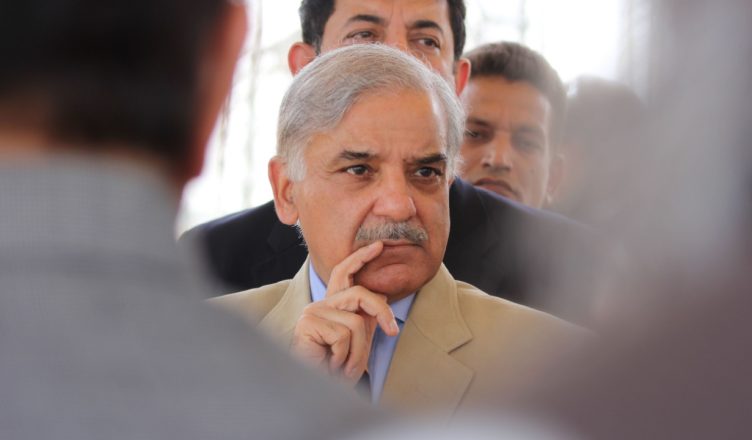
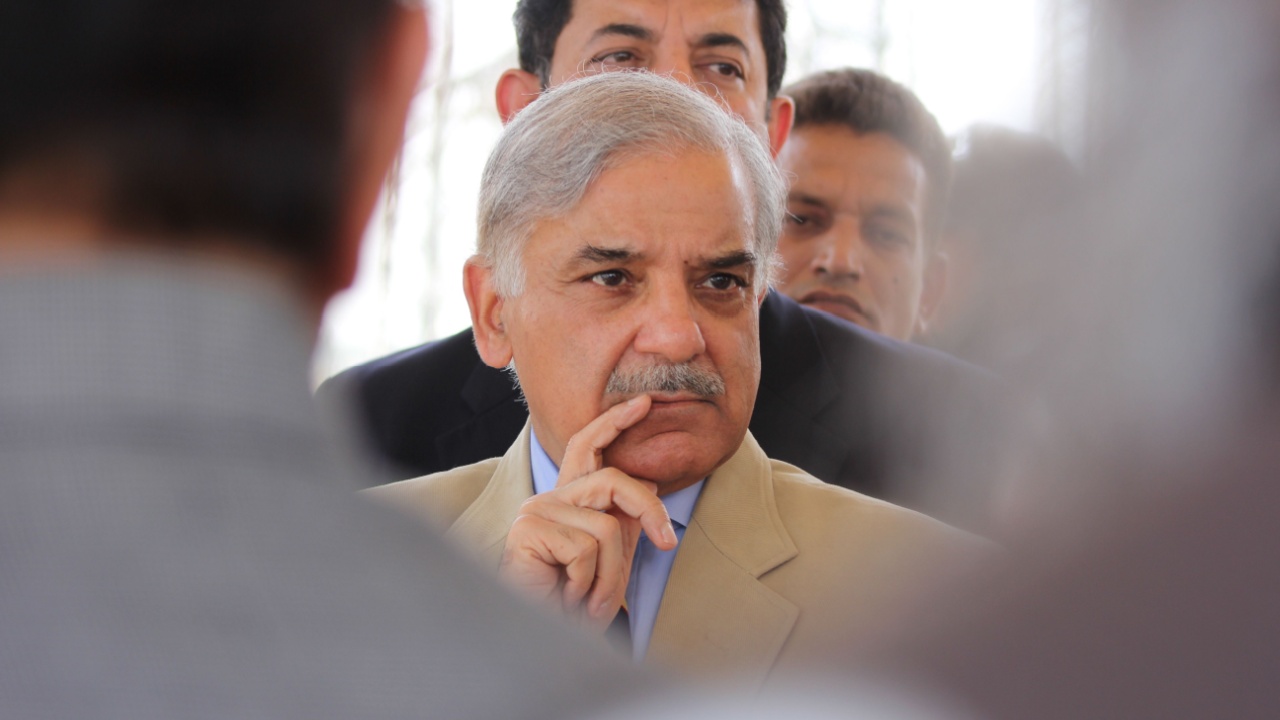
Image: Habibullah Qureshi / Shutterstock.com.
The post How US Strikes on Iran Could Destabilize Pakistan appeared first on The National Interest.
Источник: nationalinterest.org