

«Данное сообщение (материал) создано и (или) распространено иностранным средством массовой информации, выполняющим функции иностранного агента, и (или) российским юридическим лицом, выполняющим функции иностранного агента»
 Topic: Diplomacy Blog Brand: Middle East Watch Region: Middle East Tags: Gulf States, Iran, Iran War, JCPOA, Persian Gulf, and United States Why the Iran War Negotiations Need the Gulf States April 3, 2026 By: Eric Alter
Share
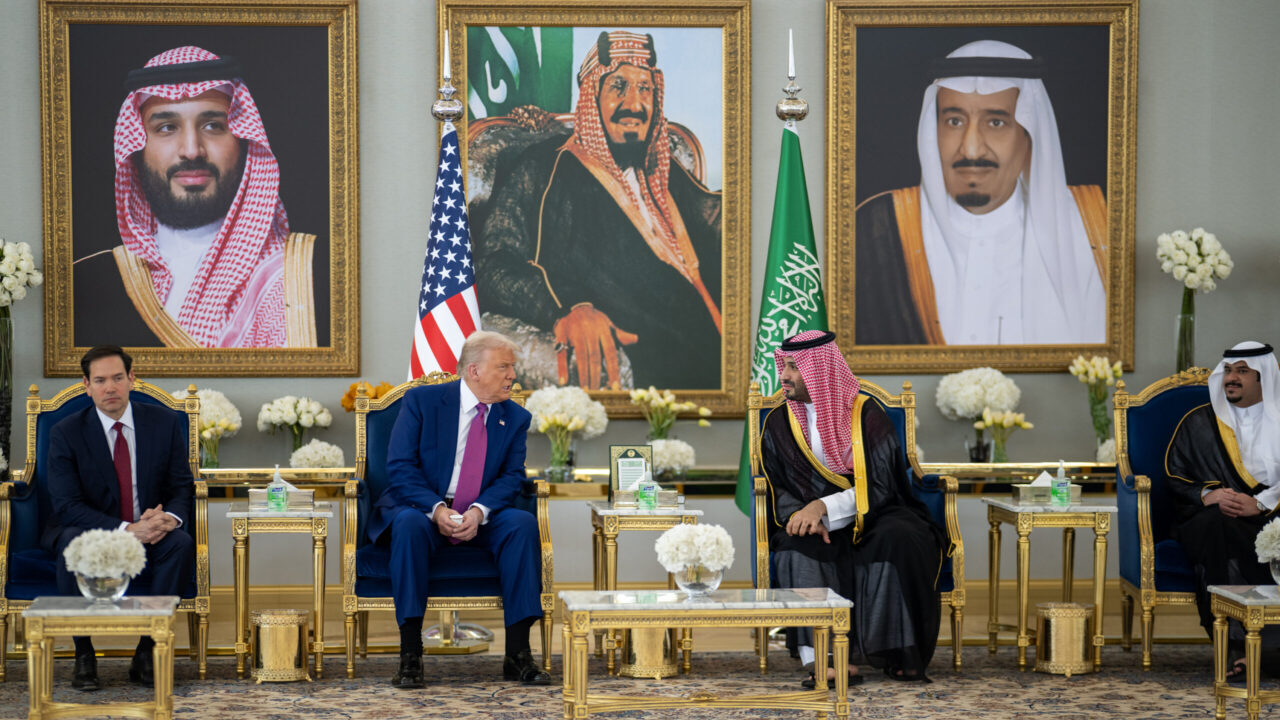
The countries most affected by the Iran War need a seat at the table to create a durable agreement.
Foreign ministers from Saudi Arabia, Turkey, Egypt, and Pakistan met in Islamabad earlier this week to discuss the de-escalation of the Iran War. At the same time, Iranian missiles and drones still hammered US bases across the Gulf. On March 27, 12 American troops were wounded—two of them seriously—when a strike hit Saudi Arabia’s Prince Sultan Air Base.
Since the war’s beginning in late February, 50 civilians have died on Gulf state territory. Most were South Asian migrant workers who had nothing to do with this fight. On March 5, Qatar’s air force shot down two Iranian Su-24 bombers that were minutes away from Al-Udeid Air Base and Doha’s international airport. Despite their location at the crux of the conflict, the Gulf states are, diplomatically speaking, still watching from the sidelines while others decide what happens next.
This pattern is familiar. The Gulf states had no real seat at the table when the United States and Iran drafted the Joint Comprehensive Plan of Action (JCPOA) in 2015. Now, they occupy only token spots. This time, once again, it doesn’t seem like an oversight.
Washington has sent Iran a 15-point proposal through Pakistani channels. The offer is straightforward: sanctions relief in exchange for nuclear limits, missile curbs, an end to proxy support, and guaranteed transit through the Strait of Hormuz. Tehran’s counteroffer demands formal sovereignty over that same strait—the waterway that carries nearly one-fifth of the world’s oil and the economic lifeblood of every Gulf country. The nations most exposed to that claim have, at best, limited consultative roles.
Gulf leaders have never fixated on Iranian uranium centrifuges the way Washington does. What worries them is Tehran’s missiles and drones, plus the network of proxy militias embedded in Iraq, Syria, Yemen, and Lebanon. Any deal that stays silent on those threats is not a peace agreement. It is at most a pause, setting the stage for the next round of fighting.
The American push for speed is understandable. Getting six Gulf Cooperation Council (GCC) governments (Saudi Arabia, the United Arab Emirates, Qatar, Bahrain, Kuwait, and Oman) aligned can slow everything down. But deals that push the countries most at risk to the margins almost never last. The Gulf states are not bystanders here. They are the main targets. Tehran built its arsenal and its networks to dominate the Gulf, not to hit the American heartland or European capitals.
For years, Gulf intelligence services have tracked Islamic Revolutionary Guard Corps (IRGC) operations and proxy financing in close detail. US officials rely on that expertise more than they care to admit. Leaving the Gulf largely out of the room means any final deal rests too heavily on Iranian promises, which cannot serve as a solid foundation.
The fact remains that the Gulf monarchies are Washington’s most important partners in the region, as well as its most skeptical ones. They are expanding energy deals with China and shopping for Russian and European air-defense systems. Shutting them out will only push them further away.
If the United States shuts the Gulf out of discussions and imposes an agreement from above rather than building one together with its partners, the Gulf capitals will treat it as a temporary truce to be endured, not something worth defending with their own forces or reputations.
A lasting agreement needs the Gulf states in the room from the start. That means sanctions relief phased in gradually as Iran meets clear, verifiable milestones, with Gulf representatives sitting alongside the major powers to monitor the nuclear program, along with missile development and proxy activities.
The Europeans insisted on staged verification in 2015 because they knew that without real buy-in from the countries under threat, enforcement almost never works. No one has more reason to catch a violation early than the people who live under the threat every day.
In the Middle East, deals rarely collapse over small technical points. They fail because no one is willing to enforce them. When Gulf leaders help write the rules and share the burden of oversight, they gain a real stake in making the deal stick.
Washington now faces a clear choice: chase speed or build something that lasts. Those two goals almost never line up. The Gulf was already in Tehran’s crosshairs before these talks started. It remains there today. Keeping its leaders mostly out of the room does not make diplomacy any easier. It all but guarantees the next war.
About the Author: Eric Alter
Eric Alter is the dean of the Anwar Gargash Diplomatic Academy in Abu Dhabi and a professor of international law and diplomacy, as well as a member of the Council on Foreign Relations. A former United Nations civil servant and a senior consultant/team leader with various international organizations such as the WTO, the World Bank, IFC, UNDP, UNEP, and FAO. Professor Alter has been seconded abroad and worked with embassies in an advisory capacity, in particular in Aden, Beirut, and Cairo. He received his PhD from Paris I Pantheon-Sorbonne. Follow him on X: @eralter_eric.
The post Why the Iran War Negotiations Need the Gulf States appeared first on The National Interest.
Источник: nationalinterest.org