

«Данное сообщение (материал) создано и (или) распространено иностранным средством массовой информации, выполняющим функции иностранного агента, и (или) российским юридическим лицом, выполняющим функции иностранного агента»

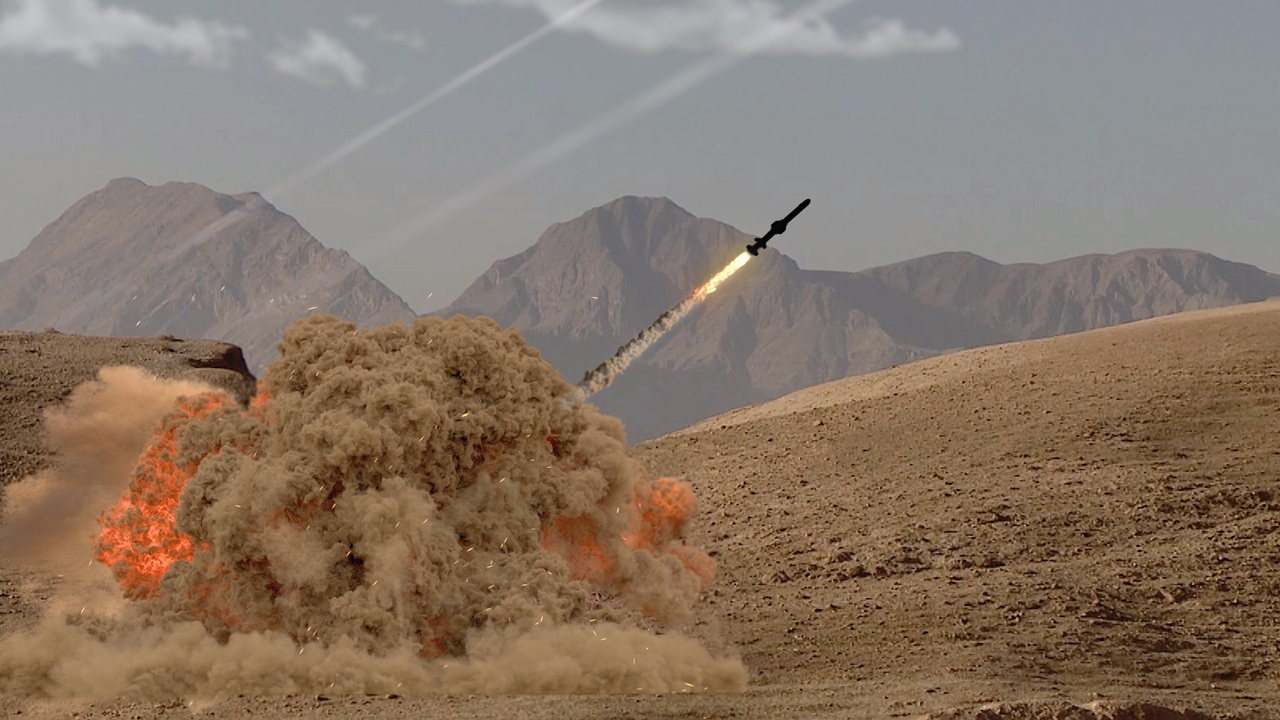
A missile being launched from a launcher in the desert. Iran’s air defense network is unlikely to stop a US air campaign, prompting Tehran to seek other ways to retaliate. (Shutterstock/Anelo)
Topic: Air Warfare Blog Brand: The Buzz Region: Middle East Tags: Air Defense, Iran, Islamic Revolutionary Guard Corps (IRGC), Persian Gulf, Strait of Hormuz, United States, US Air Force, and US Navy Does the United States Need to Fear Iran’s Air Defense Systems? February 27, 2026 By: Harrison Kass
Share
Iran is unable to defend its airspace by conventional means. Instead, it has attempted to preserve deterrence by stockpiling missiles for use against nearby US bases.
As US forces, including the US Navy’s carrier strike groups, mass in the Gulf region, all eyes are on Iran. Speculation holds that the Trump administration is on the verge of launching some variety of strike against Iran, raising questions about the country’s defensive systems. While Iran is not a peer to the US in any conventional sense, Iran does have a layered denial system in place that the United States ought to take note of—and prepare countermeasures against.
Iran’s Layered Air Denial
Iran’s IADS (Integrated Air Defense System) relies on an odd mix of Russian, indigenous, and legacy Western systems. It was designed to emphasize redundancy, mobility, and deception. Long-range SAMs include the Russian S-300 and the domestic Bavar-373 (an S-300 derivative), both of which are understood to have a 200-kilometer-plus engagement envelope, and threaten high-altitude strike aircraft. Layered beneath the S-300s are short- and medium-range Khordad-3, Raad, Tabas, Tor-M1, and HQ-2 derivative systems. Guiding the launch systems are a radar network including over-the-horizon radars and distributed nodes to avoid decapitation. Iran is also rumored to have indigenous AESA. In sum, the limitations of the Iran IADS system are a patchwork integration, a high vulnerability to SEAD/DEAD, and a general inability to detect stealth aircraft. Given the US is stealth-equipped, and capable of sophisticated SEAD/DEAD operations, these limitations are a problem.
The core of Iranian deterrence strategy lies in retaliatory deterrence rather than pure defense. To this end, ballistic missiles are on hand, including the Shahab, Grader, Sejjil, and other precision-guided variants. These missiles offer regional coverage, encompassing Israel, the Gulf states, and the US bases within. In essence, Iran cannot defend its airspace, and it knows it—but it can threaten retaliation against its most likely adversaries’ regional assets, giving it a measure of deterrence.
Iran has also been ardent about developing an extensive UAV inventory, creating asymmetric advantages in the process. The Shahed-136 loitering munitions and Mohajer series ISR assets enable the ability to create swarms against naval assets. This is a low-cost harassment method with an outsized psychological effect.
Iran Has a Big Advantage: Control over Hormuz
From a naval perspective, Iran enjoys favorable defensive geography. The Strait of Hormuz is narrow and the littoral waters are confined. Iran’s naval doctrine is shaped around closing off the strait, disrupting global oil markets and theoretically dealing a major blow to the US economy. The IRGC uses fast attack craft and a swarm doctrine. The regular navy has larger surface vessels. All told, Iran’s assets near Hormuz include fast boats with rockets and anti-ship missiles, Noor and Qader anti-ship cruise missiles, coastal defense missile batteries, a significant stockpile of naval mines, Kilo-class diesel-electric submarines, and midget subs for shallow waters. While Iranian naval forces are not a direct match for US naval power, Iran can aim to deny freedom of navigation through swarms, missile saturation, and minelaying.
On the ground, Iran enjoys a large manpower pool with a mix of older US, Russian, and Chinese hardware. Against a peer, Iran would have only limited modern armor, so the ground force’s emphasis would likely be on internal security and regime survival.
Iran knows it cannot win a conventional war against the US; it cannot maintain anything resembling air superiority or battlefield dominance. So its objective would be to survive the first wave, impose retaliatory costs through missiles (and proxies), possibly drawing in other regional actors, and thereby raising the political and economic price of launching an attack in the first place.
About the Author: Harrison Kass
Harrison Kass is a senior defense and national security writer at The National Interest. Kass is an attorney and former political candidate who joined the US Air Force as a pilot trainee before being medically discharged. He focuses on military strategy, aerospace, and global security affairs. He holds a JD from the University of Oregon and a master’s in Global Journalism and International Relations from NYU.
The post Does the United States Need to Fear Iran’s Air Defense Systems? appeared first on The National Interest.
Источник: nationalinterest.org