
«Данное сообщение (материал) создано и (или) распространено иностранным средством массовой информации, выполняющим функции иностранного агента, и (или) российским юридическим лицом, выполняющим функции иностранного агента»
 Topic: Nuclear Energy, and Three Questions Podcast Blog Brand: Energy World Region: Americas Tags: Energy Security, Nuclear Reactors, and Trump Administration Where Is US Nuclear Energy Actually Headed? February 9, 2026 By: Paul J. Saunders, and Kenneth Luongo
Share
Washington wants a nuclear renaissance, but cost, risk, and time still stand in the way of real progress.
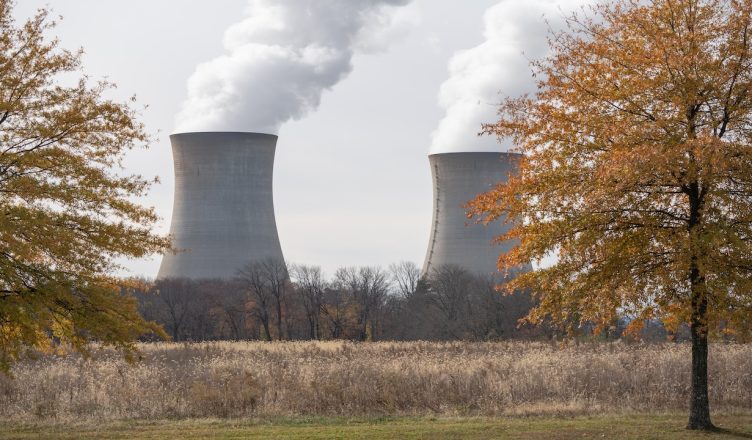
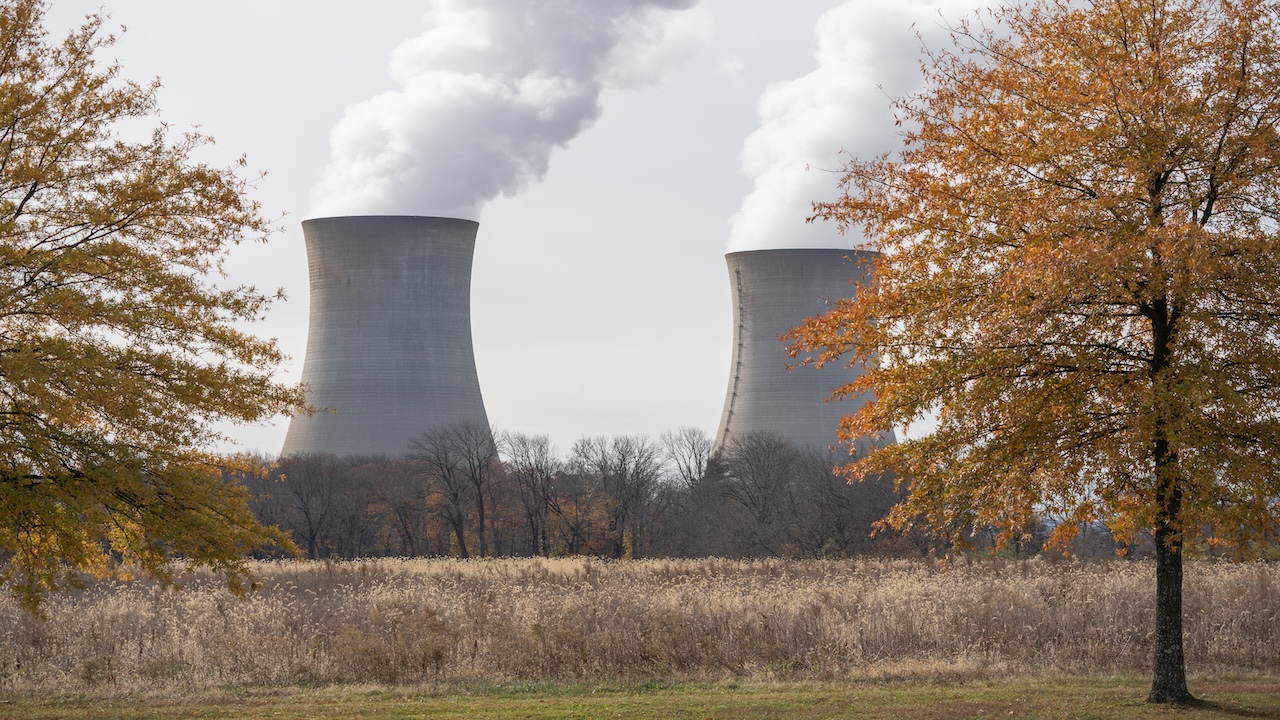
Over the past few years—and across various presidential administrations—nuclear energy has come back into vogue. It has been characterized as an issue of national security, decarbonization, reindustrialization, and—increasingly—as critical for powering the age of artificial intelligence (AI). Over the past year, the Trump administration has been pushing for a nuclear renaissance, including it as part of its energy dominance strategy, with the goal to quadruple US nuclear capacityby 2050, and announced up to $80 billion in support for Westinghouse’s AP1000 reactor.
Yet for all the momentum and money, real progress remains slow.
So what is holding US nuclear power back? And what would it actually take to move from ambition to action?
In this episode of Three Questions, Paul Saunders, President for the Center for the National Interest, speaks with Kenneth Luongo, founder and president of Partnership for Global Security, to discuss the real constraints that are shaping America’s nuclear future. The answer, unsurprisingly, comes down less to technology or political will than to something more basic: who pays.
Drawing on decades of experience working on Capitol Hill, at the Department of Energy, and in nuclear nonproliferation policy, Luongo argues that cost overruns, long construction timelines, and uncertainty about long-term federal commitments have left utilities shy on moving forward—even with significant government support. While Washington has laid out its ambitions, it has not yet resolved how to de-risk them.
The conversation also exposes a quieter tension underneath the push for a nuclear revival. While the administration has emphasized “made in America,” nuclear energy is one arena where the United States cannot realistically go it alone. The United States seeks to rebuild its nuclear manufacturing base, but it no longer controls many of the supply chains required to do so. Key components come from allies—particularly South Korea—who are partners and competitors.
The United States already lags Russia and China in nuclear deployment and is competing with China to develop and deploy AI at scale. Demand is accelerating, but nuclear construction timelines are not: building new reactors will still take close to a decade. If the United States is serious about rebuilding—and about competing in both energy and AI—this conversation suggests the window to act may be far narrower than it appears.
Listen now on Apple, Spotify, or wherever you get your podcasts.
About the Speakers: Paul Saunders and Kenneth Luongo
Paul J. Saunders is president of the Center for the National Interest and a member of its board of directors. He is also the publisher of The National Interest. His expertise spans US foreign and security policy, energy security and climate change, US-Russia relations and Russian foreign policy, and US relations with Japan and South Korea. Saunders is a senior advisor at the Energy Innovation Reform Project, where he served as president from 2019 to 2024. He has been a member of EIRP’s board of directors since 2013 and served as chairman from 2014 to 2019. At EIRP, Saunders has focused on the collision between great power competition and the energy transition, including such issues as energy security, energy technology competition, and climate policy in a divided world. In this context, he has engaged deeply in energy and climate issues in the Indo-Pacific region, especially US relations with Japan and South Korea. His most recent project at EIRP is an assessment of Russia’s evolving role in the global energy system.
Kenneth Luongo is the president and founder of the Partnership for Global Security (PGS) and the Center for a Secure Nuclear Future. His work is focused on the nexus of nuclear power, global security, and energy geopolitics. He previously served as senior advisor to the Secretary of Energy on nuclear and security affairs, as a senior fellow at Princeton University, on the staff of the House Armed Services Committee, and as an advisor to Senators Carl Levin and William Proxmire.
Image: Amy Lutz/shutterstock
The post Where Is US Nuclear Energy Actually Headed? appeared first on The National Interest.
Источник: nationalinterest.org