
«Данное сообщение (материал) создано и (или) распространено иностранным средством массовой информации, выполняющим функции иностранного агента, и (или) российским юридическим лицом, выполняющим функции иностранного агента»
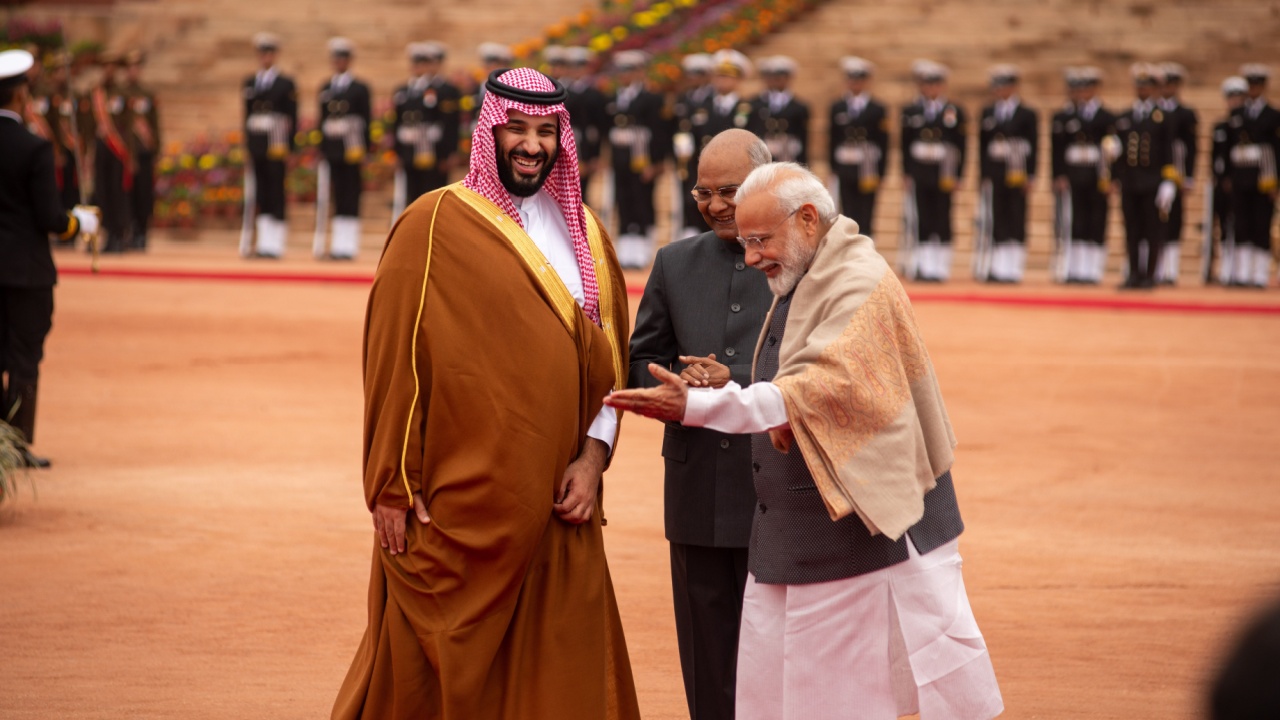
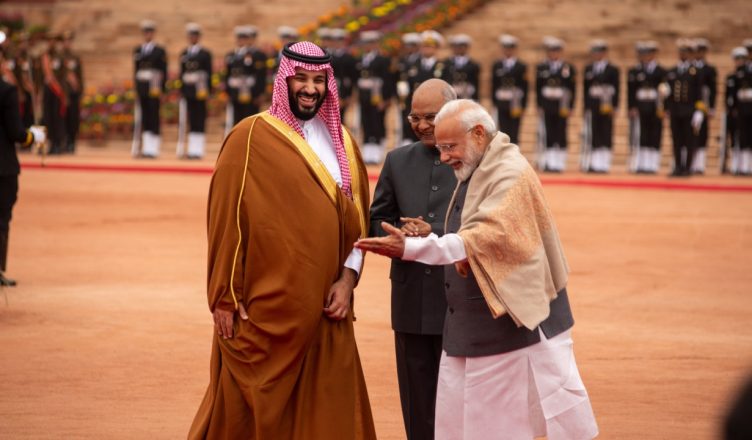
Indian prime minister Narendra Modi meets with Saudi crown prince Mohammed bin Salman in New Delhi during a state visit in February 2019, representing the close ties between India and the Arab Gulf states (Shutterstock/Pradeep Gaurs).
Topic: Diplomacy, Oil and Gas, and Trade Blog Brand: Silk Road Rivalries Region: Asia, and Middle East Tags: China, Gulf States, India, Indo-Pacific, Iran, South Asia, and United States When the Gulf Heats Up, India Is the First to Pay February 12, 2026 By: Fatemeh Aman
Share
India’s energy dependence on the Gulf states makes it more acutely sensitive to regional instability than China.
A new US-Iran crisis in the Persian Gulf need not escalate into a full-scale war to harm India. The fear that the region is sliding into an escalatory cycle in which markets, shipping companies, and insurers begin pricing in the worst-case scenario is enough to create problems for New Delhi, whether in the form of inflationary pressures, higher shipping costs and insurance premiums, and diaspora anxiety.
India’s exposure to Gulf instability is structural. New Delhi may be a rising power in the Indo-Pacific, but the Gulf remains one of its most sensitive economic lifelines. That is why even limited military action involving Iran, Israel, or the United States tends to force India into caution, narrowing its options before it forces anyone else’s.
The Strait of Hormuz is the clearest reminder of how the region exports shock. The International Energy Agency estimates that from January to May 2025, approximately 14.5 million barrels per day of crude oil passed through the Strait of Hormuz, and that China and India’s imports together accounted for 46 percent of those volumes. Even without a blockade, escalation can trigger large pricing reactions because markets price risk, not certainty.
A dramatic disruption in the Strait of Hormuz would severely harm China. In volume terms, China has more at stake than almost anyone because a large share of its crude imports still flows through the Gulf. Still, Beijing can absorb the shock longer through deeper reserves and stronger state tools. India cannot.
Fuel price spikes quickly feed into inflation. They move through transport, food, and household sectors. Any Indian government knows that this is among the most politically dangerous forms of economic stress because it permeates everyday life. There is no clean way to treat it as a purely external event.
In a tense Gulf environment, India also pays through the mechanics of trade. War-risk insurance premiums rise. Freight costs climb. Delivery schedules become uncertain. Import costs increase not only for crude, but for fertilizers, industrial inputs, and consumer goods that travel along the same routes. Even if ships keep moving, the price of moving them changes. That becomes a tax on the economy. That is often sufficient to increase shipping costs and freight rates well before any formal disruption occurs.
Then there is the human corridor. Nine million Indians live and work across the Gulf states. Their safety is a domestic issue for India’s government. Any serious escalation forces New Delhi into contingency planning and worst-case preparations. Beyond safety, the Gulf is a major source of remittances and household income in parts of India.
A crisis does not need to permanently eliminate jobs to create stress. It only needs to inject uncertainty into movement, employment, and payments. That uncertainty travels fast through families, local economies, and domestic politics.
All of these factors are why India’s instinct in Gulf crises is de-escalation. The Gulf’s stability is part of India’s internal stability, and New Delhi knows it. India’s Gulf policy has long been a careful tightrope walk, and the risk of escalation narrows an already slim wire.
This is also why the latest US-India trade framework matters. Reporting suggests that the new understanding includes India increasing purchases of US goods, including petroleum and other energy products, while reducing purchases of Russian oil, among other major items.
In theory, this could cushion India during periods of volatility by diversifying alternative supply lines and strengthening energy cooperation with a major partner. But it also carries a constraining logic. Shifting away from Russian crude is not only a commercial adjustment but also an alignment demand with political meaning attached. That matters in a crisis because the first requirement of energy security is flexibility.
India’s problem is that this shift collides with its long-standing habit of dual-alignment. Indian strategists have sought to balance the United States as a partner in technology and economic growth while maintaining Russia as a strategic fallback and defense supplier. Gulf instability makes that balancing act harder, because it turns energy into an emergency file and reduces the political space for hedging.
If the Gulf is stable, India can manage contradictions. It can buy time. It can slow-walk decisions. It can be used for gradual adjustment while maintaining relationships. If the Gulf becomes unstable, those contradictions become harder to manage because market pressures accelerate decision-making. India does not have the option to postpone decisions when inflation is rising, and shipping costs are climbing.
That problem becomes sharper when the shift is expected to happen quickly. Reports suggest that Indian refiners are wary of abrupt moves and would require a wind-down period due to existing contracts and refinery configurations.
This is where President Donald Trump’s governing style becomes central to the analysis. The US-India relationship may have a long-term structural basis, driven by shared concerns about China and expanding defense and technology cooperation. But Trump’s diplomacy has never been built for predictability. It is transactional, public, and often punitive, shifting rapidly between praise and pressure.
India may be trying to deepen economic ties with Washington while also preparing for a regional shock that punishes inflexible energy sourcing. Under a predictable US administration, India can negotiate timelines and phased adjustments. Under a volatile one, it becomes more cautious because the tolerance ceiling can shift overnight.
Trump’s unpredictability does not create freedom for India. It creates risk. India cannot assume it will be given time. It cannot assume the trade-offs will remain stable. It cannot assume that today’s deal framework will remain the same after the next headline, the next dispute, or the next demand for deliverables.
This same uncertainty shapes India’s relationship with Iran. In practice, closer alignment with Western partners has often led India to keep its ties with Iran narrow and cautious, even when New Delhi seeks to preserve options.
New Delhi has never wanted a permanent rupture with Tehran. It has repeatedly signaled that it prefers to keep channels alive and preserve strategic options. But in a Gulf crisis, those options become more expensive. A limited US strike on Iran may not escalate into a regional war, but it creates a region-wide fear of escalation. That fear changes behavior. Insurers tighten. Shippers hesitate. Banks turn conservative. Business slows even when government policy does not change.
That is the quiet mechanism that matters. Risk disciplines policy. It narrows the space for creativity. It punishes ambiguity. And it forces governments to prioritize what is immediately stabilizing over what is strategically desirable.
In that environment, the financial and commercial space for dealing with Iran narrows further. Not because India is making a dramatic political decision to isolate Iran, but because India cannot afford high-friction relationships when inflation and shipping risk are already rising. If a Gulf crisis becomes prolonged, even modest engagement can feel like unnecessary exposure.
This is how Gulf crises reshape alignment without new treaties. India does not need to declare a strategic shift. It simply becomes less willing to engage in relationships that could trigger secondary risk during volatility. In a tense Gulf, Iran becomes a high-risk file even if India’s long-term instinct is to avoid rupture.
The conclusion is uncomfortable but clear. A severe disruption of the Strait of Hormuz would significantly harm China’s energy security. But India tends to feel Gulf instability more acutely at home, through price and household economic effects, through shipping and logistics disruptions, and through the safety of its citizens working across the region. That makes India more immediately vulnerable even when China’s raw exposure in oil volume is larger.
In the next Gulf escalation, India’s challenge will not be choosing sides. It will be sustaining stability under pressure. And that is the difference between a power that can watch a crisis unfold and a power that must live it in real time.
About the Author: Fatemeh Aman
Fatemeh Aman has written on Iranian, Afghan, and broader Middle East affairs for over 25 years and advised US and non-governmental officials. A former non-resident fellow at the Middle East Institute and senior fellow at the Atlantic Council, a writer, producer, and anchor at Voice of America, and a correspondent at Radio Free Europe/Radio Liberty, her work has appeared in Jane’s Islamic Affairs Analyst, Jane’s Intelligence Review, and the Stimson Center’s Middle East Perspectives. Follow her on X: @FatemehAman.
The post When the Gulf Heats Up, India Is the First to Pay appeared first on The National Interest.
Источник: nationalinterest.org