
«Данное сообщение (материал) создано и (или) распространено иностранным средством массовой информации, выполняющим функции иностранного агента, и (или) российским юридическим лицом, выполняющим функции иностранного агента»
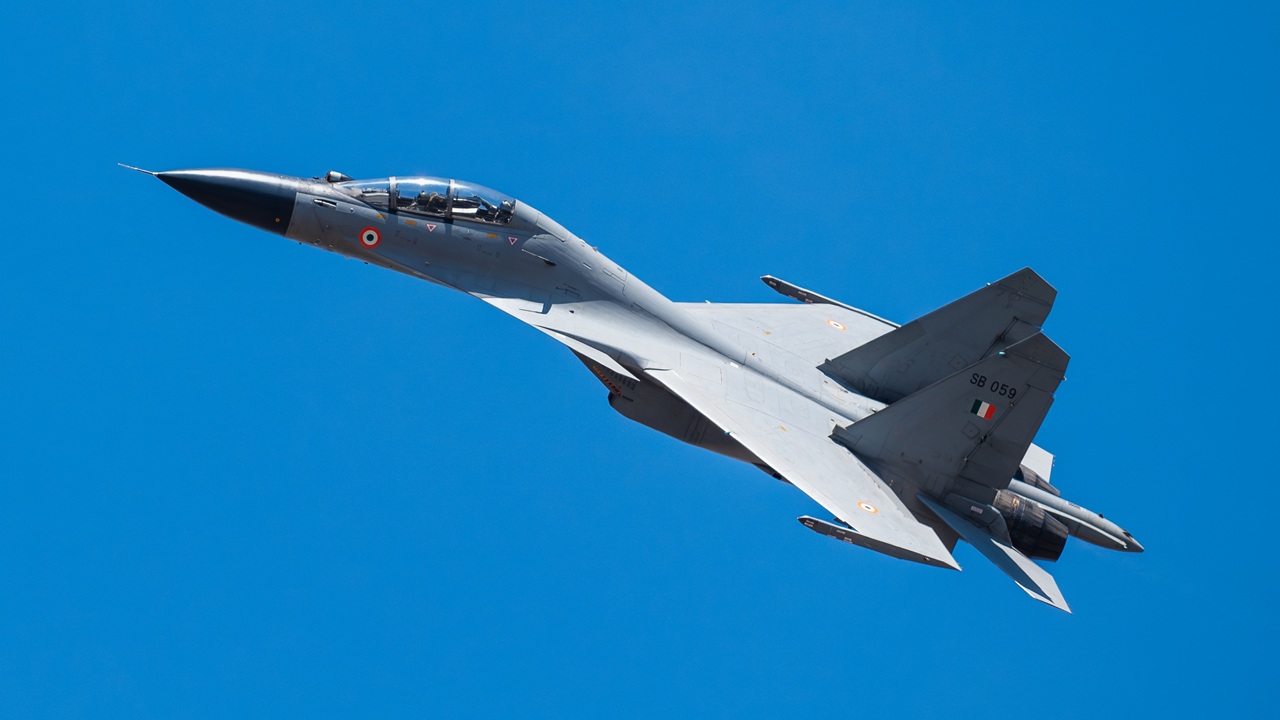
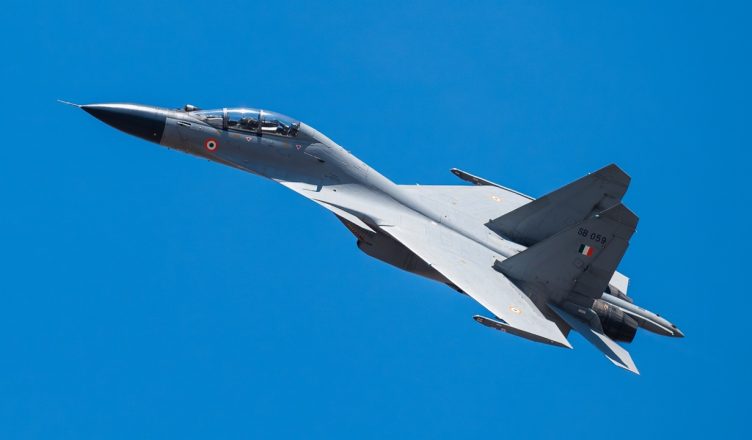
An Su-30MKI Flanker with Indian Air Force markings in flight. (Shutterstock/Neel Dass)
Topic: Air Warfare Blog Brand: The Buzz Region: Asia Tags: Aircraft, Dassault Rafale, Fighter Jets, HAL Tejas, India, Indian Air Force, Mirage 2000, Operation Sindoor, Pakistan, SEPECAT Jaguar, South Asia, and Su-30 Understanding the Indian Air Force’s Strengths—and Weaknesses February 17, 2026 By: Harrison Kass
Share
Though the Indian Air Force has enormous combat strength on paper, many of its aircraft are legacy platforms that would not fare well against a cutting-edge modern air force.
The Indian Air Force (IAF) is one of the world’s largest air forces and operates in one of the most complex security environments on earth. The IAF faces a two-front challenge: China to its north and east, and Pakistan to its west. And unlike many Western air forces focused on expeditionary operations, the IAF is built primarily for continental deterrence and high-altitude combat. Though modernizing aggressively, the IAF remains caught between legacy platforms, procurement delays, and ambitious great-power aspirations.
The IAF’s main objectives are to maintain air superiority against Pakistan, and to deter China along the Line of Actual Control (LAC). The IAF is also committed to providing nuclear delivery capability, as the air leg of India’s nuclear triad, and protecting Indian Ocean interests through maritime strike and ISR.
Significant challenges complicate the IAF’s objective set. Squadron shortfalls mean aircraft availability is limited. Aging legacy aircraft, like the MiG-21, are increasingly insufficient while slow procurement cycles and bureaucratic delays have hindered the modernization process.
What Fighter Jets Does India Fly?
- Su-30 Flanker: The IAF relies on the Su-30MKI as a workhorse backbone; compromising the largest component of the fleet, the twin-engine, long-range heavy fighter is optimized for air superiority, deep strike, and cruise missile delivery. The Su-30MKI offers range, payload, and endurance—enabling long-reach endurance against China.
- Dassault Rafale: The Rafale is a multirole platform acquired from France. With high-end sensors, Meteor BVR missiles, and SCALP strike capability, the Rafale is India’s most sophisticated platform; it was deployed in forward positions after the 2020 Ladakh crisis, and offers superior BVR capability against Pakistan, and a credible counter to Chinese J-10/J-16s.
- HAL Tejas: The Tejas is an indigenous light combat aircraft, replacing the MiG-21 fleet. Though shorter-range, the Tejas is cost-effective, signaling domestic aerospace maturation.
- Dassault Mirage 2000: India continues to fly the Mirage 2000, although it is rapidly aging. Over time, Mirage 2000 aircraft will be phased out in favor of incoming Rafales.
- SEPECAT Jaguar: India is the only nation in the world that continues to fly the SEPECAT Jaguar attack jet, first introduced in 1973, as a frontline aircraft. The Jaguar is intended as a deep strike penetration aircraft, although its effectiveness in a modern air war is unclear, and it was not used for that purpose during the May 2025 war against Pakistan.
Other aircraft, like AWACS and tankers, are used as force multipliers, helping to facilitate fighter and strike operations.
How the Indian Air Force Plans for War
The IAF is prepared for likely combat scenarios, including a short-duration high-intensity conflict with Pakistan, and a high-altitude, long-range standoff conflict with China. Accordingly, the IAF emphasizes BVR engagements, integrated air defense penetration, and stand-off precision strike.
Strategically, India’s air power is central to deterring a two-front conflict. Rafale acquisition significantly improves the BVR edge over Pakistan. Against China, the challenge is more parity-driven—range, logistics, and infrastructure matter. As IAF modernization continues, the influences will be Indo-Pacific balance, India’s role in the Quad, and defense ties with France, the US, and Russia.
in the future, India hopes to field an indigenous fifth-generation stealth project (the AMCA), which will reduce dependence on foreign suppliers. The IAF is also working to restore squadron strength, with continued production of the Tejas.
While the IAF is currently modernizing, the transformation is still ongoing. With challenges across two borders, the IAF plays a central role in deterring unfriendly neighbors; the IAF’s trajectory mirrors India’s own ambitions for strategic autonomy and great-power status.
About the Author: Harrison Kass
Harrison Kass is a senior defense and national security writer at The National Interest. Kass is an attorney and former political candidate who joined the US Air Force as a pilot trainee before being medically discharged. He focuses on military strategy, aerospace, and global security affairs. He holds a JD from the University of Oregon and a master’s in Global Journalism and International Relations from NYU.
The post Understanding the Indian Air Force’s Strengths—and Weaknesses appeared first on The National Interest.
Источник: nationalinterest.org