
«Данное сообщение (материал) создано и (или) распространено иностранным средством массовой информации, выполняющим функции иностранного агента, и (или) российским юридическим лицом, выполняющим функции иностранного агента»
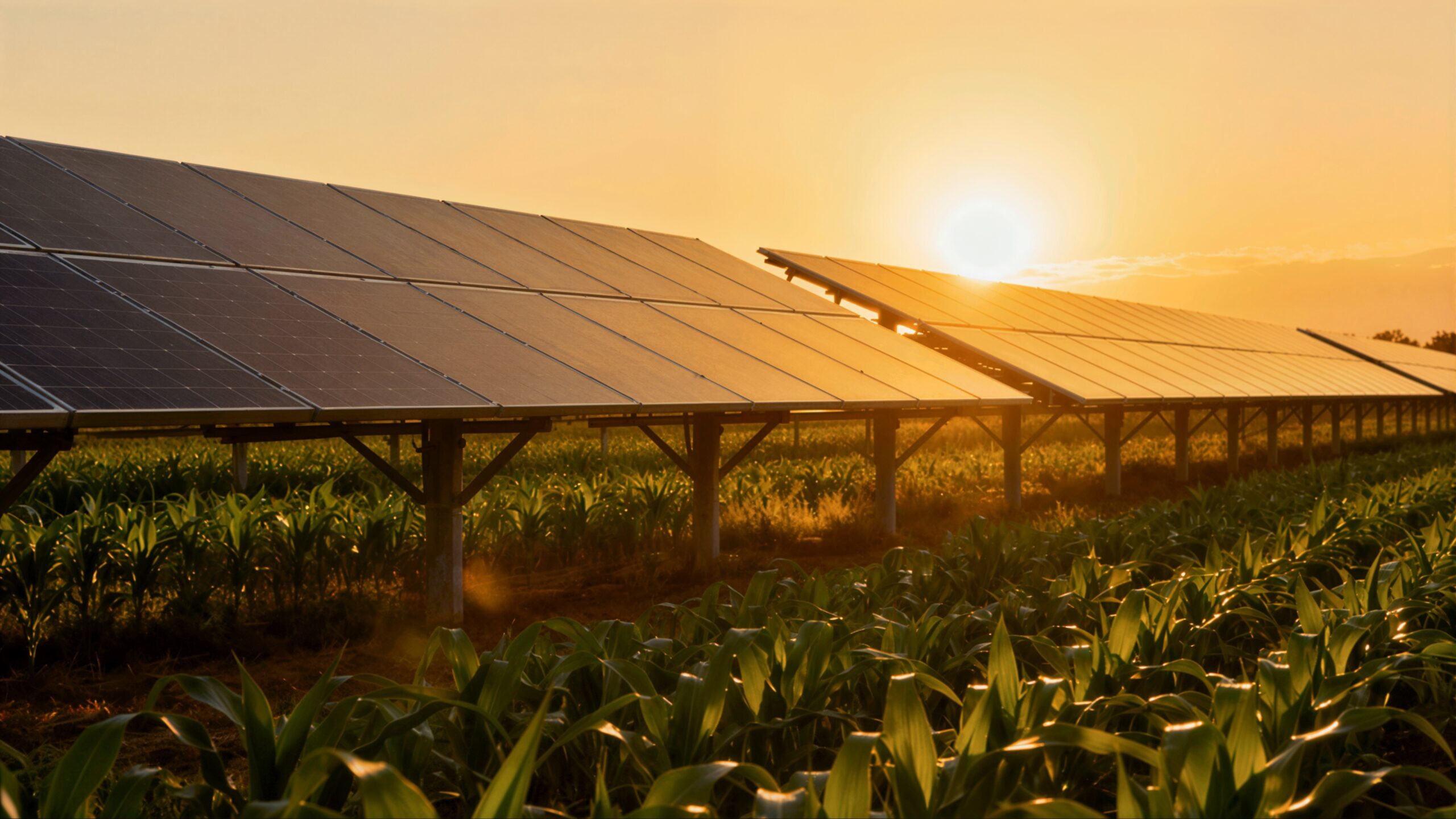
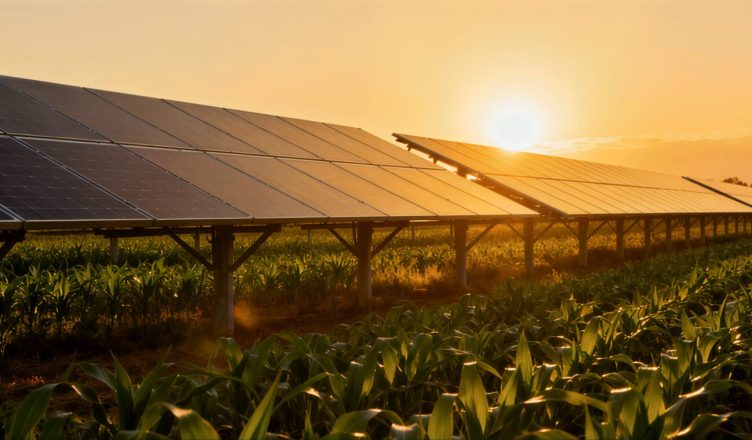
Rows of elevated solar panels stretch across working farmland, illustrating how agrivoltaics seeks to balance renewable energy expansion with continued agricultural production. (Shutterstock/ceeceelee)
Topic: Solar Energy Blog Brand: Energy World Region: Americas Tags: Agricutlure, Agrivoltaics, North America, Oregon, Photovoltaic Panels, and United States Technical and Policy Changes Impacting Agrivoltaics Deployment in the US February 23, 2026 By: Patrick Dapaa Kwao, and David Bernell
Share
Agrivoltaics could ease tensions between farmers and solar developers, and strengthen sustainability, but fragmented land-use laws remain a barrier.
Rural communities in the United States continue to face economic pressures on agricultural lands. Many places are already experiencing fragmentation due to urban sprawl, while broader economic conditions involving tariffs, interest rates, and commodity prices all pose challenges to the future of agricultural production.
The growth of the solar energy industry, driven by policy mandates and incentives, as well as the rapid decline in the cost of solar photovoltaics (PV), also drives concern and even conflict in some rural communities. Solar energy tends to be more productive when installed as a grid-scale ground-level project on even land. Energy developers, therefore, often target agricultural lands for solar siting because they are free of any natural and artificial hurdles, such as wetlands, while also providing easier access and fewer permitting requirements than public lands. These siting choices have provoked resistance over the years because farmers and landowners can be crowded out, putting additional pressure on continued agricultural production.
In response to these challenges, renewable energy developers and engineers have begun exploring less burdensome systems that integrate PV with the production of food. The response is agrivoltaics, which involves using the same plot of land for both agricultural production and energy generation (while also simultaneously saving significant water resources). At its best, this application of solar energy on working farmlands offers a response to these complex issues and an opportunity to diminish the often-contentious conflicts over land use.
Optimizing Agricultural Productivity and Sustainability
Ongoing research points to the fact that overall agricultural productivity and sustainability can be improved with agrivoltaics. Configurations and crop-system matching can be optimized to ensure the right balance between agricultural productivity and solar energy generation, maximizing the efficiency of both. This involves the placement of panels for appropriate shading, which allows for the reduction in water usage and in the level of heat stress on crops, which can improve their quality in terms of nutrition and shelf life. In addition, most crops can accommodate up to 25 percent of shading without any yield losses, though they begin to experience declines in yield when shading exceeds the 50 percent mark.
Still, there are technical and design issues that have to be worked out, sometimes on a case-by-case basis. This can involve spacing of panels, mounting, and fencing to allow for the use of mechanized farm equipment in farms with solar panels; panel orientation on an east-west orientations versus a north-south alignment; and the pattern of rainwater runoff from panels, which impacts the variability of water going to different parts of a field or even to aquifer storage for later usage—a project at Oregon State University has tested agrivoltaics systems to see how panel placement and tilt can optimize rainfall distribution.
Design is Not Enough: Social and Policy Considerations
As global agrivoltaics research progresses and adoption of the technology continues to expand, social acceptance is central to any achievement beyond niche applications, even with improvements in technical design. Any meaningful expansion in deploying agrivoltaics will require two necessary ingredients: policy measures that incentivize markets and protect landowner rights, and public support, particularly in rural communities, where opposition to renewable energy is most widespread.
Agrivoltaics development can be highly impacted by both regulations and statutes in federal and state solar policy. Therefore, legal structures that address renewable energy incentives and mandates, and also agricultural land use, are intrinsic to widescale agrivoltaics deployment.
At the state level, renewable portfolio standards have significantly impacted the deployment of solar by ensuring that utilities provide certain percentages of electricity from renewable sources. Currently, there are 24 states with goals or mandates to achieve 100 percent clean electricity in the coming years.
At the federal level, there are two major instruments that have been the most relevant for the financial support of solar energy and agrivoltaics. These are the Rural Energy for America Program (REAP) and the Investment Tax Credit. REAP is a Department of Agriculture (USDA) program that provides grants and loan guarantees to farmers and small businesses in rural areas for renewable energy systems or energy efficiency improvements. The program has undergone changes in the Trump administration, with a pause in accepting applications for several months in 2025, and the ongoing adoption of new program and eligibility requirements. For these reasons, the allocation of funds has been significantly disrupted.
The Investment Tax Credit, which was set at 30 percent in 2005 and extended most recently by the Inflation Reduction Act in 2022, has been responsible for massive growth in the adoption of solar energy. The provision was amended by the One Big Beautiful Bill Act in 2025, which ended the residential tax credit at the end of 2025, and will phase out the business tax credit by the end of 2027. While commercial and utility-scale projects remain eligible, the Trump administration has established new Treasury Department guidelines that will restrict solar energy eligibility for the tax credit. The result of changing federal policy is that both of these funding sources are greatly diminished and will be for at least a few more years. Combined with tariffs on Chinese-made solar panels, these measures will make the cost of solar more prohibitive.
Backlash to Solar Energy
In addition to programs that provide capital for the installation of solar PV, there are also legal authorities over the use of land, which is largely under the control of state and local governments. In many states and counties, there are laws that have made it more difficult to expand solar energy development, and therefore the growth of agrivoltaics.
New laws restricting the growth of solar are largely a result of diminishing public support for renewable energy in rural communities. A 2022 Reuters report highlighted the growing opposition to solar energy development from local governments and activist groups who fear that large projects bring the loss of arable land and the erosion of farm culture, while offering in return little economic upside beyond a couple of new full-time jobs and lease payments to a few lucky landowners.
This opposition is producing results. A 2025 study by the Sabin Center at Columbia Law School found that 459 municipalities and counties in 44 states around the United States had adopted restrictions on siting any form of renewables. An example is a 2021 Ohio statute that changes zoning law by authorizing county governments to reject proposed solar and wind projects, and to designate certain areas as “restricted” to any such energy construction. This law was passed with solar and wind energy in mind. Oregon is another state that has acted to protect farmland from solar energy development, with new statewide regulations that restrict commercial solar projects on highly valuable agricultural lands.
As of 2025, almost 500 proposed solar projects throughout the country were being actively contested, while a US Department of Energy survey found that over 30 percent of all utility-scale wind and solar projects were canceled between 2018 and 2023, mostly because of community opposition and local zoning ordinances. In 2021 alone, it is estimated that 1.7 gigawatts of intended solar projects had been cancelled at the permitting stage due to strict opposition to renewables.
By contrast, the states of Massachusetts and Michigan serve as case studies on how state-level laws on zoning can help with the widespread deployment of agrivoltaics. Massachusetts law states that zoning ordinances cannot unreasonably control the use of land for commercial agriculture or the siting of solar systems unless they pose health hazards. The state’s Department of Energy also defines agrivoltaics as a system that promotes both energy and agricultural output, which not only shields the technology from being blocked by municipalities but also allows for financial incentives to install agrivoltaics systems. Michigan adopted laws that take energy siting authorities away from county and municipal governments and give them to the Michigan Public Service Commission. This centralized system is expected to spur the adoption of solar energy, even over the opposition of local communities that don’t want new solar and wind energy development.
Navigating Zoning Gaps and the Path Forward for Agrivoltaics
Alongside the extremely variable land use policy landscape as a result of divergence in state, municipal, and county authority over zoning, there are also many jurisdictions that do not have clear zoning provisions for solar energy, and this creates uncertainty for energy developers. This gap may be an opportunity for counties and municipalities to design zoning laws to cater to agrivoltaics. Scale-specific standards, temporary installation standards, and conditional use permits are examples of tools that local governments can leverage to support the uptake of agrivoltaics. However, the political hurdles will be significant, as local opposition among communities and officeholders continues to place obstacles in the way of new agrivoltaics development.
Scaling up technologies such as agrivoltaics can be intrinsically tied to an energy transition of the agricultural sector itself. As the technical elements of agrivoltaics continually improve, the technology offers a path toward the resolution of the social and political conflicts pitting rural communities and solar energy developers against one another. However, these benefits will not be achieved without strong regulatory and policy frameworks that favor the adoption of solar energy. Whether or not federal tax incentives and funding become more available in the coming years, future efforts to expand agrivoltaics will have to focus on local zoning strategies that are supportive, while remaining sensitive to governance concerns associated with state and local decision-making.
If the promise of agrivoltaics is to realize a net gain for electricity generation and agricultural production, alongside a reduction in community conflict, the tragedy would be failure in all of these matters.
About the Authors: Patrick Dapaa Kwao and David Bernell
Patrick Dapaa Kwao is a PhD student at Oregon State University with a major specialization in renewable energy policy, energy transitions, and the design of policy mechanisms that encourage investment in climate-smart energy and agricultural technologies. He previously served as an investment promotion official with the Government of Ghana.
David Bernell is an associate professor in the School of Public Policy at Oregon State University. He is the author of The Energy Security Dilemma: US Policy and Practice and Constructing US Foreign Policy: The Curious Case of Cuba. He also served in the Clinton administration with the US Office of Management and Budget and the US Department of the Interior.
The post Technical and Policy Changes Impacting Agrivoltaics Deployment in the US appeared first on The National Interest.
Источник: nationalinterest.org