
«Данное сообщение (материал) создано и (или) распространено иностранным средством массовой информации, выполняющим функции иностранного агента, и (или) российским юридическим лицом, выполняющим функции иностранного агента»
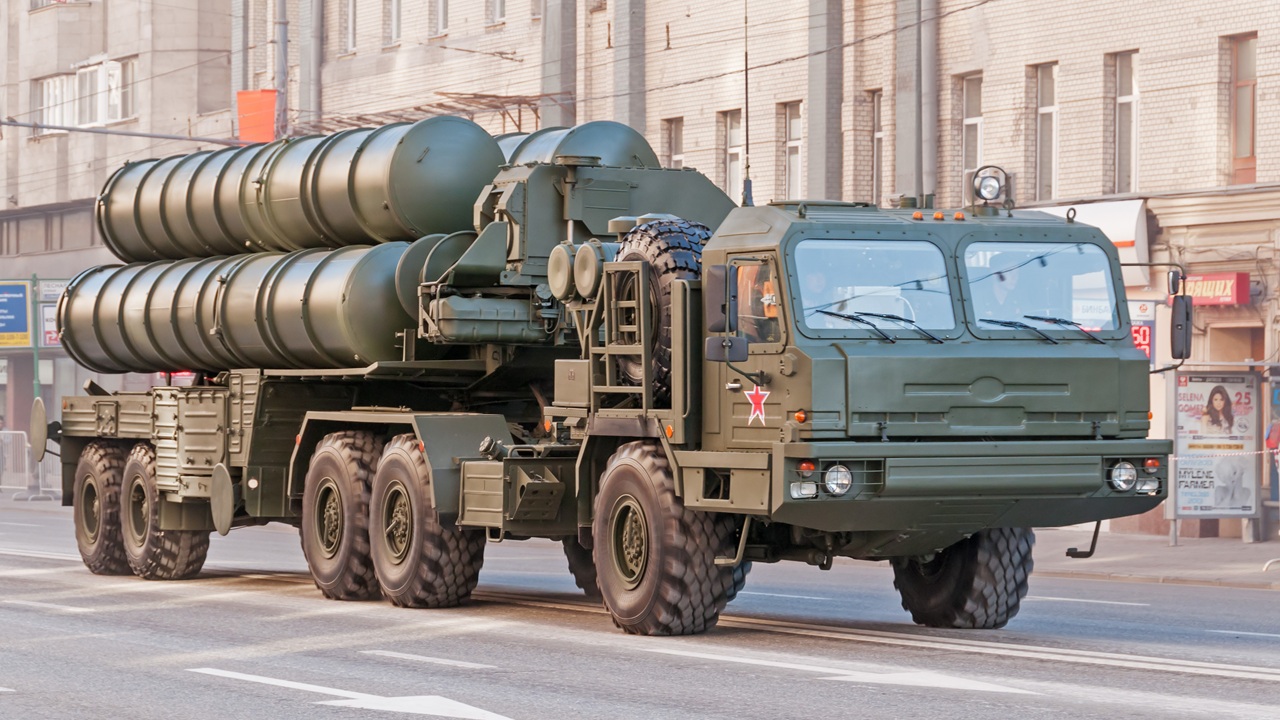
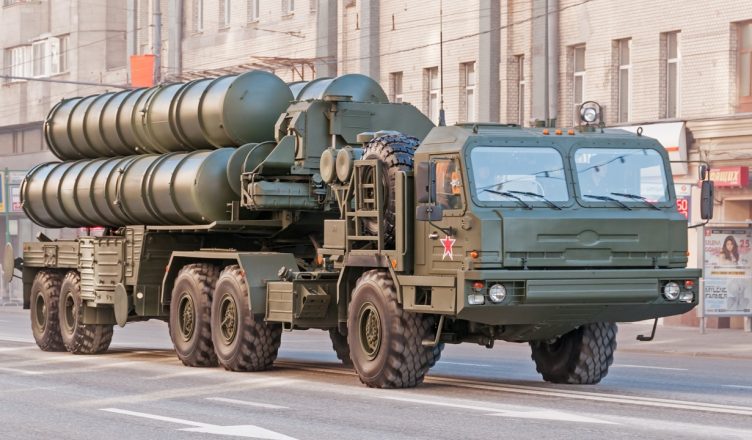
An S-400 Triumf anti-aircraft weapon system seen during Russia’s annual Victory Day parade on May 9, 2013. (Shutterstock/Shujaa_777)
Topic: Air Warfare Blog Brand: The Buzz Region: Eurasia Tags: Eastern Europe, Indo-Pacific, Russia, S-400 Triumf, South China Sea, Turkey, Ukraine, and Ukraine War Russia’s S-400 Triumf Missile System Is a Real Headache for NATO February 17, 2026 By: Harrison Kass
Share
Though no longer as cutting-edge as it once was, the S-400 remains an effective air defense system—and has caused no shortage of trouble for Ukraine during the ongoing war.
The S-400 Triumf is Russia’s premier long-range surface-to-air missile (SAM) system. Designed to counter aircraft, cruise missiles, and ballistic missiles, the S-400 is less a single missile and more an integrated air defense architecture intended to deny adversary air superiority over wide areas.
Why Russia Built the S-400 System
Developed by Almaz-Antey as a successor to the aging S-300 family, the S-400 entered Russian service in 2007. Built to modernize Soviet layered air defense doctrine, the S-400 emphasized extended range, multi-target engagement, and improved radar discrimination.
Functionally, the S-400 was designed to serve as the backbone of Russia’s A2/AD strategy. The core components of the S-400 are the 91N6E Big Bird acquisition radar; 92N6E Grave Stone engagement radar, command and control vehicle, multiple transporter-erector-launchers (TELs)—all offering optional integration with Pantsir point-defense systems, S-300 batteries, and early warning radars. The S-400 operates as part of a broader integrated Air Defense System (IADS) and shares targeting data across units; the S-400 can coordinate engagements at multiple altitude bands.
The S-400 can deploy various missile types across various ranges. The 40N6 missile is theoretically accurate up to 400 kilometers, while the 48N6 family extends this range an additional 250 kilometers. The 9M96E2 only reaches 120 kilometers, but is optimized for maneuvering targets, giving Russian anti-air defenses a shorter range option for point defense.
The system can track dozens of targets simultaneously and engage multiple targets concurrently. The S-400 was designed to counter high-altitude bombers, low-flying cruise missiles, and ballistic missile threats.
Does the S-400 Work?
The S-400 allows Russia to establish anti-access/area denial A2/AD bubbles. This protects capitals, military bases, and strategic infrastructure—forcing adversaries to fly lower and stand off farther and expend long-range precision munitions. The practical implications of the S-400’s presence is that it changes flight planning for NATO aircraft, encouraging the use of stealth platforms, standoff weapons, and electronic warfare.
The strengths of the S-400 include long detection range, layered missile options, mobility, and psychological deterrent value. But the system isn’t perfect—and real-world performance varies by operator training; the S-400 is vulnerable to SEAD/DEAD operations, electronic warfare, and saturation attacks. And of course, stealth aircraft complicate the S-400’s performance.
Exports to China, India, and Turkey have had notable geopolitical impact. In China, the S-400 has enhanced coastal air defense and supports A2/AD in East and South China Seas. In India, the S-400 is deployed near borders with China and Pakistan, strengthening layered defenses but complicating US-India relations. And Turkey’s S-400s have not yet been turned on—but triggered CAATSA sanctions anyway, creating NATO interoperability concerns.
In the ongoing Ukraine War, the S-400 has demonstrated the manner in which air defense can shape the battle space—but also that the systems are vulnerable if exposed. Ukraine’s use of Western stand-off weapons demonstrates that layered systems can be degraded.
Strategically, the S-400 symbolizes Russia’s defense export leverage, and extends Russian influence through hardware dependency. The system also complicates Western air power planning, forcing adversaries into higher-cost suppression campaigns.
In sum, the S-400 is a sophisticated long-range air defense system that enhances defensive depth. It does not make air space impenetrable—but it raises the cost of entry. The system’s strategic value lies in deterrence, denial, and export influence rather than invulnerability.
About the Author: Harrison Kass
Harrison Kass is a senior defense and national security writer at The National Interest. Kass is an attorney and former political candidate who joined the US Air Force as a pilot trainee before being medically discharged. He focuses on military strategy, aerospace, and global security affairs. He holds a JD from the University of Oregon and a master’s in Global Journalism and International Relations from NYU.
The post Russia’s S-400 Triumf Missile System Is a Real Headache for NATO appeared first on The National Interest.
Источник: nationalinterest.org