
«Данное сообщение (материал) создано и (или) распространено иностранным средством массовой информации, выполняющим функции иностранного агента, и (или) российским юридическим лицом, выполняющим функции иностранного агента»
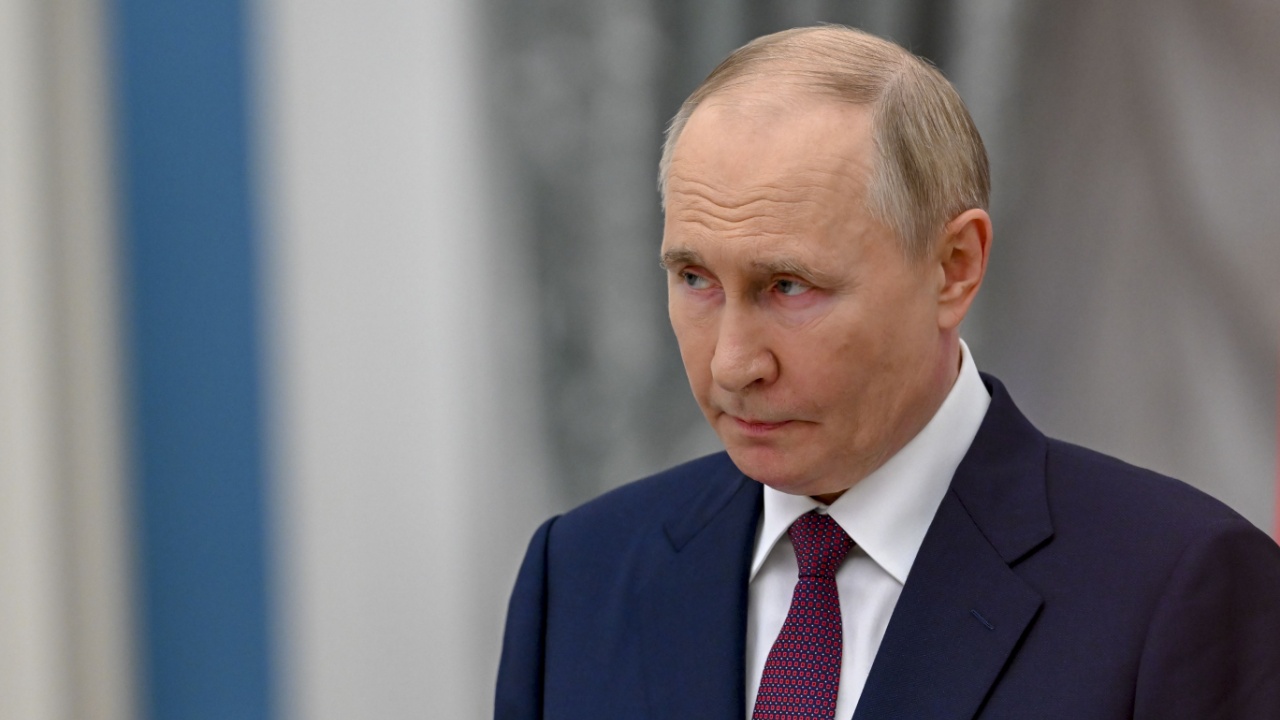
Russian president Vladimir Putin speaks at a joint press conference after a meeting with Hungarian prime minister Viktor Orban at the Kremlin Palace on May 7, 2024. President Putin has presided over Russia’s war in Ukraine, which is leading to strategic losses for Russia. (Shutterstock/PhotoIbo)
Topic: Diplomacy, and Land Warfare Blog Brand: Silk Road Rivalries Region: Eurasia, and Europe Tags: Armenia, Azerbaijan, Caucasus, Central Asia, China, Ukraine, Ukraine War, and United States Russia’s Military Losses Are the US’ Gain in Central Asia February 13, 2026 By: Mamuka Tsereteli
Share
A weakened Russia is still a Russia that is more comfortable with taking risks.
Russia’s war in Ukraine has produced a paradox for US strategy: it has significantly reduced Russia’s strategic long-term power while hardening Moscow into a more dangerous, risk-tolerant adversary for the United States and its allies and partners in Europe, the South Caucasus, and Central Asia. The challenge for policymakers is to lock in the strategic setbacks Russia has incurred—geopolitical, economic, demographic, and technological—while managing escalation risks and preparing for a prolonged confrontation in the Russian neighborhood.
Russia’s most serious long-term strategic vulnerabilities are structural: adverse demographics, growing dependence on and asymmetry with China, and persistent risks of Islamic radicalism and separatism in the North Caucasus, the Volga region, and parts of Siberia. NATO enlargement, often presented by the Kremlin as an existential threat, has served more as a domestic mobilization tool than as Russia’s most acute security challenge. Yet the narrative of Western encirclement and historical invasions was a central ideological driver of the decision to attack Ukraine in 2022; it must be taken seriously when assessing both Russia’s losses and its adaptive gains.
Four years later, Russia has failed to achieve its declared objectives in Ukraine and has instead exacerbated nearly all of its long-term strategic weaknesses. At the same time, it has adapted militarily and politically in ways that complicate Western assumptions about coercion, deterrence, and the durability of authoritarian war economies.
Russia’s Wartime Resilience and Adaptation
Militarily, Russia today has a more combat-effective force than on the eve of the invasion, despite massive losses. Its armed forces have adapted to large-scale attritional warfare, integrating drones, electronic warfare, artillery, air defenses, and glide bombs into a coherent operational system optimized for prolonged, high-intensity conflict in its neighborhood.
Economically, sanctions have constrained access to advanced technology but failed to collapse Russia’s war-making capacity. Most Russian missiles still contain Western components, indicating that Russia has found ways to circumvent sanctions. Moscow has rapidly expanded munitions and drone production, relying on simpler designs, stockpiles, and third-country supply chains. This experience calls into question assumptions that broad economic pressure alone can quickly neutralize the military capabilities of such a large, mobilized authoritarian state.
Politically, the Kremlin has used the war to tighten internal control, suppress dissent, and bind elites more closely to regime survival. The absence of large-scale unrest despite military mobilization and high casualties indicates a degree of internal resilience that Western observers underestimated and suggests that regime stability cannot be assumed to erode simply because of the costs of an extended war.
Russia has also learned to incorporate Western domestic politics into its strategy, banking on legislative delays, industrial bottlenecks, and public fatigue in the United States and Europe. For policy purposes, this underscores that timelines favor actors with fewer internal constraints and that adversaries are actively planning around perceived Western political fragility.
Large-scale emigration adds another layer. The departure of hundreds of thousands of skilled Russians has created globally dispersed communities embedded in allied economies that present a persistent counter-intelligence and sanctions-evasion challenge. This is less an immediate security crisis than a slow-burning vulnerability that will require long-term attention from intelligence, law enforcement, and financial regulation communities.
Russia Is Losing Its Periphery
Geopolitically, the war has produced outcomes directly contrary to Moscow’s core stated aims. Russia sought to halt NATO enlargement and push Western forces away from its borders; instead, Finland and Sweden have joined the alliance, bringing capable militaries and advanced economies into NATO’s fold. Finland’s accession alone adds more than 1,000 miles of NATO-Russia border and transforms Northern Europe into a reinforced, integrated theater for allied defense planning. This represents a net strategic gain for the United States and its allies, achieved without direct combat with Russian forces.
Even more consequential is the transformation of Ukraine. After four years of large-scale war, Ukraine now has one of Europe’s most experienced, innovative, and resilient land forces. In practice, it functions as a de facto frontline NATO partner, anchoring the defense of Europe’s eastern flank and extending allied strategic depth eastward even without formal membership.
From Moscow’s perspective, this is a strategic nightmare. Instead of a neutral or pliable neighbor, Russia now faces a hostile, permanently militarized state that constrains its military options across Eastern Europe. From a Western perspective, Ukraine represents a cost-effective force multiplier, in which relatively modest budgetary support yields substantial increases in Russian military attrition and in European security. This is a major strategic benefit for the United States in any future relationship with Russia, whether adversarial or friendly.
Russia has also lost influence across the post-Soviet space. Its failure to prevent renewed conflict between Armenia and Azerbaijan severely damaged its credibility as a security guarantor in the South Caucasus. It opened space for deeper EU and, most importantly, US engagement. In Central Asia, governments are increasingly hedging among Russia, China, the EU, Turkey, and the United States, taking advantage of Moscow’s reduced capacity to enforce its preferences.
Meanwhile, Russia’s position in Syria and parts of the Middle East has eroded as other actors, including Turkey and the United States, test and expose the limits of Russian power projection. Recent developments in Venezuela and the Russian shadow oil fleet further damage Russia’s international reputation and mythology of its “global power” capacity.
These trends collectively undermine Russia’s claim to be the indispensable security arbiter in its neighborhood and reduce its ability to trade regional influence for concessions in Europe or elsewhere. For US policy, they create openings for calibrated engagement in the South Caucasus, Central Asia, and the Middle East, where modest investments in diplomacy, security assistance, and economic connectivity can yield outsized strategic returns.
Russia’s list of strategic losses includes demography and human capital. According to CSIS, Russian forces have suffered approximately 1.2 million casualties, including as many as 325,000 killed, since February 2022. A sizable share of young men are no longer able to join the labor force and form families. The casualty rates are higher in areas populated by ethnic minorities, increasing discontent with the federal government in those areas, and igniting separatist feelings in the North Caucasus, Volga region, and Siberia.
Emigration has compounded these battlefield losses. Estimates vary, but it is clear that hundreds of thousands left after February 2022 to avoid mobilization and for political and economic reasons. These flows have disproportionately involved young, urban, highly educated professionals: engineers, programmers, scientists, finance specialists, and entrepreneurs.
Economic trends reinforce the picture of Russian strategic losses. Following the 2023–2024 growth driven by defense spending, Russia’s GDP growth slowed sharply in 2025. Budget deficits are growing. Oil revenues, initially resilient, are now subject to structural pressures from price caps, discounts on Russian crude, stricter enforcement of sanctions, and unfavorable exchange-rate developments.
The most significant loss is that of natural gas exports. Before the war, Russia supplied 40 percent of EU gas consumption; by early 2023, pipeline deliveries had fallen by roughly 90 percent from historical levels, and exports dropped from about 142 bcm in 2021 to 31 bcm in 2024, further reduced to 18 bcm in 2025.
Russia’s pre-war model of energy leverage over Europe has effectively collapsed. Increased volumes to China and continued exports to Turkey and some post-Soviet markets cannot fully compensate for the loss of volume or political leverage.
The Ukraine War’s Implications for US Partners in the Caucasus and Central Asia
The war has imposed profound demographic, economic, technological, and geopolitical costs on Russia, many of them structural and not easily reversible. Yet Russia is not strategically broken: it has adapted militarily, reoriented its economy toward war, and demonstrated political resilience. The United States, therefore, faces a Russia that is weaker in aggregate power but more experienced in high-intensity warfare, more dependent on China, and more willing to accept risk.
US strategy must therefore treat Russia not as a declining power to be waited out, but as a weakened yet embittered adversary that will remain capable of sustained confrontation, particularly if supported by China. A major strategic question for the United States is whether Russia can still be decoupled from China, or whether this has become a lost cause.
The next major risk from post-war Russia will be its desire to restore its position of power in parts of the post-Soviet space. Russia will most likely continue to conduct coercive operations in the Baltics, testing NATO’s cohesion. However, its primary focus will be on neighbors in the South Caucasus and Central Asia, where Russia retains greater influence and expects less resistance.
The key case to watch this year is Armenia. Upcoming parliamentary elections in June create opportunities for manipulation to generate chaos and instability. Armenia is currently perhaps the most significant irritant to Russia in the former Soviet space. Some Russian propagandists have already called for a “Special Military Operation” in Armenia, similar to the invasion of Ukraine. The Trump Route for International Peace and Prosperity (TRIPP) project—connecting mainland Azerbaijan with the Azerbaijani exclave of Nakhchivan and onward to Turkey via Armenian territory—represents a major strategic challenge for both Russia and Iran.
On January 13, 2026, US secretary of state Marco Rubio and Armenian foreign minister Ararat Mirzoyan announced a TRIPP Implementation Framework (TIF) following their meeting in Washington. US vice president JD Vance then announced he would travel to the two countries.
While Russia has not expressed open opposition to the project, this level of US engagement in the South Caucasus runs counter to Russian strategic interests. Russia still maintains significant leverage over Armenia: it operates a military base in Gyumri and controls major strategic assets, including the country’s railway system and energy infrastructure. Russia also possesses significant soft-power tools to influence Armenian elections.
US interests in resource-rich Central Asia dictate American leadership in Black Sea-Caspian connectivity. A strategy focused on targeted diplomacy, infrastructure initiatives, and security cooperation can balance Russia’s residual influence without requiring large-scale US engagement. The United States has already taken several proactive steps. The TRIPP project is a powerful signal, and inviting Kazakhstan and Uzbekistan to the G20 Summit in Miami in 2026 is another move to elevate the region’s global significance. The next step should be to build on the TRIPP and C5+1 initiatives and expand the political scope of TRIPP to encompass the entire Black Sea-Trans-Caspian connectivity space, covering energy, minerals, fertilizers, data, and related sectors.
Finally, time in the Ukraine War is not neutral. Prolonged conflict tends to benefit actors capable of suppressing dissent, mobilizing societies, and absorbing losses more resiliently. This is placing democratic coalitions at a structural disadvantage unless they adapt politically, militarily, and economically. The central task for US policy is to convert Russia’s current losses into durable strategic realities while preparing institutions, alliances, and industrial and infrastructure bases for a prolonged period of strategic competition in Europe and Eurasia.
About the Author: Mamuka Tsereteli
Mamuka Tsereteli is a senior fellow for Eurasia at the American Foreign Policy Council (AFPC) and a senior fellow at AFPC’s Central Asia-Caucasus Institute. He has more than thirty years of experience in academia, diplomacy, and business development, with a focus on economic security, business, and energy development in the Black Sea-Caspian region. Previously, he served as a research director at CACI and as a professor at Johns Hopkins University’s School of Advanced International Studies (SAIS). He also directed the Center for Black Sea-Caspian Studies at the School of International Service (SIS) at American University (2009-2013) and served as an assistant professor at SIS (2007-2011). Dr. Tsereteli is also a co-founder of the American University Kyiv, a newly established university in Ukraine, in partnership with Arizona State University.
The post Russia’s Military Losses Are the US’ Gain in Central Asia appeared first on The National Interest.
Источник: nationalinterest.org