
«Данное сообщение (материал) создано и (или) распространено иностранным средством массовой информации, выполняющим функции иностранного агента, и (или) российским юридическим лицом, выполняющим функции иностранного агента»
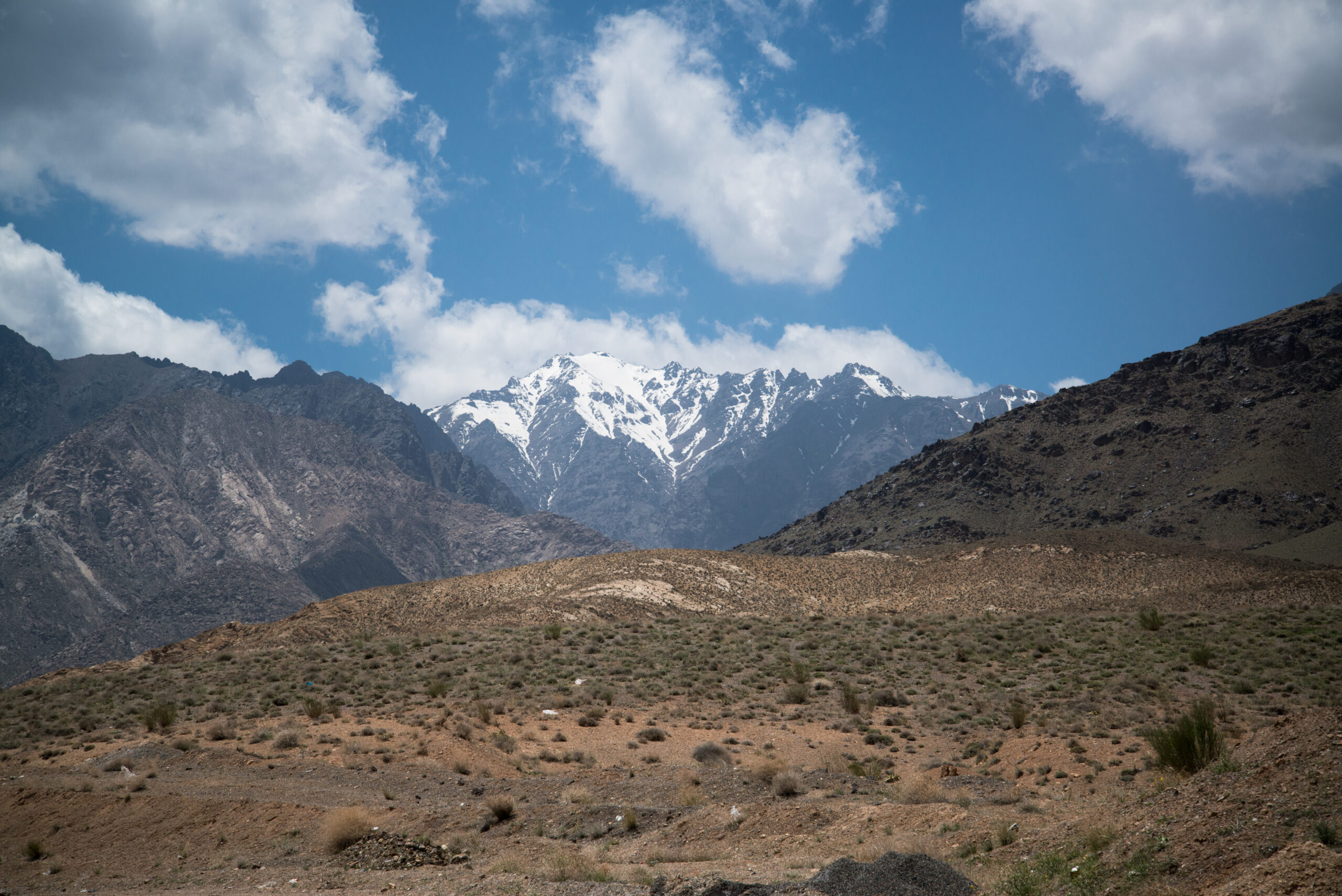
A mountain range in Iran near the city of Natanz. Satellite imagery from November 2025 shows continued construction at Pickaxe Mountain, a clandestine nuclear facility in this mountain range, where Iran has built a security wall around the perimeter and expanded tunnel networks. (Shutterstock/Pe3k)
Topic: Nuclear Proliferation Blog Brand: Energy World Region: Middle East Tags: Iran, Iran Nuclear Deal, Iran Nuclear Program, Islamic Republic, MENA, Nuclear Weapons, and United States Post Midnight Hammer Strikes: Iran’s Nuclear Reconstitution as Regime Survival February 17, 2026 By: Aidin Panahi, and Emily Day
Share
Iran’s crackdown on protests makes clear that its nuclear ambitions will be harder to negotiate away.
Six months after US and Israeli strikes devastated Iranian nuclear facilities in June 2025, satellite imagery reveals an accelerating pattern of reconstruction, concealment, and dispersion. But the strategic calculation for the regime has fundamentally shifted. The January 2026 massacre in Iran—where regime security forces killed tens of thousands of protesters across all 31 provinces—has exposed the Islamic Republic as a government willing to violently suppress its own population to maintain power. That domestic calculus is now inseparable from Tehran’s determination to reconstitute nuclear capability, which is increasingly central to the survival of the regime.
The protests that erupted on December 28, 2025, were not another round of limited demonstrations. Millions poured into the streets across Iran in what became the largest uprising since the 1979 Revolution. The initial spark for the protests was economic: a severe economic crisis, rising inflation, and the collapse of the Iranian currency triggered unrest beginning in Tehran’s Grand Bazaar before spreading across the country. But what began as protests over living standards quickly developed into protests against the clerical establishment. The regime’s response was a lethal crackdown on protestors. Supreme Leader Ali Khamenei ordered security forces“to crush the protests by any means necessary,” resulting in what activists estimate as more than 40,000 deaths, primarily concentrated in the massacres of January 8-9, 2026. Reports and videos show body bags stacked at Tehran’s Behesht Zahra Cemeterycomplex. The regime imposed a near-total internet blackout lasting over two weeks specifically to conceal the scale of killing from international observation.
Iran Was Already Structurally Weak
Iran has long struggled with a weakened economy. The Iranian rial has deteriorated for years under sanctions pressure, but its slide accelerated in December 2025, when the currency fell to roughly 1.4 million rials per US dollar. Since then, it has continued to decline, hitting a historic low of 1.63 million rials per US dollar on February 12. Additionally, inflation has remained above 40 percent, and food prices averaged 72 percent higher in 2025 than in 2024. Meanwhile, external economic pressure compounded vulnerabilities in the domestic economic environment. In September 2025, the United Nations imposed snapback sanctions on Iran for its “significant non-performance” related to its nuclear commitments. This has further isolated Iran economically and impacted its trade of oil, energy equipment, and certain metals, among other things.
Throughout 2025, the Iranian regime was militarily and geopolitically weakened as well. The collapse of the Assad regime in Syria, and attacks on its proxies within the region, including Hezbollah and Hamas, eroded Iran’s influence. The US bombings of nuclear facilities in June set back its nuclear program, and Israeli bombings killed military leaders, politicians, nuclear scientists, and damaged and destroyed air defense systems. At this time, Tehran could not rely on its closest allies, Russia and China, to materially help as Russia remained occupied with its invasion of Ukraine, and China focused on economic and geopolitical competition with the United States. Recent events also suggest that future aid from Russia and China is unlikely, as the US kidnapping of Venezuelan President Nicolás Maduro in January did not trigger meaningful Russian or Chinese intervention beyond rhetorical condemnation.
Nuclear Reconstitution as Regime Insurance
The recent protests and subsequent use of lethal force by the regime therefore changes the calculus of which nuclear negotiations can be pursued. For the Iranian leadership, the nuclear program is not a bargaining chip but is insurance to maintain power. And that survival calculus is now visible in how Tehran is rebuilding the program: concealed, hardened, and increasingly underground.
These reconstruction signals matter more as formal verification has collapsed. On October 18, 2025, Iran’s Ministry of Foreign Affairs officially announced that all obligations under the Joint Comprehensive Plan of Action had expired, formally ending all international oversight of Iran’s nuclear program. The International Atomic Energy Agency (IAEA), which has been working on re-entering the country following the June attacks, confirmed that it cannot verify enriched uranium stockpiles. Prior to the June attacks, the IAEA had confirmed that Iran had 440 kilograms of 60-percent highly enriched uranium (HEU)—sufficient for up to 10 nuclear weapons if weaponized. However, according to a February 2025 IAEA report, Iran has a total stockpile of 9,247 kilograms, which is enriched to various levels up to 60 percent. But without current inspector access, assessments rely entirely on satellite imagery and signals intelligence—inadequate for determining breakout timelines inside hardened underground facilities.
Satellite imagery from November 2025 shows continued construction at Pickaxe Mountain, a clandestine nuclear facility approximately one mile south of Natanz, where Iran has built a security wall around the perimeter and expanded tunnel networks. New satellite imagery from February 2026 shows Iran is actively hardening Pickaxe Mountain’s tunnel entrances against future airstrikes. Concrete is being poured over the western tunnel entrance extension, while the eastern entrance has been reinforced with rock and soil overburden. The Institute for Science and International Security reports that smaller vehicles and closed-roof vehicles observed near the entrances indicate Iran may be outfitting the tunnel complex’s interior, suggesting the facility is approaching operational readiness.
At Isfahan, satellite imagery from February 2026 shows all three tunnel entrances to the nuclear complex are now completely buried under soil—the middle and southern entrances are unrecognizable. The Institute for Science and International Security notes these preparations mirror defensive measures Iran took in the days before Operation Midnight Hammer, suggesting Tehran anticipates another strike. The backfilling would dampen potential airstrikes and obstruct special forces raids aimed at seizing the estimated 440 kilograms of 60-percent enriched uranium likely stored inside.
Recent imagery from Planet Labs shows roofs built over two damaged buildings at Isfahan and Natanz—the first major activity at any bombed nuclear site since June. These coverings serve a specific purpose: blocking satellites from seeing what’s happening on the ground, now the only monitoring method available since Iran has prevented IAEA inspector access.
Perhaps most concerning is satellite imagery that shows construction at Taleghan 2, a former AMAD Plan nuclear weapons development site, featuring what appears to be a long cylindrical chamber measuring 36 meters long and 12 meters in diameter—consistent with previous high-explosive test chambers Iran has built. Such infrastructure aligns with weaponization rather than energy development.
In this environment, intelligence access becomes decisive—and Tehran is moving to shut it down. This verification collapse coincides with systematic efforts to eliminate intelligence penetration. In June 2025, Iranian intelligence forces arrested over 700 people accused of spying for Israel. There are reports that Iran executed at least 1,000 people in 2025, creating a culture of fear within nuclear and military organizations.
Aligning US Policy to a Nuclear Program Built for Regime Survival
Current Western approaches operate without viable theories of change. Military strikes demonstrated the capacity to inflict damage but not to eliminate reconstitution or alter regime calculus. Sanctions pressure, while economically significant, appears not to have constrained nuclear investment, even amid inflation above 40 percent and massive unemployment. Diplomatic engagement remains constrained given the absence of verification and a relationship of zero trust between Iran and the United States.
Taken together—repression at scale, concealment, and verification collapse—now define the operating environment shaping Iran’s nuclear trajectory. The January 2026 massacres reinforce the view among many Iranian dissidents that the regime is unwilling to reform or moderate and therefore cannot negotiate in good faith. The same decision-makers who ordered live fire into crowds will not voluntarily surrender nuclear capability. For Tehran’s leadership, the nuclear program and regime survival are inseparable.
Western policy must align with this reality. Supporting the Iranian people’s demand for regime change is recognition that millions of Iranians have already chosen this path. Effective policy requires sustained procurement disruption focused on supply chain chokepoints, the restoration of verification for sanctions relief, and regional intelligence coordination. However, the United States must walk a careful path while supporting the Iranian people. Future US involvement should be calibrated, focused on deterring further repression and constraining the regime’s capacity for violence. This approach aligns with President Trump’s statement that “help is on the way” for Iranian protesters. The United States does not need boots on the ground in Iran. External pressure can help shape the strategic environment, but lasting political change will be driven from within.
Technical assessments suggest Iran can restore significant enrichment capacity within 12-18 months if current reconstruction continues. Intelligence assessments from July 2025 placed post-strike breakout timelines at one to three months, but continued reconstruction could return those windows to one to two weeks by mid-2026. At that point, the regime would achieve de facto nuclear status without formal weaponization—sufficient enriched material and delivery systems that create strategic ambiguity exploitable for coercive diplomacy.
Iran appears prepared to continue enduring economic pain and international isolation to restore its nuclear program. Policymakers must consider whether to accept the emergence of a nuclear-threshold Iran governed by a leadership that has proved its willingness to use extreme force to maintain power or pursue strategies that will meaningfully alter that trajectory.
About the Authors: Dr. Aidin Panahi and Emily Day
Dr. Aidin Panahi is an energy expert specializing in industrial policy, energy systems, and national energy security. He earned his Ph.D. in Mechanical Engineering from Northeastern University and completed his postdoctoral research at the Massachusetts Institute of Technology (MIT). He has taught at several institutions, including Harvard University, and holds multiple patents in energy technologies. Dr. Panahi has also provided research and advisory support to the US Department of Energy. Follow him on X: @Aidin_FreeIran.
Emily Day is an experienced researcher, writer, and editor with expertise in geopolitics, nuclear energy, and global security. She is an associate editor of Energy World and Techland at The National Interest and a senior research associate at Longview Global Advisors, where she provides insights on global political and economic trends with a specialization in utilities, risk, sustainability, and technology. She was previously a Della Ratta Energy and Global Security Fellow at the Partnership for Global Security.
The post Post Midnight Hammer Strikes: Iran’s Nuclear Reconstitution as Regime Survival appeared first on The National Interest.
Источник: nationalinterest.org