
«Данное сообщение (материал) создано и (или) распространено иностранным средством массовой информации, выполняющим функции иностранного агента, и (или) российским юридическим лицом, выполняющим функции иностранного агента»
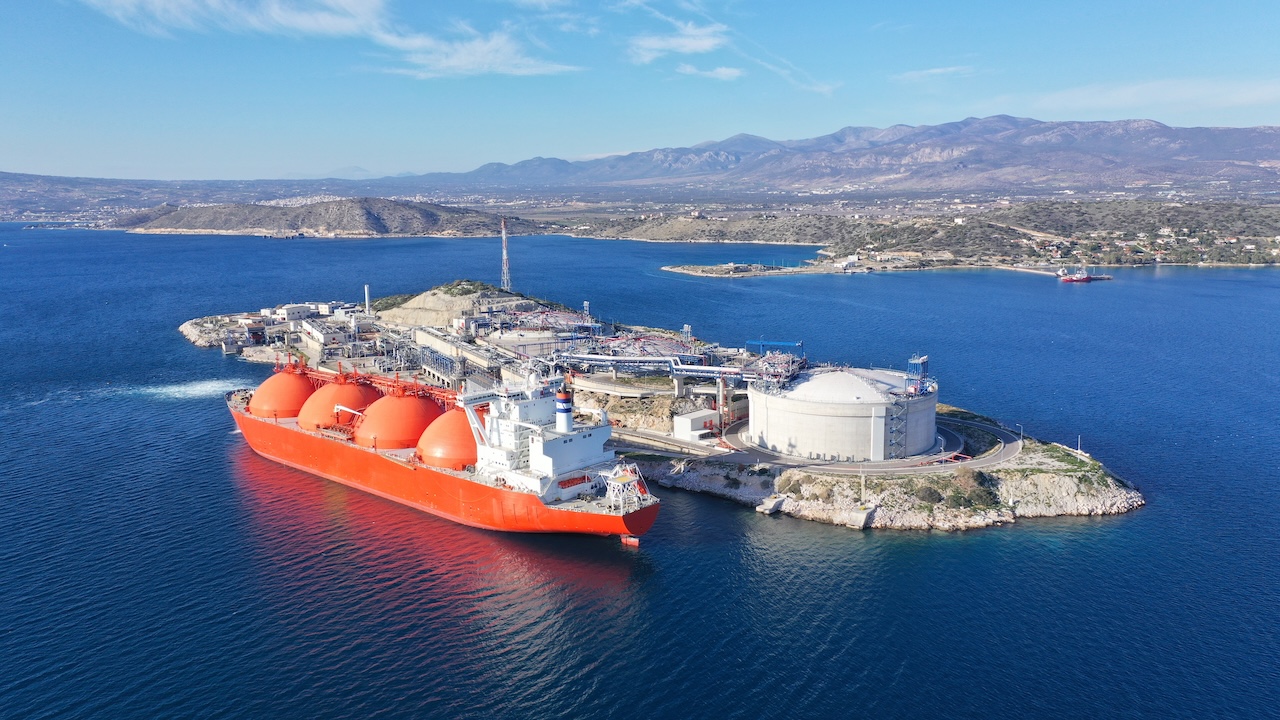
An LNG tanker anchored in Greece. The United States has been shipping LNG to Europe since the Russian invasion of Ukraine to help the continent diversify its energy requirements away from Russia. (Shutterstock/Aerial-motion)
Topic: Oil and Gas, and Trade Blog Brand: Energy World Region: Americas, and Europe Tags: China, Energy Security, European Union (EU), Liquefied Natural Gas (LNG), Munich Security Conference, NATO, Russia, Ukraine War, and United States No Easy Solutions to Europe’s Geopolitical Trilemma February 17, 2026 By: Greg Pollock, and Joshua Busby
Share
In seeking defense, economic, and energy autonomy, Europe must diversify and hedge against Russia, China, and an increasingly unpredictable United States.
For the past 75 years, the primary concern for European security has been the threat posed by the Soviet Union and its Russian successor state. As the North Atlantic Treaty Organization’s (NATO) first Secretary General, Lord Ismay, said back in the 1950s, NATO’s purpose was to “Keep the Russians out, the Americans in, and the Germans down.” But times have changed. President Donald Trump’s efforts to take Greenland from Denmark may have culminated in a dramatic climbdown at Davos, but the episode underscored the incredible pressures Europe faces—not just from Russia, but from the United States and China as well. Europe’s geostrategic position is now under threat in ways the European Union (EU) has never faced since coming into being in late 1993, and these concerns were at the center of discussions at the Munich Security Conference this weekend.
Breaking Free from Russia But Becoming Dependent on America
Russia’s full-scale invasion of Ukraine in 2022, which still threatens to metastasize and spill over into the rest of Europe, drove Europe to reduce its vulnerability to energy coercion by switching from Russian piped gas to liquified natural gas (LNG), much of it imported from the United States. Europe reduced its dependence on Russian energy significantly over the past three years and, barring an unexpected change of government in Moscow and a sudden end to Russia’s war of aggression in Ukraine, it is difficult to imagine Europe returning to its prior state of dependence on Russian energy. The EU currently intends to phase out all Russian gas imports by the end of 2027.
Surging liquefied natural gas (LNG) from the United States to Europe to avoid energy shortfalls and widespread societal disruption was a close-run thing, aided in part by back-to-back mild winters, but the curtailment of Russian energy exports to Europe seemed beneficial to both sides of the Atlantic. However, with Donald Trump back in power, Europe now faces growing pressure from the United States as well—not only to surrender Danish sovereignty, but also to increase its defense spending and forgo its clean energy commitments. This combination of pressures puts Europe in a terrible bind.
Europe knows climate change is a destabilizing force; European governments mobilized their militaries to support disaster response operations nearly 30 times in 2024 and 2025, and European leaders recognize that the threat of climate change requires transitioning to clean energy. However, much of what remains of Europe’s industrial sector, many of its home heating systems, its auto sector, and its military capabilities all still rely on fossil fuels. LNG imports from the United States now constitute 57 percent of European needs, and the EU has pledged to import $250 billion in natural gas and nuclear technology as part of the trade deal it signed with the United States last year. Will Washington abide by that agreement, or will it look to energy supplies and additional tariffs as a way to apply renewed pressure on Europe, whether over Greenland or some new grievance?
The political machinations within the transatlantic relationship are now more uncertain than ever, but what is clear is that the strategic challenge for Europe is to determine how it can keep its medium-term conversion to a more self-reliant, renewable-based energy mix on track even as it depends on energy imports from an increasingly bullying United States in the short term.
Developing European Strategic Autonomy
To navigate this geopolitical moment and begin inching towards a greater sense of “strategic autonomy,” Europe will need to pursue multiple objectives at once. For now, it should sustain its imports of both US energy and defense matériel to placate the White House even as it starts building up some semblance of an independent deterrence capability vis-à-vis Russia. Given Washington’s wobbling commitment to collective defense as embodied in Article Five of the North Atlantic Treaty, Europe is rightly taking steps to develop its own defense industrial base, but these efforts will take time to bear fruit, particularly with respect to the “enabling capabilities” such as strategic airlift and air-to-air refueling for which NATO still largely relies on the United States.
Europe will also want to show Washington that it has other options, geopolitically speaking, which seemed to be the central message of the recent trade deals between Europe and India, as well as the pending agreement with the South American trading bloc (MERCOSUR). The EU, like Canada, is also exploring closer ties to China. The EU recently agreed to reduce tariffs on Chinese electric vehicle imports in exchange for voluntary export restraints and minimum import prices, with the expectation that Chinese carmakers will be incentivized to manufacture vehicles in Europe and pursue joint ventures with European automakers.
Europe’s China Hedge
Of course, increasing ties with China poses risks of its own. The Chinese Communist Party is an authoritarian regime that has no regard for European values and has demonstrated its willingness to use state subsidies and intellectual property theft to make China a world-leading manufacturing powerhouse at the expense of other countries, including many in Europe. Europe already relies on Chinese imports of solar panels and other technologies to support its clean energy transition, and China’s manufacturing dominance bears the potential to undermine the European auto sector and its wider industrial capacity.
Europe should be very careful about how deeply it engages with China, as the economic impact from that decision could ultimately destroy the very foundations of national-level political support for the entire European project. Europe will need to ensure that any Chinese investment in the auto sector brings local employment, builds regional supply chains, includes technology transfer, and provides for data security.
How Europe Might Push Back Against Washington
In the search for some kind of leverage over mercurial US decision-making, some European analysts have suggested that Europe could make it harder or more expensive for the United States to keep its military bases in Europe. However, that likely would only give President Trump an excuse to withdraw US troops from Europe, potentially making its security vulnerability to Russia even more acute. Others have suggested that Europeans could refuse American aircraft the ability to refuel in Europe or restrict US military over-flight of European airspace. However, these are extraordinary measures that Europeans should only contemplate if faced with an imminent US military threat, in Greenland or elsewhere.
Europe has economic cards to play as well, including the European Union’s anti-coercion mechanism, which could reduce US access to European markets and exclude US firms from valuable European procurement contracts, especially in the defense and tech sectors. This so-called “trade bazooka,” which was envisioned as a potential counter-China instrument, could be a powerful weapon, but deploying it would require considerable internal agreement across the EU.
For now, Europe should resist the temptation to take steps that may further inflame its relationship with the Trump administration. And rather than hastily opening the continent to enduring Chinese political and economic influence, Europe would be better served by thinking about its engagement with China as a near-term hedge against the risk that the United States doesn’t return to the status quo ante with respect to its view of Europe in 2028, as it did, at least temporarily, in 2020.
Thankfully for Europe, it is wealthy enough to continue restricting its imports of Russian energy, build up its own defense industrial base, maintain its support for Ukraine, and continue its trajectory toward a clean energy future—even as it resists growing economic coercion from both the United States and China—but only if it can summon the unity and political will to do so. As last weekend’s Munich Security Conference illustrated, balancing these imperatives has become the generational challenge for Europe’s leaders. For now, the jury is still out on whether Europe can do what is required to face down this emerging geopolitical trilemma and preserve both its prosperity and its territorial integrity in these turbulent times.
About the Authors: Greg Pollock and Joshua Busby
Greg Pollock is a senior research fellow at the Center for Climate & Security and an adjunct professor at Georgetown University, where he teaches graduate students about national security risks. He served previously in a series of leadership positions in the Office of the US Secretary of Defense, most recently as the acting deputy assistant secretary of defense for Arctic and global resilience policy.
Joshua Busby is a professor at the LBJ School of Public Affairs at the University of Texas at Austin. From 2021 to 2023, he served as a senior climate advisor at the US Department of Defense. He writes on the intersection of climate, energy, and geopolitics. His book States and Nature: The Effects of Climate Change on Security won the 2026 Grawemeyer Award for Ideas Advancing World Order.
The post No Easy Solutions to Europe’s Geopolitical Trilemma appeared first on The National Interest.
Источник: nationalinterest.org