
«Данное сообщение (материал) создано и (или) распространено иностранным средством массовой информации, выполняющим функции иностранного агента, и (или) российским юридическим лицом, выполняющим функции иностранного агента»
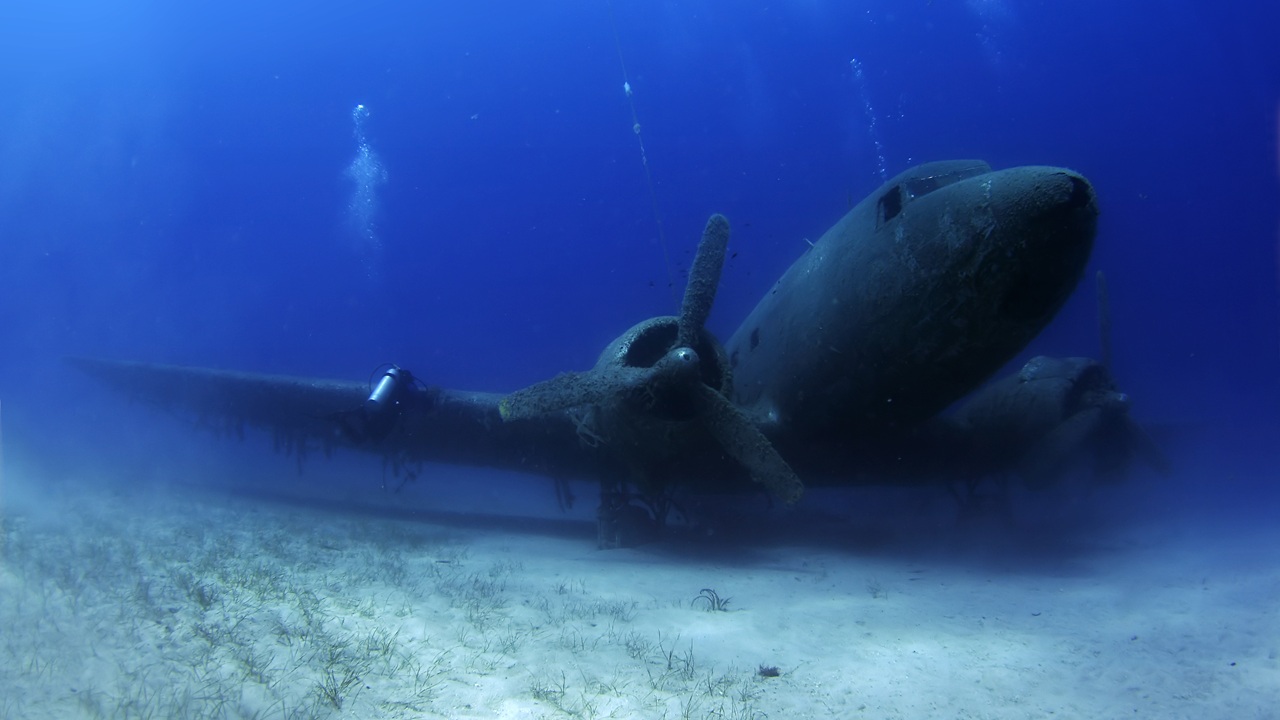
An aged Dakota propeller aircraft submerged underwater. (Shutterstock/sacit u)
Topic: Naval Warfare Blog Brand: The Buzz Region: Asia Tags: Aircraft Carriers, China, Fighter Jets, People’s Liberation Army Navy, United States, and US Navy If China Loses a Plane at Sea, Could the US Recover It? February 19, 2026 By: Peter Suciu
Share
The United States has extensive experience in maritime salvage operations—recovering planes lost from the decks of aircraft carriers during mishaps at sea. China does not.
The International Institute for Strategic Studies (IISS), a Washington, DC-based think tank, warned this week that China was able to launch nuclear-powered submarines faster than the United States. This reporting has ominous consequences for the US Navy, which could lose a significant source of its sea-power advantage over time.
However, there is still one area in which the US maintains an advantage: salvage operations, including those involving carrier-based aircraft.
In December, the United States Navy successfully recovered both an F/A-18F Super Hornet multirole jet fighter and an MH-60R Seahawk helicopter in the South China Sea. Those two aircraft were lost in separate incidents, just 30 minutes apart, while operating from the nuclear-powered supercarrier USS Nimitz (CVN-68) in October.
“This recovery was a true Navy team effort across CTF 73 (Command, Task Force 73), SUPSALV (Salvage and Diving), Task Force 75, HSM 73, VFA 22, and our Mobile Diving and Salvage Unit,” said Lt. Cmdr. Christopher Andersen, the CTF 73 officer who led the salvage mission in December. “Everyone involved brought critical expertise, ensuring we could safely and successfully bring these aircraft back under US custody. This operation highlights the importance of naval integration, readiness, and the unmatched capability of our salvage and diving teams.”
Another F/A-18E was salvaged from the Ionian Sea by TF 68 and SUPSALV in August 2022 after it blew overboard the USS Harry S. Truman in the Mediterranean Sea a month earlier. The aircraft was recovered from a depth of approximately 9,500 feet, with the teams employing a CURV-21 remotely operated vehicle.
Mishaps Will Happen—and When They Do, China Won’t Be Prepared
An unspoken truth about carrier operations is that mishaps will occur and aircraft will end up “in the drink.” These incidents, while expensive and frustrating for any navy involved, are essentially unavoidable.
To make matters worse, the aircraft involved must be recovered in order to prevent a great power adversary from dredging them up instead.
The South China Morning Post, citing the Chinese military publication Shipborne Weapons, warned that Beijing now “risks exposing sensitive military technology if a carrier-borne aircraft crashes and the PLA Navy fails to secure or salvage the wreckage before rival forces reach the site.”
Beyond exposing its capabilities or other sensitive details, a lost Chinese plane may “carry important classified weapons and avionics information from various countries.” That technology could then be “reverse-analyzed” by the United States.
A particular risk for China is that its advanced aircraft carriers will be deployed well beyond China’s coastal waters. Unlike the US Navy, the People’s Liberation Army Navy (PLAN) has little experience in these waters, and few resources to call on in the event of a lost plane. A mishap involving an aircraft in distant waters could result in China being unable to recover the asset.
The PLAN rarely discloses information about accidents or other mishaps during training operations. However, Chinese state media did confirm in 2014 that two PLA Naval Air Force (PLANAF) pilots were killed during testing of a J-15 Flying Shark jet fighter from the Type 001 CNS Liaoning, the People’s Liberation Army Navy’s (PLAN’s) first aircraft carrier.
“Beijing has also not disclosed any details of carrier-based aircraft salvage operations,” the SCMP added. The particular J-15 could likely be at the bottom of the waters off China.
China Can Recover Lost Aircraft in Its Own Waters
China has some experience in conducting salvage operations in its littoral (near-shore) waters, which land-based systems can support. China has near absolute control of its littoral waters, which are typically less than 200 meters (656 feet) deep.
Sea control and location are two of the primary concerns in recovery missions, according to the US Navy. The further from Chinese waters, the more complicated the issue becomes.
China lacks the equipment to locate a lost aircraft in the open ocean and is unlikely to achieve the same level of control.
“If effective control could not be achieved in the distant seas, a hard-kill plan should be in place,” the Chinese report suggested. That could include the use of “depth charges or specialised uncrewed underwater vehicles,” which could thoroughly destroy critical parts of the wreckage and prevent technology from being compromised.”
What Does It Take to Recover a Sunken Aircraft?
Even as China operates three Type 926 salvage-and-rescue ships and a pair of submarines designed for underwater recoveries, it still lacks the underwater robots and other systems likely required for successful operations. The US has multiple three-robotic systems, including the Deep Drone 8000, the MR2 Hydros, and the CURV-21, with the latter capable of conducting missions at a depth of 6,000 meters (19,685 feet). The US also has advanced sensors and detection systems.
The report noted that the “US possesses the TPL-25 sonar locator and the Hugin 54 underwater searcher, both of which are 6,000-metre class. The TPL-25 sonar locator took part in the salvage operation of a crashed UK F-35B in 2021.”
Finally, the Chinese military publication added that the PLAN should consider deploying salvage ships “near its aircraft carriers during routine operations.” Although the United States Navy’s carrier strike groups (CSGs) do not need to do so because they maintain strong maritime control, the PLAN is unable to maintain the same level of control.
Instead, the PLAN may need to take a ‘prepare for the worst’ mindset.
“Delaying the salvage operation will also result in missed opportunities and increase the difficulty of the operation.”
About the Author: Peter Suciu
Peter Suciu has contributed over 3,200 published pieces to more than four dozen magazines and websites over a 30-year career in journalism. He regularly writes about military hardware, firearms history, cybersecurity, politics, and international affairs. Peter is also a contributing writer for Forbes and Clearance Jobs. He is based in Michigan. You can follow him on Twitter: @PeterSuciu. You can email the author: Editor@nationalinterest.org.
The post If China Loses a Plane at Sea, Could the US Recover It? appeared first on The National Interest.
Источник: nationalinterest.org