
«Данное сообщение (материал) создано и (или) распространено иностранным средством массовой информации, выполняющим функции иностранного агента, и (или) российским юридическим лицом, выполняющим функции иностранного агента»
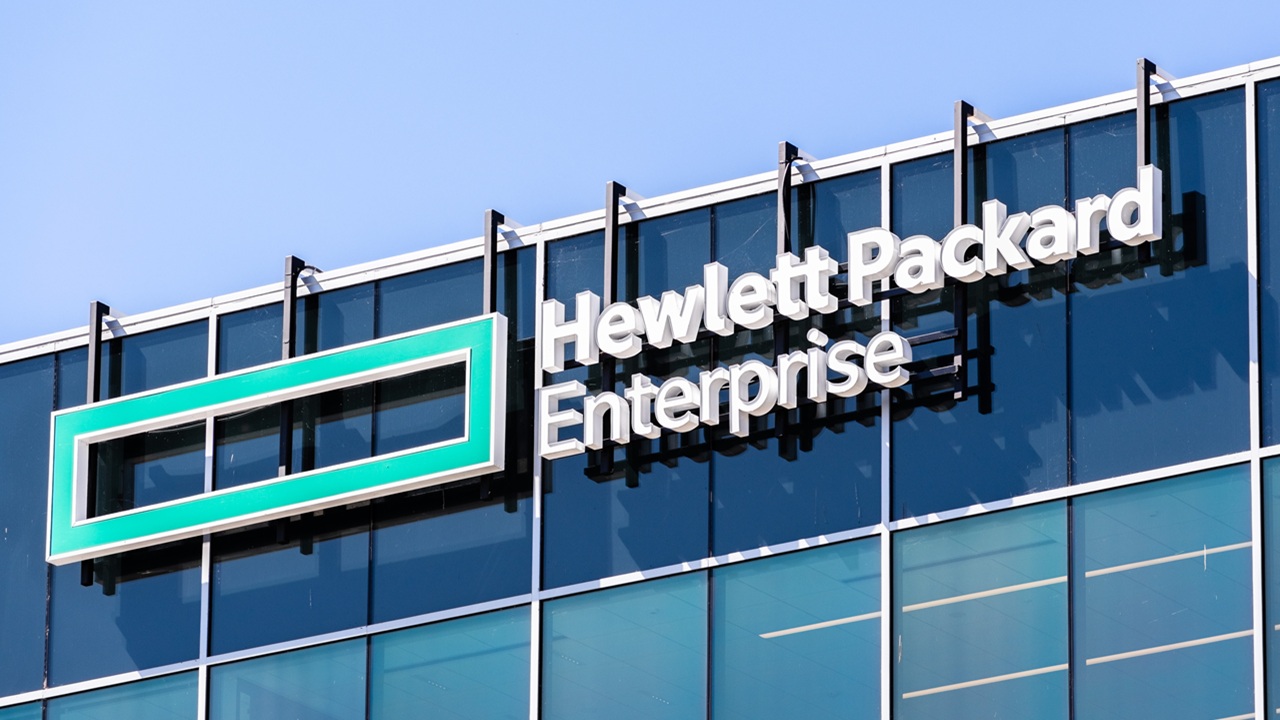
The exterior of Hewlett Packard Enterprise’s (HPE) corporate headquarters in San Jose, California. (Shutterstock/Sundry Photography)
Topic: Congress, and Digital Infrastructure Blog Brand: The Buzz Region: Americas Tags: China, Hewlett Packard, North America, Nuclear Weapons, Telecommunications, and United States How Partisanship and Lawfare Are Undermining US National Security February 16, 2026 By: David Sauer
Share
The United States’ existing legal framework and political atmosphere makes it all but impossible to build a coherent industrial policy.
On February 6, the United States accused China of carrying out a secret nuclear test in 2020. On February 5, the last remaining US–Russia arms control treaty expired. These two events further highlight the collapse of the “rules-based international order” in global politics.
What replaces the collapsing global international security structure will be decided by raw national power—industrial, technological, military and political. It will not be decided at international disarmament conferences. China and Russia both understand this. America does not, or pretends not to. While Beijing builds missile silos, massively modernizes its nuclear forces, and quietly probes the limits of international monitoring, Washington is litigating itself into paralysis, aided by partisan division.
Partisan Division Undermines US National Security
A serious threat to American power today is the growing habit of turning every strategic decision into a courtroom brawl. Domestic lawfare has become a substitute for national security strategy.
The nuclear issue makes the difference between the Chinese and the American approaches painfully clear. Under the iron grip of Chinese President Xi Jinping, the Chinese communist regime has vastly expanded China’s nuclear arsenal. This expansion is not defensive, but aspirational; Beijing wants nuclear parity with the United States to use as political leverage, without responsibly discussing its growing nuclear force and its opaque nuclear doctrine.
Even more worryingly, China’s nuclear force expansion is being conducted in secret, without visibility for the United States. This makes it impossible for Washington and Beijing to achieve the nuclear stability that the United States tenuously kept with the Soviet Union throughout the Cold War.
Instead of confronting that reality, however, American politics reflexively turns inward. Every attempt to align industrial policy, technology policy, or national security priorities is immediately reframed in terms of partisan politics, and attacked by the opponents of the party that instigated it. The enemy in Washington is never the Chinese Communist Party. It is always the opposite political party.
The HPE-Juniper Deal Is a Case Study in Legal Paralysis
This reflex is not confined to national security issues. It has seemingly metastasized across the entire government.
Consider technology and infrastructure. Telecommunications, cloud computing, and AI-enabled networks are no longer neutral commercial sectors. They are vital components of national power. China treats them as such, pouring state capital into national champions and tying market access to political loyalty. The clearest example of this model in practice is Chinese tech giant Huawei, which has taken over much of the world’s telecom infrastructure through generous assistance from the Chinese government at each step. The United States, by contrast, treats these sectors as divorced from the geopolitical environment in which they operate.
This is the backdrop to the controversial ongoing merger between Hewlett Packard Enterprise and Juniper, two major American networking firms. The merger would bring them together, allowing them to build at scale and compete with Chinese giants like Huawei—strengthening U.S. capacity in 5G, cloud computing, and AI-driven networks.
On national security grounds, the intelligence community urged the Department of Justice to approve it, and it did so last year. However, in November 2025, a federal judge green-lighted individual states to intervene in the settlement, effectively ensuring that it would be delayed indefinitely.
The HPE–Juniper deal is only one example of a broader pattern. In the United States, strategic consolidation is viewed as inherently suspect. In the minds of many on Capitol Hill, scale is a vice, and national security considerations are a pretext for corporate greed rather than a legitimate concern to be met.
The deal is far from moribund: it will likely eventually pass, and the two companies will merge. But the costs of these types of interventions are real. They slow decisions and implementation of needed strategic policies. Most importantly, they signal to America’s adversaries that the United States can be weakened simply by exploiting its own internal divisions and taking advantage of its own relatively open legal processes. Antitrust legislation exists to protect competition and consumers—but in practice, it can have the effect of freezing American industry in place while foreign adversaries scale without restraint.
China is building. Russia is watching. The question is whether America can still act decisively to meet the challenges they pose by securing supply chains, scaling our industries, and ensuring we have the most powerful military to deter aggression. Lawfare can feel virtuous: it’s tidy, procedural, and emotionally satisfying. But it does not deter missiles, secure supply chains, or win technological races.
About the Author: David Sauer
David Sauer is a retired senior Central Intelligence Agency (CIA) officer who served as chief of station and deputy chief of station in multiple overseas command positions in East Asia and South Asia. He earned a Master’s degree in international security policy studies from the George Washington University and a Bachelor’s degree in Chemistry from Gustavus Adolphus College. Mr. Sauer is self-employed and writes and teaches about US national security issues.
The post How Partisanship and Lawfare Are Undermining US National Security appeared first on The National Interest.
Источник: nationalinterest.org