
«Данное сообщение (материал) создано и (или) распространено иностранным средством массовой информации, выполняющим функции иностранного агента, и (или) российским юридическим лицом, выполняющим функции иностранного агента»
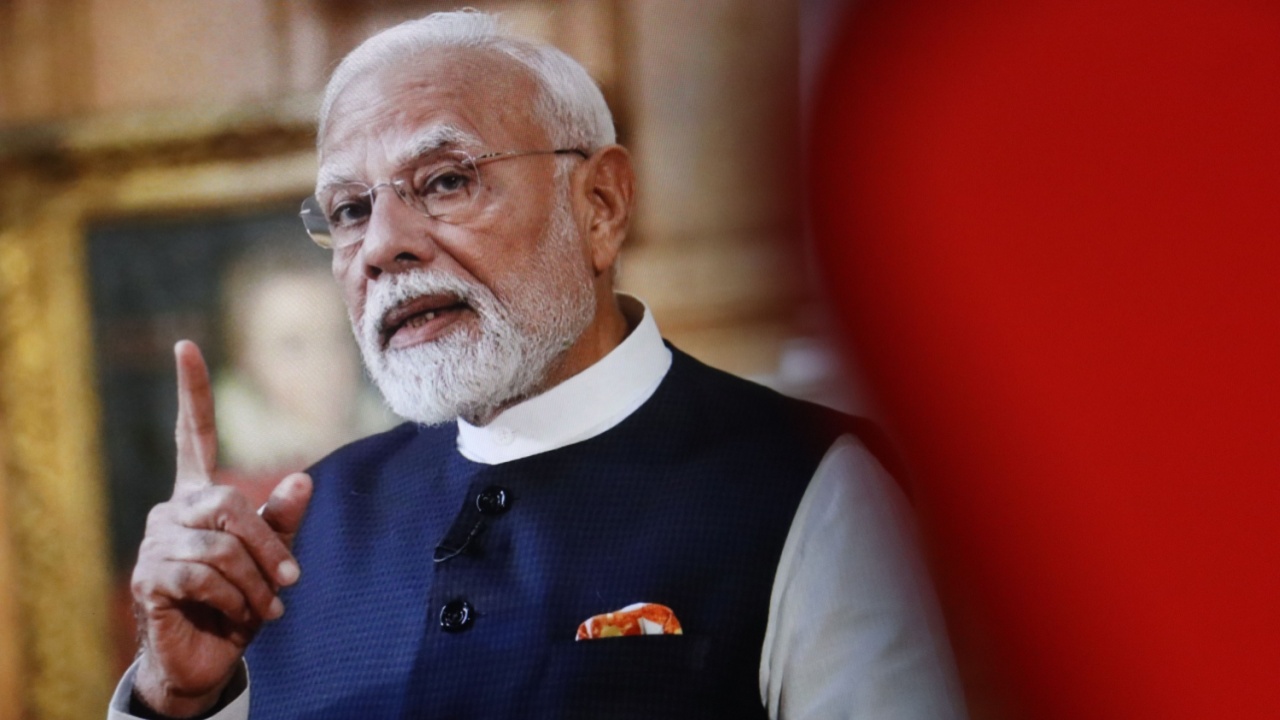
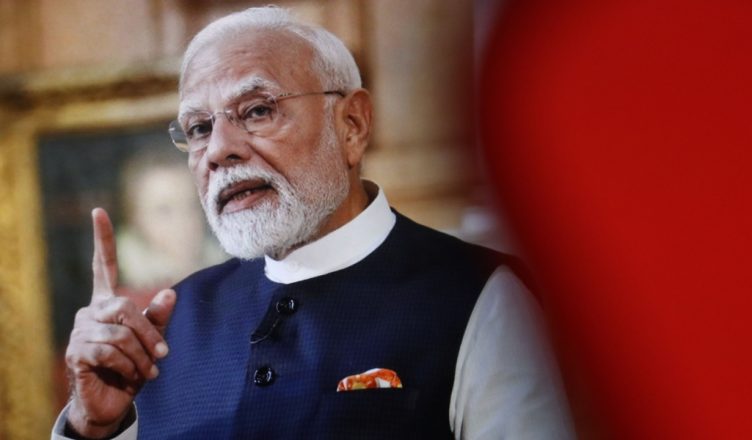
Indian prime minister Narendra Modi speaks to reporters on August 25, 2025. He has recently secured trade agreements with the EU and the United States. (Shutterstock/Press Connect)
Topic: Trade Blog Brand: Silk Road Rivalries Region: Americas, Asia, and Europe Tags: Canada, China, Donald Trump, European Union (EU), India, Narendra Modi, North America, Russia, and Tariffs How India Is Helping Europe and Canada De-Risk Their Economies February 10, 2026 By: Jianli Yang
Share
With the United States, China, and Russia creating a hostile world, Brussels and Canada have no choice but to deepen ties with India.
The United States and India have reached a long-anticipated trade deal, bringing a measure of relief to a relationship strained by tariffs, energy disputes, and strategic mistrust. Under the framework announced by President Donald Trump and Prime Minister Narendra Modi, Washington will lower its “reciprocal” tariff on Indian goods from 25 percent to 18 percent. At the same time, India has committed to reducing tariffs and non-tariff barriers on a wide range of American exports. The agreement arrests a clear downward spiral and signals that both sides still see strategic value in economic cooperation.
Trump, however, cast the deal in geopolitical terms that went well beyond trade. He claimed India had agreed to stop buying Russian oil and would instead purchase energy from the United States and, potentially, Venezuela. Modi conspicuously avoided confirming any such pledge, and Indian ministries, refiners, and private firms neither endorsed nor denied Trump’s assertion.
The silence was deliberate. New Delhi had little incentive to publicly contradict Trump, but even less reason to bind itself to a dramatic energy realignment. Trump’s pressure on India over Russian oil has grown noticeably restrained—especially when contrasted with his far harsher treatment of Europe over the last few months, which sits awkwardly alongside his own recent, non-hostile posture toward Vladimir Putin.
The timing of the US-India deal is revealing. It followed closely on the heels of a sweeping India-European Union free trade agreement, concluded after nearly 25 years of stalled negotiations. That pact eliminates or sharply reduces tariffs on most goods and creates one of the world’s largest trading blocs. Its sudden breakthrough owed less to a burst of EU-India enthusiasm than to Trump’s external pressure: his tariff threats, confrontational stance toward allies, and willingness to weaponize trade issues against Europe.
Across the Atlantic, European leaders are reassessing long-held assumptions. Faced with US tariff pressure and political estrangement, Europe’s most obvious economic alternative to the United States is China. That reality is reflected in the surge of high-level diplomacy. Leaders from France, Britain, Germany, and Spain have either recently traveled to Beijing or are preparing to do so, seeking market access and investment as Washington becomes more unpredictable.
Yet Europe’s turn toward China is deeply uneasy. For years, EU leaders have spoken of “de-risking” from China, citing supply-chain vulnerabilities, national security concerns, and Beijing’s alignment with Moscow. Closer trade ties revive those anxieties rather than resolve them. At home, European governments face criticism from voters and human rights groups who accuse leaders of prioritizing profits over democratic values. The charge that Europe is willing to overlook repression for commercial gain has become politically costly.
At the same time, Europe has not given up on the United States. Despite Trump’s warnings that closer ties with China could carry consequences—even as he explores transactional engagement with Beijing—European leaders still hope America will eventually re-emerge as a more predictable partner. Fully aligning with China would create long-term strategic liabilities that most European capitals remain unwilling to accept.
Caught between de-risking China and hedging against American volatility, Europe has turned to India as a strategic alternative. India offers scale without China’s level of geopolitical and normative baggage. It is not a substitute for the US security umbrella, nor a replica of China’s manufacturing ecosystem, but it represents a viable third pole in an increasingly fragmented global economy.
This logic extends beyond Europe. It is also visible in Canada’s evolving posture under Prime Minister Mark Carney. Carney has poignantly acknowledged the middle powers’ predicament. Canada’s cautious outreach to China reflects a strategy shared with Europe: diversify partnerships, reduce exposure to unilateral shocks, and preserve room for maneuver between Washington and Beijing.
Canada’s dilemma mirrors Europe’s. Relations with China remain fraught with security concerns and public mistrust, while reliance on the United States has become risky in an era of punitive tariffs and transactional alliances. Despite strained Canada-India relations in recent years, driven by diplomatic and security disputes, Ottawa may realistically follow Europe’s path and treat India not as a perfect values partner but as a pragmatic hedge.
With Europe and India sealing a trade pact, the United States and India reaching a framework deal, and Canada potentially moving in the same direction, an unintended architecture is emerging. India is becoming a bridge—commercial, strategic, and political—connecting both sides of the Atlantic. Ironically, under Trump’s foreign policy, Europe and North America may find themselves linked not directly, but through a partner thousands of miles away.
India’s suitability for this role is structural. Economically, it is rapidly expanding its manufacturing base, absorbing production that has been relocated from China as companies diversify their supply chains. Most iPhones sold in the United States are now made in India, a symbolic marker of global realignment. New budgetary commitments aim to turn India into a global manufacturing powerhouse, with heavy investment in semiconductors, electronics, biopharma, and rare-earth supply chains. India combines relatively low labor costs with improving legal infrastructure, technological capacity, and a vast domestic market.
Equally important, India offers something China cannot: democratic legitimacy. Its institutions are imperfect and contested, but they provide a shared political language with Europe and North America—elections, courts, and civil society—that lowers the political cost of cooperation. Demographically, India’s young, English-speaking workforce and growing purchasing power enhance its long-term appeal. Strategically, its rivalry with China and insistence on strategic autonomy align it more naturally with transatlantic interests than Beijing’s vision of authoritarian-led globalization.
India is not a flawless bridge. Its protectionist instincts, bureaucratic inertia, and insistence on autonomy will frustrate partners on both sides of the Atlantic. But in a global order characterized by disruption and distrust, India’s very flexibility—its ability to engage all sides without fully binding itself to any—may be its greatest asset. As Trump redraws alliances, antagonizes allies, and personalizes foreign policy, India has become the unlikely connective tissue holding together an increasingly divided Atlantic world—not by grand design, but by the vacuum left behind.
About the Author: Jianli Yang
Dr. Jianli Yang is a distinguished visiting fellow at the Center for National Interest and a columnist for National Review. He is the founder and president of the Citizen Power Initiatives for China and author of For Us, The Living: A Journey to Shine the Light on Truth and It’s Time for a Values-Based “Economic NATO.”He was a Tiananmen student leader and a political prisoner of China.
The post How India Is Helping Europe and Canada De-Risk Their Economies appeared first on The National Interest.
Источник: nationalinterest.org