
«Данное сообщение (материал) создано и (или) распространено иностранным средством массовой информации, выполняющим функции иностранного агента, и (или) российским юридическим лицом, выполняющим функции иностранного агента»
 Topic: Artificial Intelligence (AI), and Trade Blog Brand: Techland Region: Americas, and Asia Tags: China, Chips, Nvidia, Semiconductors, United States, and US-China Relations Beyond the Chips: A Better Strategy for AI Dominance February 9, 2026 By: Sharon Squassoni
Share
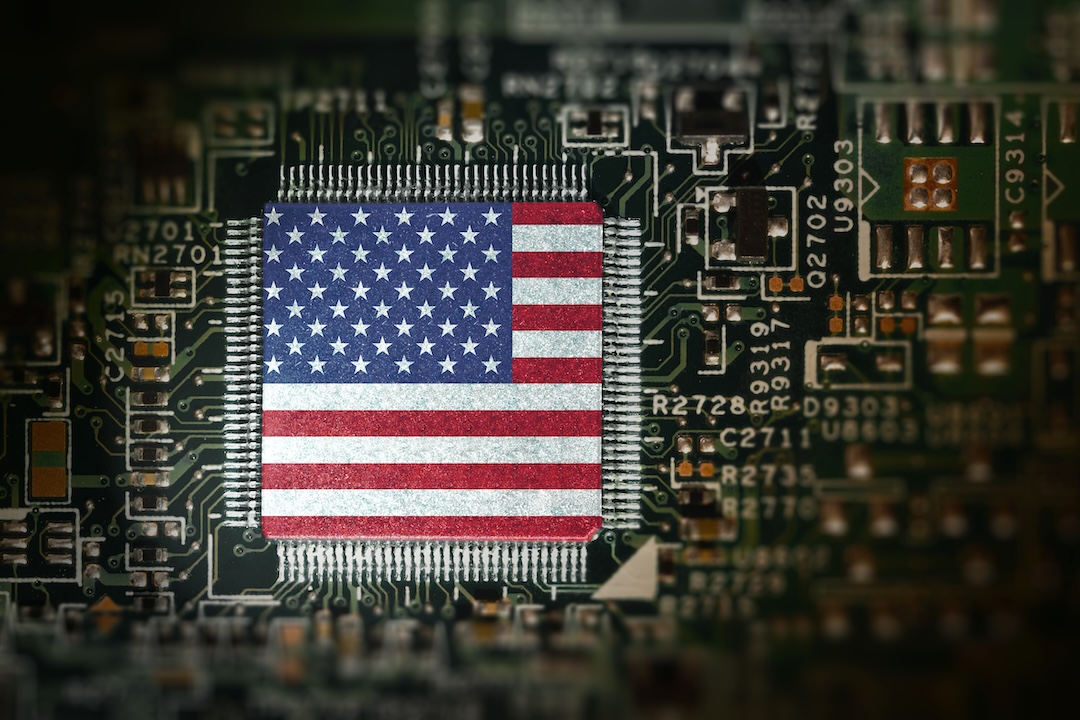
US efforts to restrict chip exports to China mask an important point: that AI leadership depends on dominating how the world builds, deploys, and governs AI.
The Department of Justice recently announced that its Operation Gatekeeper had helped dismantle a smuggling ring that had exported about $160 million worth of integrated circuits (semiconductor chips) to China in a six-month period in 2025. In describing the challenge, the US Attorney Nicholas J. Ganjei for the Southern District of Texas said, “These chips are the building blocks of [artificial intelligence] AI superiority and are integral to modern military applications. The country that controls these chips will control AI technology; the country that controls AI technology will control the future.”
Chips Enforcement Can’t Keep Pace with the Market
If so, the Trump administration should be worried. According to a 2025 Reuters report, nearly $1 billion worth of Nvidia AI chips entered China via black markets between April and July in 2025.
A few days after the arrests in Texas, President Donald Trump rolled back the Biden-era ban on exporting Nvidia’s second-best chip (the Graphics Processing Unit H200) to China. Perhaps he realized that despite significant effort, time, and money spent on enforcement, the administration’s ability to make a dent in chip smuggling has been marginal.
Even where chip smuggling has been dampened, China has sought other workarounds, such as renting supercomputer capabilities from offshore locations. Concerned about this, the House of Representatives introduced the Chip Security Act in May 2025, which would require location verification hardware for certain chips. In response, Nvidia developed software to geolocate its chips, but this would not have solved the problem of end users renting compute capability to offshore entities. More recently, the House passed the Remote Access Security Act (HR 2683), which seeks to close this loophole.
Why Supply Restrictions Miss the Point
These piecemeal efforts miss the point. In AI, it’s not the chips, it’s the people. Focusing on restricting supply rather than incentivizing demand will ultimately be misleading and counterproductive. That demand is not just for American hardware, but for software, models, and apps that rely on millions of users to test and perfect, and for rules to manage risks. When the United States focuses on controlling the supply of items like high-speed AI chips to China rather than on shaping demand, it fights a tactical, not a strategic war. Instead, achieving key national security imperatives such as promoting US AI leadership requires focusing on long-term, sustainable, and demand-driven solutions.
It remains to be seen whether the recent decision to open the spigot for H200 chips will dampen China’s demand for self-sufficiency. One thing is certain: it is unlikely to be the export equivalent of an open bar. The exports will be subject to conditions, including a 25 percent tariff and a case-by-case review. This could mean that China is able to buy far fewer H200 chips than it wants. For computing purposes, quantity has a quality all its own, and a “go-slow” strategy may ultimately force China to invest still more in building out its domestic supply chain. A long-term loss of China as a market—the second largest AI market globally—for US vendors would be very significant. For the time being, China seems to be encouraging imports, perhaps succumbing to pressure from its domestic companies, which have become dependent on US chips.
The AI Race Will Be Decided by Ecosystems
Some observers doubt China’s ability to truly catch up with the United States. They cite difficulties in integrating hardware and software, weaknesses in integrated circuit manufacturing, and low user familiarity with Chinese platforms. Others identify a massive influx of sophisticated US AI chips as solving the chip bottleneck that plagues China, potentially helping China move from having 1/20th of the US so-called compute power to as much as a fifth or third.
Focusing on arresting chip smugglers or physically tracking chip exports misses the larger point: leadership lies in innovation. Refusing to export certain capabilities may instead accelerate China’s self-sufficiency, discourage American innovation, drive venture capital to other countries, and ultimately hollow out the semiconductor leadership that took decades to build. The real contest will lie in winning allied markets, setting global AI standards, and ensuring American technology dominates how the world builds, deploys, and governs AI systems.
About the Author: Sharon Squassoni
Sharon Squassoni is a research professor at the Elliott School of International Affairs at George Washington University, where she focuses on nuclear weapons proliferation and arms control. While in the US government, she held senior positions at the State Department, the Arms Control and Disarmament Agency, and the Congressional Research Service.
Image: Tomas Ragina/shutterstock
The post Beyond the Chips: A Better Strategy for AI Dominance appeared first on The National Interest.
Источник: nationalinterest.org