
«Данное сообщение (материал) создано и (или) распространено иностранным средством массовой информации, выполняющим функции иностранного агента, и (или) российским юридическим лицом, выполняющим функции иностранного агента»
 Topic: Naval Warfare Blog Brand: The Buzz Region: Americas, and Arctic Tags: Alaska, Arctic Circle, Icebreakers, North America, United States, US Coast Guard, and Washington A Cold War Is Heating Up in the Arctic—but a Key US Military Base Is Still Frozen February 7, 2026 By: Peter Suciu
Share
The Coast Guard plans to open a $300 million icebreaker facility in Juneau, Alaska—but it is not clear exactly when.
Seattle is approximately 1,500 to 1,800 miles (2,400 to 2,900 km) from the Arctic region, yet it is where the United States Coast Guard currently bases its “fleet” of Arctic icebreakers. The Emerald City remains the closest major US port with the necessary industrial infrastructure to the Arctic, and provides specialized maintenance for the service’s heavy icebreakers.
The Pacific Northwest has been home to America’s icebreaker fleet since 1976. This month, the Coast Guard confirmed that it would invest $323 million to expand and modernize the base, supporting the growing fleet now under construction. The first Polar Security Cutter is now under construction in Mississippi, with delivery planned for 2030.
Within the next decade, the Coast Guard will operate 11 Arctic Security Cutters (ASCs) and three Polar Security Cutters, but not all the vessels will remain homeported in Seattle.
The Coast Guard Is Heading North to Alaska… Sooner or Later
Given the intensifying great-power competition in the Arctic, the United States Coast Guard, which in peacetime falls under the jurisdiction of the Department of Homeland Security (DHS), will base several ASCs in Alaska.
However, it remains unclear at this point which will be ready first—the base or the icebreakers!
In addition to the Seattle expansion, the Coast Guard has committed $300 million towards the construction of a new facility in Juneau, Alaska. Still, that facility won’t be completed until at least 2029, according to Commandant of the Coast Guard, Adm. Kevin Lunday, who testified to lawmakers on Thursday.
In his address to the United States Senate Subcommittee on Coast Guard, Maritime, and Fisheries, chaired by Senator Dan Sullivan (R-Alaska), Lunday confirmed that work is progressing, even though the original timeline called for the base to be ready in 2028.
“We’re moving quickly to be able to execute that funding and have that pier and infrastructure there ready by 2029,” Lunday told the lawmakers. He was recently confirmed to the position after President Donald Trump relieved Admiral Linda Fagan from the post last year.
The Coast Guard chief also couldn’t confirm how many medium icebreakers will be based at Juneau when the facility is finally completed.
“As (my team) develops options, one of the first ones that I want them to present among a range of options for consideration … is for homeporting of up to four icebreakers in Alaska,” Lunday explained. “Although we are still pending a decision, that’s clear guidance I’ve given to the team.”
The Coast Guard Is Expanding America’s Presence in the Arctic
The United States Coast Guard retains the only US surface presence in the Arctic. Still, it works closely with the US Northern Command and Alaskan Command to monitor foreign vessels operating in and near US waters, thereby supporting US homeland defense and security operations. Even as the ice has been melting in the Great White North, icebreakers are still required for America to maintain year-round access to what is likely to be an increasingly contested region.
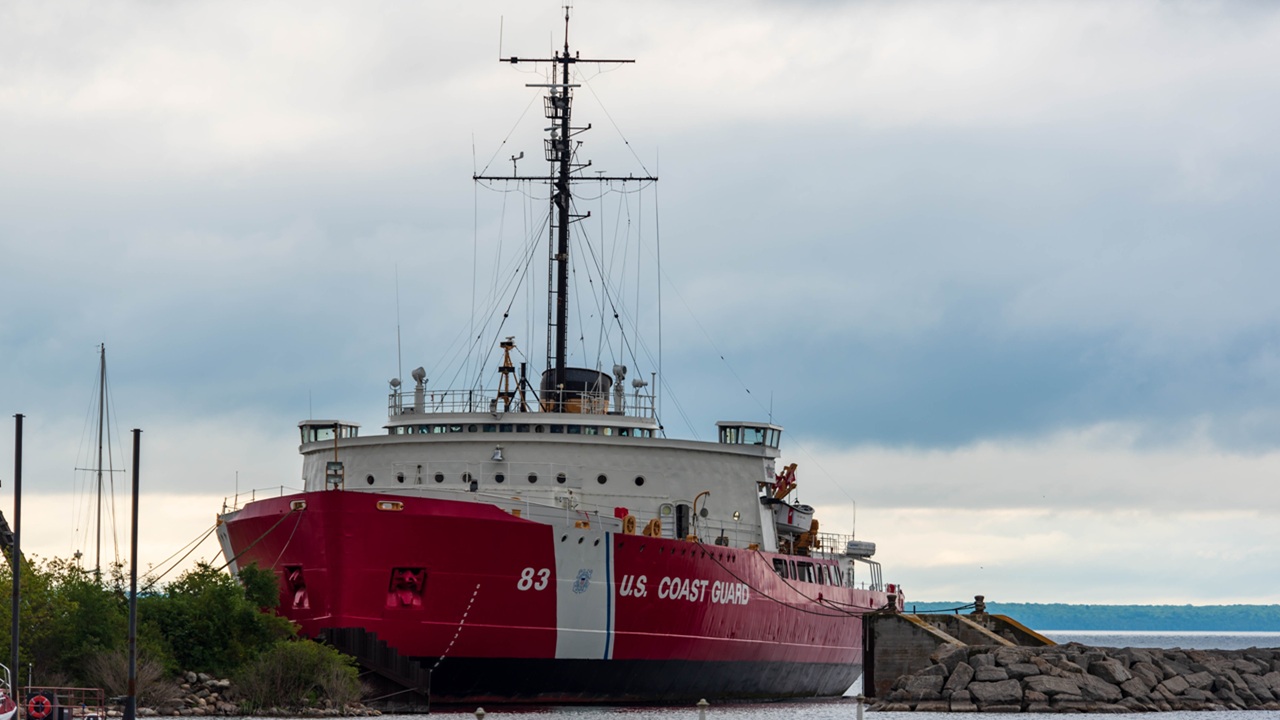
Last August, the US Coast Guard also commissioned the USCGC Storis, the former oilfield supply ship and icebreaking tug Aiviq. The ship spent the first half of last year undergoing modifications that enhanced its communication and defense capabilities. It will eventually be homeported out of Juneau—but it is still unclear exactly when this will happen.
About the Author: Peter Suciu
Peter Suciu has contributed over 3,200 published pieces to more than four dozen magazines and websites over a 30-year career in journalism. He regularly writes about military hardware, firearms history, cybersecurity, politics, and international affairs. Peter is also a contributing writer for Forbes and Clearance Jobs. He is based in Michigan. You can follow him on Twitter: @PeterSuciu. You can email the author: Editor@nationalinterest.org.
Image: Shutterstock / Focused Adventures.
The post A Cold War Is Heating Up in the Arctic—but a Key US Military Base Is Still Frozen appeared first on The National Interest.
Источник: nationalinterest.org