

«Данное сообщение (материал) создано и (или) распространено иностранным средством массовой информации, выполняющим функции иностранного агента, и (или) российским юридическим лицом, выполняющим функции иностранного агента»
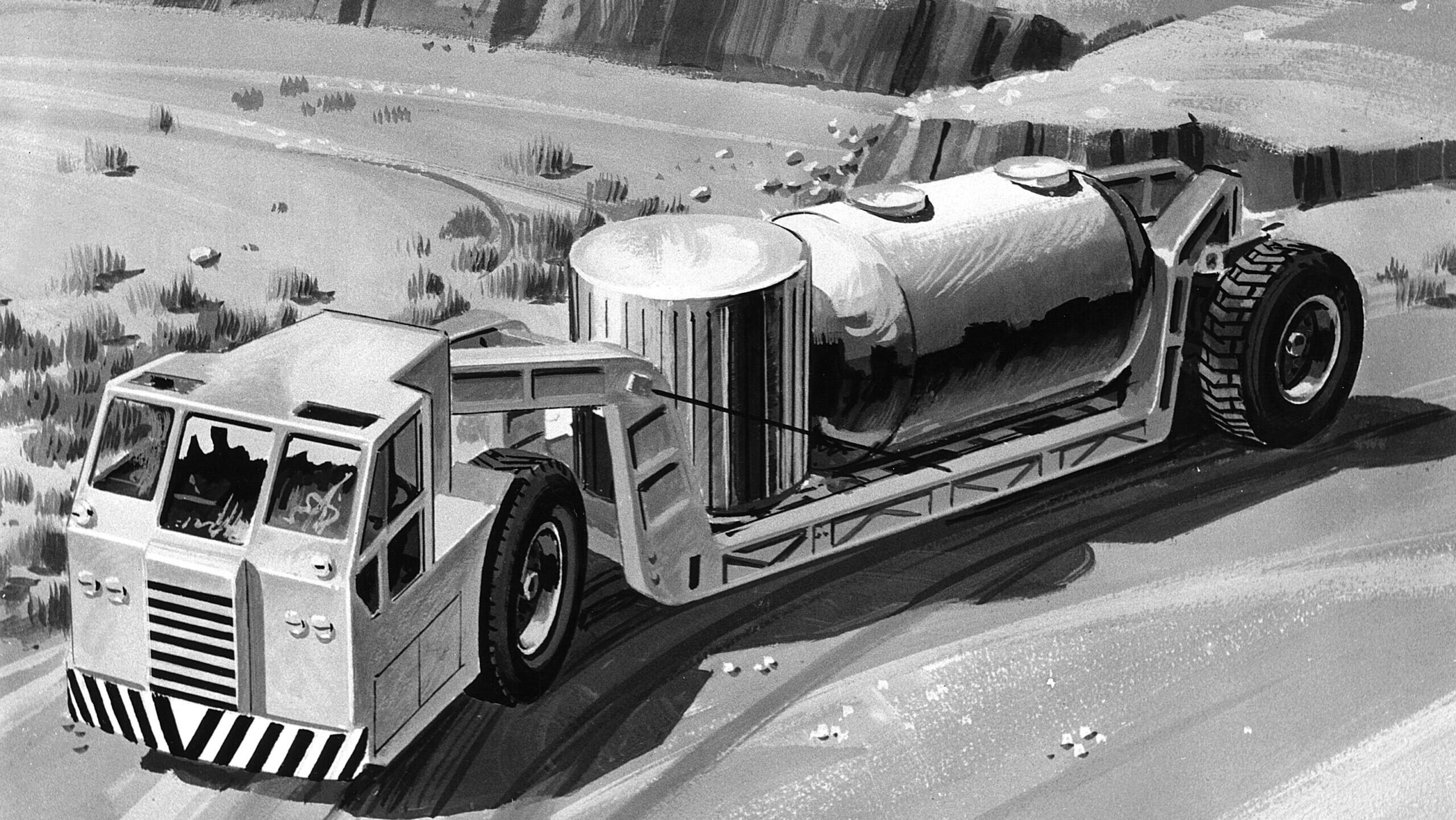
Artist’s illustration of a mobile microreactor. As warfare becomes increasingly electrified, advanced nuclear reactors could provide militaries with the reliable, resilient power needed to sustain operations. (Department of Energy)
Topic: Military Administration, and Nuclear Energy Blog Brand: Energy World Region: Asia, and North America Tags: Advanced Nuclear Reactors, China, Department of Defense (DoD), Energy Security, Iran War, Israel, Microreactors, Russia, Small Modular Reactors (SMRs), and United States Powering Future Conflicts: The Case for Going Nuclear May 17, 2026 By: Lami Kim
Share
As warfare becomes increasingly electrified, advanced nuclear reactors could provide militaries with the reliable, resilient power needed to sustain operations.
The Israeli Ministry of Defense has announced that Israel employed high-power laser systems to intercept 40 Hezbollah drones during the October 2024 Gaza war, marking the first official acknowledgment of the combat use of a directed-energy weapon, which is emerging as a promising low-cost air-defense option. In late April 2026, Israel deployed its 100-kilowatt Iron Beam laser system in the United Arab Emirates to support the country’s defense against Iran’s missiles and drones. Iran has also recently unveiled an updated version of its one-way attack drone, the Shahed-101, which uses an electric motor instead of a gasoline engine, making it quieter and more difficult to detect with acoustic sensors, thereby enhancing its stealth.
These emerging weapons systems—and modern military operations more broadly—are increasingly reliant on electricity. Improving the accuracy of artificial intelligence (AI) systems requires ongoing machine learning processes, often supported by energy-intensive data centers. Autonomous systems rely on modular batteries that must be regularly recharged in the field. Counter-drone operations are also shifting toward electronic warfare and directed-energy weapons, both of which require significant electrical power. In addition, the electrification of existing platforms, such as ground vehicles, is further increasing overall energy demand.
The Military’s Growing Need for Reliable Power
A central question, therefore, is how militaries can meet this growing demand and reliably power operations in both current and future conflicts.
Nuclear energy—in particular, advanced, small reactors—could form part of the solution. The US military is already planning to deploy nuclear reactors to support operations. In 2019, the US Department of Defense launched Project Pele “to design, build, and demonstrate a prototype mobile nuclear reactor within five years.” These portable microreactors are intended to generate between one and five megawatts (MWe) of electrical power, providing reliable energy for military operations in remote or contested environments.
In October 2025, the US Army announced the Janus Program, which aims to deploy microreactors capable of producing 10 to 20 MWe, with scalable output of up to 50 MWe across US military installations by 2030. Peak electricity demand at these installations is typically around 30 MWe and does not exceed 50 MWe. Small modular reactors (SMRs), which can generate up to 300 MWe, may exceed the needs of a typical military base. Nevertheless, in 2024, the United States Navy announced plans to explore SMRs, which could potentially supply electricity not only to military bases but also to surrounding communities.
Why Nuclear Energy Offers Strategic Advantages for the Military
Utilizing nuclear energy for military operations offers several advantages. First, it provides a reliable and abundant source of electricity without the need for frequent refueling. SMRs and microreactors typically use high-assay low-enriched uranium (HALEU) fuel, which is enriched between five and 20 percent of the U-235 isotope, rather than the low-enriched uranium (three to five percent) used in traditional large-scale nuclear power plants. The higher enrichment levels enable these reactors to operate for extended periods—potentially up to a decade—without refueling, representing a significant advantage over diesel-based systems that require constant fuel resupply.
Second, powering military operations with microreactors can enhance energy security. By operating independently of the civilian electricity grid, microreactors reduce vulnerability to both cyber and kinetic attacks on energy infrastructure, which are attractive targets in conflict, as their disruption can degrade military bases that depend on them, affecting command and control, communications, logistics, and ISR systems. Microreactors, if securely deployed with heavy shielding or hardened containment—such as deep burial or reinforced concrete structures—could provide a more resilient and continuous source of power. Moreover, reducing reliance on fossil fuels would lessen the military’s vulnerability to their supply disruptions.
Another advantage of using nuclear reactors for military operations is their mobility. Microreactors are compact enough to be transported by truck or aircraft and can be deployed to remote military bases where alternative power sources are limited, as well as to naval platforms. In February 2026, the United States demonstrated the air transport of a microreactor: a C-17 military aircraft airlifted a five-megawatt system and flew nearly 700 miles from California to Utah.
Theoretically, their mobility would also enable forward deployment on the battlefield, which could significantly enhance power projection by enabling the charging and operation of surveillance and attack systems without relying on vulnerable and logistically burdensome diesel fuel convoys. However, this introduces significant security risks that may limit their feasibility. While forward-deployed reactors would become attractive targets on the battlefield, they cannot rely on the same level of protection used in fixed facilities. If struck, these systems could result in radiological contamination, posing risks to personnel, operations, and the surrounding environment. Such risks suggest nuclear reactors are better suited for fixed military installations than battlefield deployment.
China and Russia Are Setting the Pace in Nuclear Energy
Given the strategic advantages offered by these advanced nuclear reactors, it is concerning from a military perspective that China and Russia are leading in this area. While neither has yet fielded microreactors, both are already operating SMRs. Russia operates the world’s first SMR—the KLT-40S, a marine-based SMR deployed on a floating nuclear power plant—while China operates the world’s first land-based SMR, the 210 MWe High-Temperature Gas-Cooled Reactor-Pebble-bed Module (HTR-PM).
Some argue that China may be “10 to 15 years ahead of the United States” in its ability to deploy advanced reactors at scale. Falling behind China and Russia in the development and deployment of advanced reactors is therefore not only an economic concern, but also a potential challenge to military capability and power projection. In this light, the US military’s push to accelerate the deployment of advanced nuclear reactors is a strategic imperative.
Energy Security Will Shape Allied Military Readiness
Other countries in Europe and Asia will also need to consider nuclear energy as a source of power for military operations. The current crisis in the Strait of Hormuz underscores how dependence on oil and gas can pose serious risks to their economies. Imagine their adversaries exploiting such energy vulnerabilities to take more aggressive action that is supercharged by AI and electric weapons systems. This is not a far-fetched scenario. It is increasingly plausible in a world where great power competition and international conflicts are becoming more normalized. For energy-constrained countries in Europe and Asia facing acute security threats, preparing for such contingencies will be essential. A key part of that preparation will be ensuring secure electricity supplies.
Advanced nuclear reactor technology requires further technological maturation before it can be widely deployed. Nevertheless, addressing how to overcome these constraints and ensure a sufficient, reliable energy supply should be a central consideration in preparing for future conflicts that cannot be delayed. Ultimately, the outcome of war may depend not only on who can produce more weapons systems, but also on who can reliably power them.
About the Author: Lami Kim
Lami Kim is the inaugural Korea chair at the International Institute for Strategic Studies (IISS), where she researches military and defense issues on the Korean Peninsula with a focus on emerging technologies and defense innovation. Before this role, she served at the US Department of Defense. She is also the author of Everything but the Bomb: South Korea’s Nuclear Hedging Strategy, forthcoming from Stanford University Press. She holds a PhD degree from the Fletcher School of Law and Diplomacy at Tufts University and a master’s degree from Harvard University.
The post Powering Future Conflicts: The Case for Going Nuclear appeared first on The National Interest.
Источник: nationalinterest.org