

«Данное сообщение (материал) создано и (или) распространено иностранным средством массовой информации, выполняющим функции иностранного агента, и (или) российским юридическим лицом, выполняющим функции иностранного агента»
 Topic: Air Warfare, and Military Administration Blog Brand: The Buzz Region: Americas Tags: Aircraft, B-21 Raider, F-47, Military Budget, North America, Sixth-Generation Aircraft, United States, and US Air Force The US Air Force Wants to Double Its Infrastructure Budget Next Year April 22, 2026 By: Stavros Atlamazoglou
Share
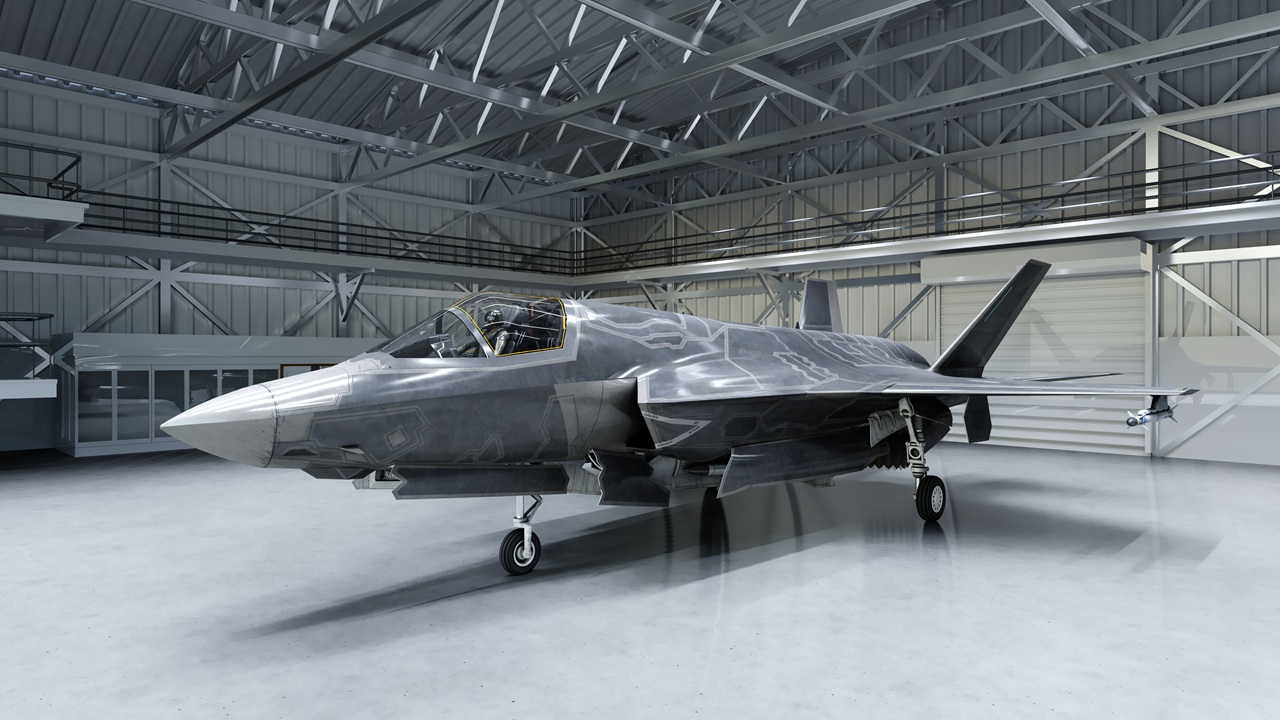
The Air Force is hoping to invest in improved hangars for its sixth-generation aircraft—not least because of concerns about espionage.
The US Air Force is asking for more than double last year’s budget for construction and maintenance as it gets ready to receive several new platforms in the near future.
The B-21 Raider bomber and the F-47 fighter jet, America’s first two sixth-generation aircraft, will require new infrastructure to operate safely.
Billions More for Infrastructure in Air Force’s FY27 Request
The combined military construction and facilities sustainment, restoration, and modernization budgets cover a wide range of infrastructure, including new runways, fighter jet hangars, and even family housing on base.
Last year, the Air Force received $13 billion for construction and maintenance. Now, it is looking to more than double that amount, with a request for $26.7 billion in the Fiscal Year 2027 (FY27) budget. As part of the budget increase, the Air Force is seeking a total of $2.03 billion for new hangar and support spaces for the F-47 fighter jet and for modernized nuclear weapons facilities for the B-21.
First announced in 2025, the F-47 is set to replace the F-22 Raptor stealth fighter jet and assume the crucial air superiority mission set.
The B-21 Raider is set to replace the B-1 Lancer and B-2 Spirit strategic bombers. The Air Force aims for a global bomber force composed of B-21 Raiders for deep-penetration missions in non-permissive environments and B-52 Stratofortresses for missions in semi-permissive and permissive air spaces.
The Air Force wants both platforms to be operational as soon as possible. The chances of a near-peer conflict with China in the near future are rising. Aircraft like the B-21 Raider and F-47 could make the difference, both in a war and in Beijing’s decision-making process of whether or not to enter a war.
The B-21 is in early production, with several prototypes conducting flight testing; it is scheduled to enter regular service later in the decade. The F-47 is not as advanced, with the first flight scheduled for 2028 and a full operational capability expected in the early 2030s.
Sixth-Gen Aircraft Have Major Security Concerns
The Air Force is taking the correct approach. It seems odd that delivery of cutting-edge, sixth-generation aircraft like the B-21 Raider and F-47 can be delayed due to a lack of proper infrastructure. However, a lack of suitable infrastructure can be a critical Achilles’ heel for advanced aircraft.
Take the example of Greece and the F-35 Lightning II stealth fighter jet. The southern European country is one of the latest members of the F-35 Joint Strike Fighter program. Athens has contracted with Lockheed Martin, the F-35’s manufacturer, for the purchase of 20 F-35A Lightning IIs, with the option to purchase another 20 aircraft in the future. This will be the first 5th-generation aircraft to join the Hellenic Air Force.
However, a key requirement for the delivery of the aircraft is that the Hellenic military establishes the necessary infrastructure to receive and safely operate the stealth fighter jet. This requirement includes constructing new hangars to host the F-35, as well as a layered network of security around the installations to ensure that the stealth fighter jet’s classified technology does not fall into the wrong hands.
The cost for this work is in the hundreds of millions of dollars and can even reach into the billions, highlighting an often unseen cost behind purchases of high-end weapon systems.
About the Author: Stavros Atlamazoglou
Stavros Atlamazoglouis a seasoned defense journalist specializing in special operationsand a Hellenic Army veteran (national service with the 575th Marine Battalion and Army HQ). He holds a BA from the Johns Hopkins University and an MA from the Johns Hopkins’ School of Advanced International Studies (SAIS). His work has been featured in Business Insider, Sandboxx, and SOFREP.
The post The US Air Force Wants to Double Its Infrastructure Budget Next Year appeared first on The National Interest.
Источник: nationalinterest.org