

«Данное сообщение (материал) создано и (или) распространено иностранным средством массовой информации, выполняющим функции иностранного агента, и (или) российским юридическим лицом, выполняющим функции иностранного агента»

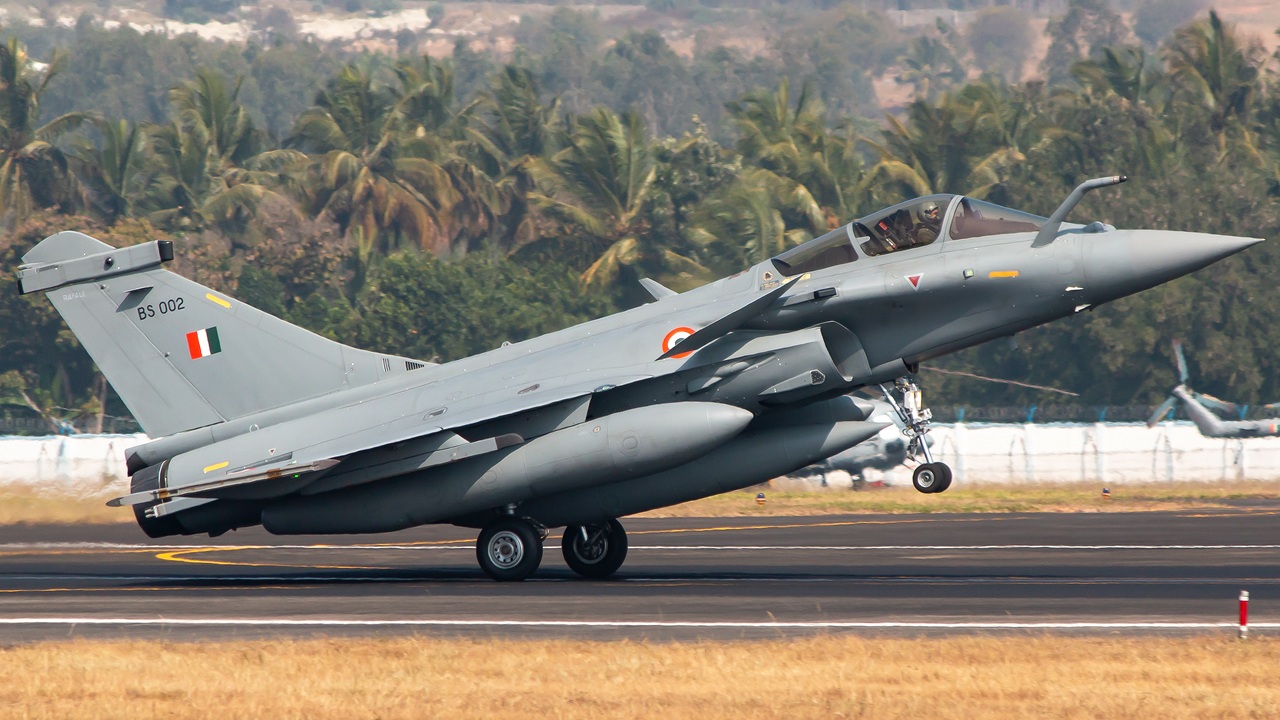
An Indian Air Force Dassault Rafale landing in Bengaluru on February 21, 2021. (Shutterstock/BoeingMan777)
Topic: Air Warfare, and Trade Blog Brand: The Buzz Region: Asia Tags: Aircraft, China, Dassault Rafale, Fighter Jets, France, India, Operation Sindoor, Pakistan, and South Asia India Is Buying 31 More French Rafale Fighter Jets. Here’s Why. February 17, 2026 By: Peter Suciu
Share
The deal represents a major vote of confidence in the Rafale, which fell victim to a smear campaign by Chinese competitors following last year’s India-Pakistan war.
Although it lost a French-made Dassault Rafale jet fighter in its border flare-up with Pakistan last May—and was reportedly frustrated by the plane’s performance during that conflict—the government of India has closed a deal to buy 31 additional Rafales from France. Even as the Indian military operates a variety of combat aircraft from around the world, the Rafale has largely been seen as the jewel of India’s fleet.
As of this month, the Indian Air Force (IAF) operates a full three dozen of the “omni-role” fighters. The aircraft, which were delivered between early 2020 and December 2024, are deployed across two squadrons.
In addition to the Indian Air Force’s contingent, the Indian Navy is now in the process of procuring 26 Rafale-M (Marine) variants.
About the Dassault Rafale
In October 2025, Dassault Aviation confirmed it had completed production of its 300th Rafale fighter jet. France’s omnirole aircraft remains in high demand worldwide, with customers in eight foreign nations now operating or adopting it.
- Year Introduced: 2001 (entered French Navy service; 2006 for French Air Force)
- Number Built: ~240+ delivered as of 2024 (production ongoing for export customers)
- Length: 50 ft 2 in (15.3 m)
- Wingspan: 35 ft 9 in (10.9 m)
- Weight (MTOW): ~54,000 lb (24,500 kg)
- Engines: Two Safran (formerly Smecna) M88-2 turbofans (17,000 lbf each with afterburner)
- Top Speed: Mach 1.8 (approx. 1,190 mph / 1,915 km/h at altitude)
- Range: ~1,000 nmi (1,850 km) combat radius; ~2,000 nmi (3,700 km) ferry range with drop tanks
- Service Ceiling: ~50,000 ft (15,240 m)
- Loadout: 14 hardpoints (13 on Rafale M naval variant); 9,500 kg (20,900 lb) total payload capacity
- Aircrew: 1 (Rafale C and M); 2 (Rafale B twin-seat variant)
The Dassault Rafale entered service in 2001 and has since undergone steady upgrades, culminating in its F4 configuration, often described as a “4.5-generation” fighter.
Future Rafales Will Be Made (Partly) in India
The most recent deal was approved last Thursday, ahead of French President Emmanuel Macron’s visit to India. The acquisition, one of the largest aircraft orders placed by New Delhi, is part of the country’s 3.6 trillion rupee ($39.7 billion) defense spending package that covers several military programs.
In total, New Delhi seeks to add 114 Rafale jets to its fleet, with 18 supplied by Dassault and produced in France. The remainder will be manufactured domestically under a localization program supported by Dassault Reliance Aerospace Limited. Reliance Defence, a joint venture with DRAL, will produce the aircraft at its Nagpur facility. At the outset, India will manufacture the fuselage and airframe components, with the remainder of the aircraft produced in France.
India’s state-owned Hindustan Aeronautics Limited (HAL) will oversee maintenance operations and, over time, the integration of Indian-made weapons systems.
The IAF currently operates 29 squadrons but has sought to increase that number to 42 amid threats from regional rival Pakistan and China.
It was only last September that two squadrons operating the Soviet Cold War-era Mikoyan-Gurevich MiG-21 (NATO reporting name “Fishbed”) supersonic interceptor aircraft were stood down. New Delhi has sought to retire additional aging aircraft as part of its ongoing modernization efforts.
How China Tried to Cash in on the India-Pakistan War
The newly concluded deal is a major win for Dassault, which was targeted by a Chinese disinformation campaign last summer aimed at sowing doubts about the Rafale’s capabilities.
The French intelligence service alleged that China’s defense attachés were tasked with carrying out disinformation efforts, including seeking nations that had committed to purchasing the Rafale to reconsider and perhaps look to offerings from Chinese aerospace firms Shenyang and Chengdu instead. Among the nations targeted in the effort was Indonesia, according to documents shared with The Associated Press on condition of anonymity.
China helped spread claims that Pakistani J-10 fighters shot down five IAF aircraft, including three Rafales. That prompted questions about their performance from countries that have bought the fighter.
Although India has acknowledged that it suffered losses in the air war with Pakistan in May, it didn’t confirm that three Rafales were shot down. French officials countered that the evidence showed a total of three Indian fighters were lost, including one Russian-made Sukhoi (likely a MiG-29) along with a Mirage 2000.
Of course, the fight still marked the first confirmed loss of a Rafale in combat, but there is a big difference between one being shot down and three. Moreover, it was determined that faulty intelligence about the capabilities of China’s PL-15 air-to-air missiles may have given the IAF pilots a false sense of confidence. The Rafale pilot may have believed his aircraft was beyond the range of Pakistani aircraft. IAF pilots were reportedly instructed that the export model of the PL-15 carried by the Chinese-made J-10C had a range of 150 kilometers (94 miles), but were shot down at a range closer to 200 km (125 miles).
About the Author: Peter Suciu
Peter Suciu has contributed over 3,200 published pieces to more than four dozen magazines and websites over a 30-year career in journalism. He regularly writes about military hardware, firearms history, cybersecurity, politics, and international affairs. Peter is also a contributing writer for Forbes and Clearance Jobs. He is based in Michigan. You can follow him on Twitter: @PeterSuciu. You can email the author: Editor@nationalinterest.org.
The post India Is Buying 31 More French Rafale Fighter Jets. Here’s Why. appeared first on The National Interest.
Источник: nationalinterest.org