
«Данное сообщение (материал) создано и (или) распространено иностранным средством массовой информации, выполняющим функции иностранного агента, и (или) российским юридическим лицом, выполняющим функции иностранного агента»
 Topic: Naval Warfare Blog Brand: The Buzz Region: Europe Tags: Eastern Europe, Poland, Saab, Submarines, Sweden, and Undersea Warfare Why Poland Wants to Buy Saab’s Upcoming A26 Diesel-Electric Submarine December 6, 2025 By: Brandon J. Weichert
Share
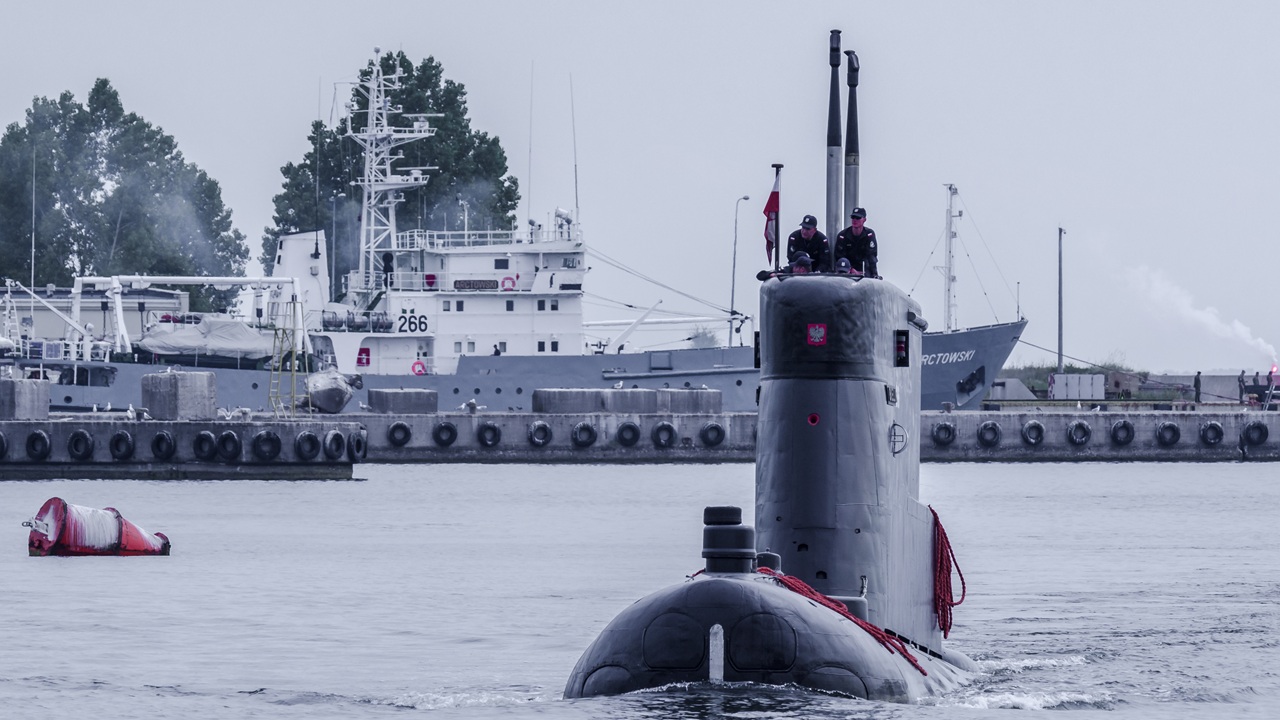
Saab’s A26 submarine has not yet left the drawing board—but Poland has already expressed interest in the sub as a replacement for its aging Kilo class.
As I reported in an earlier essay for The National Interest, Saab Kockums of Sweden has created for itself a potent “fifth-generation,” first-of-its-kind, diesel-electric submarine that puts all the other diesel-electric subs to shame. Known as the “A26” submarine, Saab bills this new submarine as “meeting the requirements of NATO’s Multi-Domain Operations (MDO).”
Therefore, the A26 is being looked at as the basis for the undersea component of Europe’s overall rearmament drive.
Toward that end, Poland’s navy, which is in many respects a frontline navy in the face of the resurgent threat posed to Europe from Russia, has become the first foreign navy to order the A26. The new sub, the first models of which are expected to be ready in the early 2030s, is intended as a replacement for Poland’s aging Kilo-class Soviet-era submarine force.
The Blekinge-Class (A26) Submarine’s Specifications
- Year Introduced: Not yet introduced (anticipated 2031)
- Number Built: 0 (2 planned)
- Length: 66.1 m (216 ft 10 in)
- Beam (Width): 6.75 m (22 ft 2 in)
- Displacement: 1,925 tonnes (surfaced); 2,100 tonnes (submerged)
- Engines: One shaft, with one propeller, driven by four Kockums Mk V V4-275R Stirling air independent propulsion (AIP) engines
- Top Speed: 20 km/h (12 mph) surfaced; 11 km/h (7 mph) submerged
- Range: 45 days’ endurance
- Armaments: Six torpedo tubes (four 533mm/21-inch, two 400mm/16-inch); naval mines
- Crew: 17–26
Why Poland Chose the A26 Submarine
For Poland, this fell under the imprimatur of their Project Orka. Other contenders for the Orka contract with Poland included France’s Naval Group, Germany’s ThyssenKrupp Marine Systems, Italy’s Fincantieri, Spain’s Navantia, and South Korea’s Hanwha Ocean.
Conspicuously absent from that list of possible contenders were the likes of the United Kingdom and the United States, neither of which can build their own warships and submarines in any meaningful way—despite their obvious wealth and ideological desire to antagonize the Russians as leading members of the NATO alliance.
Apparently, the only real competition that Saab faced was from South Korea’s Hanwha Ocean. Interesting Engineering reported recently that “[South] Korea had even offered to transfer an active-duty submarine at no cost as part of the bid.”
What killed that deal was the “entry barrier” for the South Korean firm to do business with NATO. After all, a defense firm interested in selling arms to European countries is never just doing business with an individual European state. They are doing business with the entire NATO bloc.
In any case, Saab has agreed to a joint development deal with Poland that would, over time, allow for key technology transfers to eventually see the Poles building these submarines.
This is a key feature for any agreement, since individual European states that are part of NATO all need to enhance their national industrial bases—notably the countries closest to Russia’s borders, such as Poland.
What Makes the A26 So Much Better Than Its Competitors?
Still, the fact that the A26 submarines are not set to be delivered until the 2030s, with the Russian threat purportedly being severe (at least from Warsaw’s perspective), it begs the question as to whether the A26 will be around in a timely enough manner to make much of a difference for Poland’s navy?
As for the A26 itself, this submarine is quite impressive. An affordable alternative to many of the other submarines on the global market, possessed of the most advanced technologies Saab can bring to bear in a submarine, the A26 could be a significant boost for Europe’s naval capacity in the face of a growing Russian naval threat—if Saab can build these things on time and in proper quantities, that is.
One of the most unique features about this diesel-electric fifth-generation submarine is its ability to “bottom” at the seafloor. Essentially, this submarine can park itself on the seafloor for extended periods of time and conduct undersea warfare operations, including cutting, tapping, or even possibly repairing the sprawling undersea cable network that seems to be a prime target for the Russians should a real war for Europe ever erupt.
Relatedly, the A26 is basically a mothership for unmanned undersea vehicles (USVs). So, this submarine can ply the depths with squadrons of unmanned systems that are stealthy and lethal. Undersea warfare, then, will never be the same.
Importantly, Saab has designed the A26 with both long-range precision torpedoes as well as the potential for submarine-launched missiles—meaning this boat can hit targets at sea or on land, allowing for multi-domain mission sets.
Swedish Naval officials have also been promoting the A26 to the world. One of the key features the Swedish Navy has fixated on is the submarine’s impressive electronic warfare (EW) suite. Saab’s website for this particular capability refers to it as “underwater information warfare.” It is yet another feature that makes the A26 so attractive to European countries, like Poland.
Stealth is one of the most important features of any submarine. Saab claims that the new A26, since it is the first of its model—a fifth-generation submarine—has some of the quietest acoustic signatures beneath the waves.
The A26’s New Features Could Revolutionize Undersea Warfare
Swedish engineers are pushing the idea that the A26 has low magnetic signatures, thanks to an innovative degaussing system that is controlled by the submarine’s advanced undersea sensors.
What’s more, Saab’s website makes the case that “Radar, visual and IR surface signatures are also minimized by special coatings on the submarine’s surface and the hull’s design.” All this means that the A26 is a great system.
So Poland is smart to purchase these systems.
As always, though, scalability remains very much in question when speaking about European production. Nevertheless, from a technical perspective, this is an excellent pick for Poland’s next-generation submarines.
About the Author: Brandon J. Weichert
Brandon J. Weichert is a senior national security editor at The National Interest. Recently, Weichert became the host of The National Security Hour on America Outloud News and iHeartRadio, where he discusses national security policy every Wednesday at 8pm Eastern. Weichert hosts a companion book talk series on Rumble entitled “National Security Talk.” He is also a contributor at Popular Mechanics and has consulted regularly with various government institutions and private organizations on geopolitical issues. Weichert’s writings have appeared in multiple publications, including The Washington Times, National Review, The American Spectator, MSN, and the Asia Times. His books include Winning Space: How America Remains a Superpower, Biohacked: China’s Race to Control Life, and The Shadow War: Iran’s Quest for Supremacy. His newest book, A Disaster of Our Own Making: How the West Lost Ukraine is available for purchase wherever books are sold. He can be followed via Twitter @WeTheBrandon.
Image: Shutterstock / Wojciech Wrzesien.
The post Why Poland Wants to Buy Saab’s Upcoming A26 Diesel-Electric Submarine appeared first on The National Interest.
Источник: nationalinterest.org