
«Данное сообщение (материал) создано и (или) распространено иностранным средством массовой информации, выполняющим функции иностранного агента, и (или) российским юридическим лицом, выполняющим функции иностранного агента»
 Topic: Air Warfare Blog Brand: The Buzz Region: Europe Tags: F-15 Eagle, Fighter Jets, Japan, JSDF, NATO, Operation Highmast, and United Kingdom Why Did Japan Send Fighter Jets to Europe? December 31, 2025 By: Joseph Hammond
Share
Though Europe has a long military history in Asia, it is quite rare for an Asian nation to send ships or aircraft to Europe, as Japan did earlier this year.
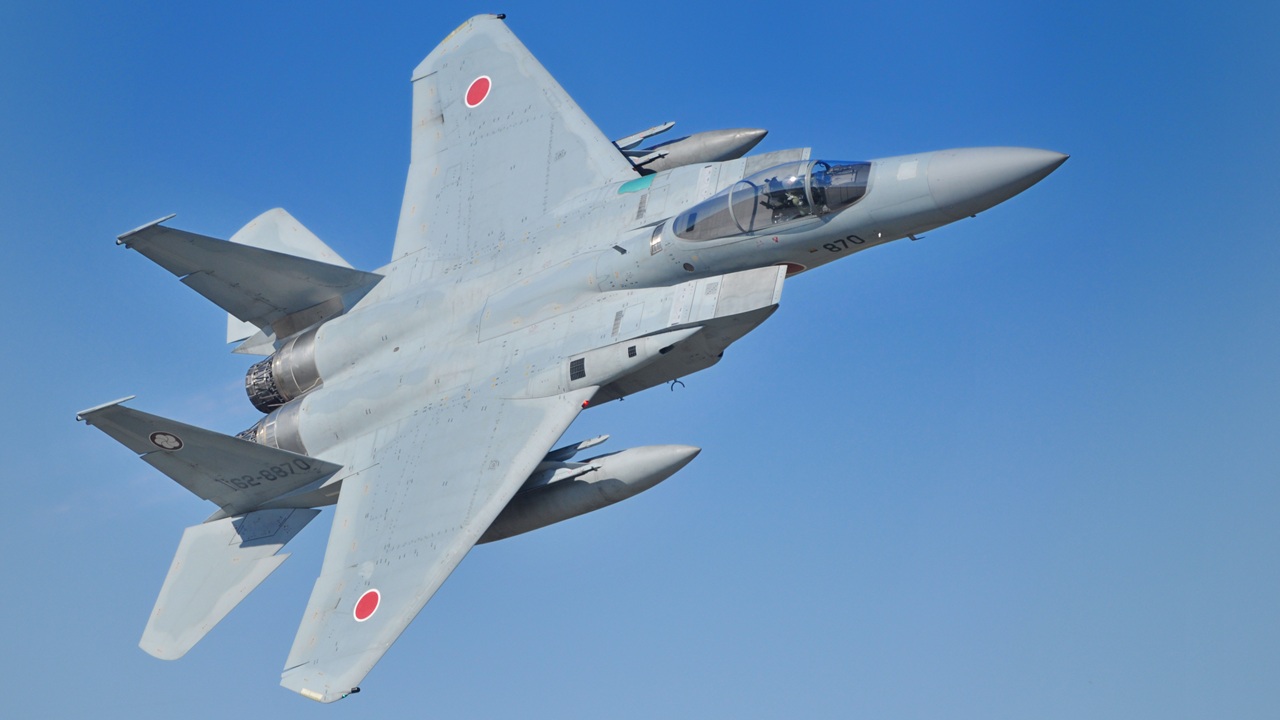
In a year dominated by battlefield attrition in Ukraine and headline-grabbing alliance summits, one of the most consequential military developments in recent memory occurred almost unnoticed. Japan’s deployment of F-15J Fighters was one of the most underrated geopolitical moments of 2025 that flew under the proverbial radar.
Japan’s decision to deploy frontline fighter aircraft to Europe—its first such mission in the history of the Japan Air Self-Defense Force—underscored how the Indo-Pacific and Euro-Atlantic security theaters are becoming inseparable.
Japan dispatched F-15J fighters, along with supporting transport aircraft, personnel, and planners, on a tour that took Japanese forces to North America and Europe. The Japanese force visited Canada, Germany, and the United Kingdom for a series of high-profile training exercises aimed at deepening interoperability with NATO partners. The Japanese Air Self-Defense Force (JASDF) mission operated out of two different hubs in Europe, RAF Coningsby and Laage Air Base in Germany.
“This marks our first fighter deployment to Europe in the 71-year history of the Koku-Jieitai (Japan Air Self-Defense Force). We have named this mission ‘Atlantic Eagles,’ symbolising our F-15 jets spreading their wings across the Atlantic,” said General Morita Takehiro, the Chief of Staff of the Japan Air Self-Defense Force, in a media statement.
Asian Armies Rarely Deploy to Europe
Much has been made in the international media about the deployment of North Korean forces to Ukraine in combat operations on behalf of Russia. After initially being deployed as cannon fodder, the North Korean forces adapted and learned much about modern warfare – to the dismay of many in the South Korean military establishment, who mulled over a number of ways to help Ukraine in response.
With some commentators suggesting that this was the first deployment of an Asian army by a sovereign state to Europe since the Mongols, the actual history was far more recent.
The last time an Asian combat force was deployed to Europe—exempting colonial units and the transcontinental Ottoman Empire—was during World War I, when Japanese warships conducted anti-submarine patrols and protected convoys from German and Austrian attacks.
Beginning in 1917, 14 Japanese destroyers (with cruisers in support) operated under direct British command out of bases in Malta. These Japanese warships played a key role in protecting British, Australian, New Zealand, and Indian troops aboard. Only one ship was lost while under direct Japanese protection.
The Mongol invasion of Europe was also a key conduit for technological transfer from Asia and the Islamic world. Everything from medical knowledge to gunpowder technologies moved west with the Mongols.
The deployment demonstrated that the JASDF’s F-15J fleet has an ongoing modernization program to enhance survivability in contested environments and enable data sharing. The upgrades are also meant to ensure their interoperability with NATO – one of the themes of the September deployment.
“Some JASDF F-15J/DJ aircraft have been equipped with Link 16 systems as part of the earlier Multi-Stage Improvement Program (MSIP),” said Akhil Kadidal, an Asian Affairs analyst with Janee’s Information Services, a private intelligence firm. “In addition, 68 airframes are being subject to upgrades under the latest Japan Super Interceptor (JSI) program, which will give the fleet many of the same systems found in USAF-bound, NATO-compatible Boeing F-15EX Eagle IIs. This includes the new Eagle Passive Active Warning and Survivability System (EPAWSS) system.”
Japan and Europe Have Strong Military Cooperation
Nor was this mission the only recent high-profile deployment of Japan with a NATO country. The visit to the United Kingdom comes in response to Operation Highmast, a high-profile visit of a British aircraft carrier to Japan and Asian waters earlier in 2015. It also builds on a previous mission of four RAF Typhoons, which visited Japan in 2016. In doing so, they became the first non-American military to train with the Japanese military on Japanese soil.
Along with Italy, the two countries have formed the Global Combat Air Programme (GCAP) to develop a new twin-engine 6th-generation fighter jet. The first of these yet unnamed fighter jets will enter service in 2035. The headquarters of the joint consortium between the three nations developing the project opened this year in London.
“By combining our complementary expertise, we’re accelerating technology breakthroughs in materials, manufacturing, and design that will power GCAP and strengthen the defence industrial base across the UK, Italy, and Japan,” said Phil Townley, Director of Future Combat Programs at Rolls-Royce, in a media statement regarding the status of the program.
The new era of military cooperation in particular recalls the Anglo-Japanese Alliance (1902–1922), which once linked the two island countries across the Eurasian landmass. However, it is also about showing the linkages between the Indo-Pacific and Europe. One of these is, obviously, fear of Russia, which Japan shares.
Japan shares Europe’s concerns over Russian territorial seizure and war in Ukraine. Russia still occupies the southern Kuril Islands, which Japan calls the Northern Territories. As a result, Japan and Russia have not formally ended World War II. This history informs Japan’s reading of the war in Ukraine—for Japan, NATO is not a distant institution, but a relevant security partner.
Japan’s deployments beyond the Indo-Pacific are therefore not symbolic gestures. They demonstrate a practical commitment to collective defence and signal to both Moscow and Beijing that Japan’s alliances now possess genuine operational reach. Britain reinforces the logic of engaging Indo-Pacific partners not merely as observers, but as contributors to Euro-Atlantic security.
About the Author: Joseph Hammond
Joseph Hammond is a journalist and former Fulbright public policy fellow with the government of Malawi. He has reported from four continents on topics ranging from the Arab Spring to the M23 rebellion in the Eastern Congo, with bylines in Newsweek, The Washington Post, Forbes, and more. He has contributed to The National Interest since 2016. Hammond has been a recipient of fellowships organized by several think tanks, including the National Endowment for Democracy, the Atlantic Council of the United States, the Heinrich Boll Stiftung North America Foundation, and the Policy Center for the New South’s Atlantic Dialogue.
Image: Shutterstock / dreamnikon.
The post Why Did Japan Send Fighter Jets to Europe? appeared first on The National Interest.
Источник: nationalinterest.org