
«Данное сообщение (материал) создано и (или) распространено иностранным средством массовой информации, выполняющим функции иностранного агента, и (или) российским юридическим лицом, выполняющим функции иностранного агента»
 Topic: Land Warfare Blog Brand: The Buzz Region: Asia Tags: Anti-Tank Missiles, Armored Warfare, Cambodia, Missiles, Southeast Asia, Thailand, and VT-4 Why China Is Backing Both Sides in the Cambodia-Thailand War December 27, 2025 By: Brandon J. Weichert
Share
China has sold VT-4 main battle tanks to Thailand—and GAM-102LR anti-tank missiles capable of destroying them to Cambodia.
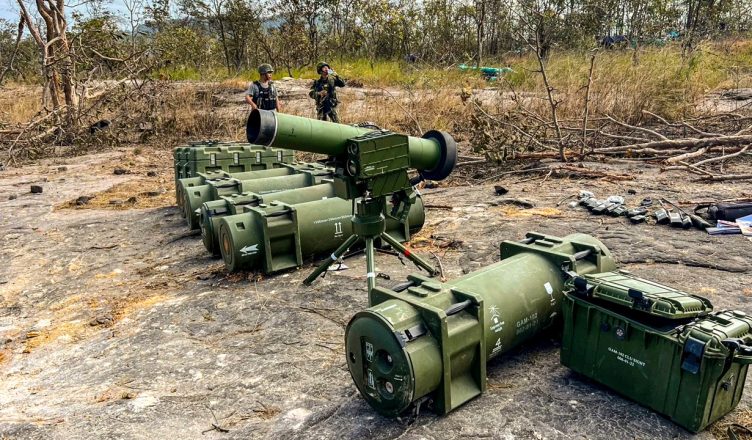
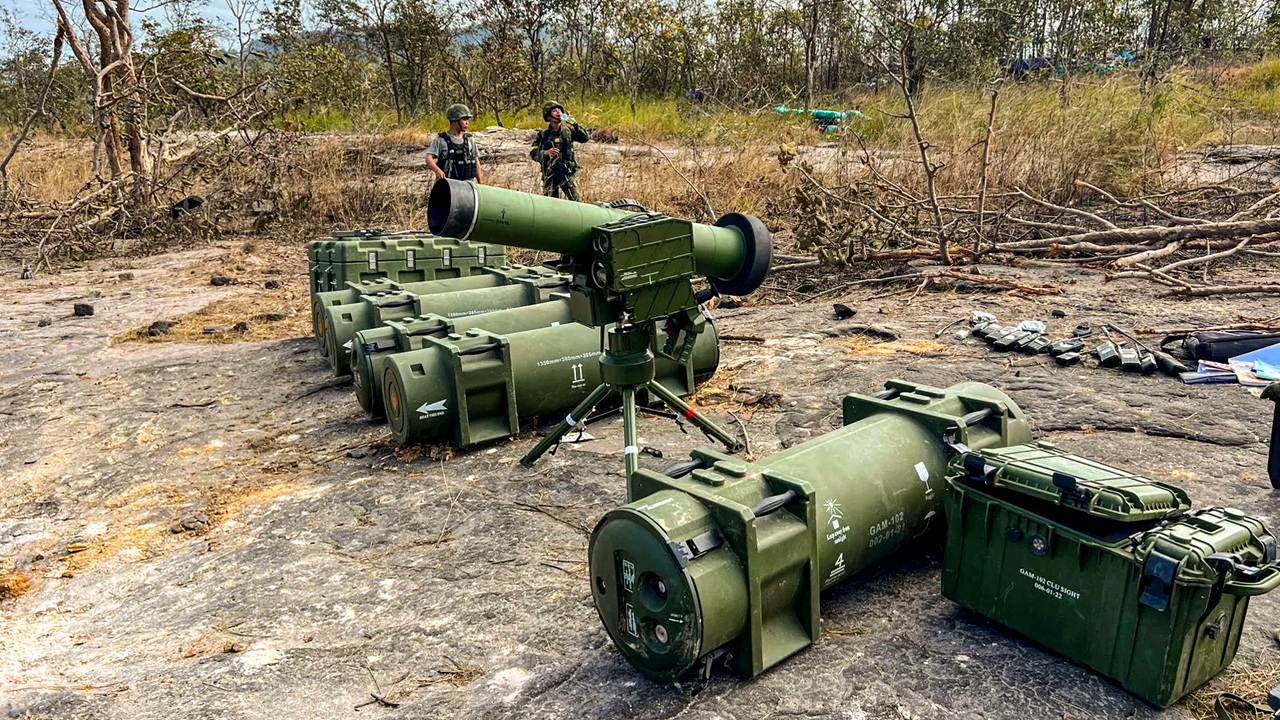
The renewed Thailand-Cambodia conflict has continued during the holiday season, with Thailand’s forces making significant inroads in their war. Recently, news came out from the region that Thai military personnel had captured what they described as a “significant quantity” of Chinese-made GAM-102LR anti-tank missiles that the Cambodian Army used.
In fact, the Chinese have been plying the Cambodians with weapons for years. More than that, though, the Chinese have been using the Cambodians as proxies for their larger geopolitical goals of dominating the energy flows out of the Gulf of Thailand and having a firmer hold on the shipping lanes cutting through the nearby Strait of Malacca, one of the most important maritime chokepoints in the world.
The Significance of the GAM-102LR ATGM Missile
Chinese-made GAM-102LRs in the possession of Cambodia is a significant development. These are among the more advanced weapons in Beijing’s arsenals, and the Cambodians were not known to possess these systems until now.
First introduced by China in 2016, the GAM-102LR is described as a fifth-generation Anti-Tank Guided Missile (ATGM) system. It operates on the principle of “Fire-and-Forget” (Lock-on-After Launch, or LOAL) and “man-in-the-loop.” The weapon possesses an advanced seeker, too.
The range on the GAM-120LR is approximately 3.7-to-6.2 miles (6-10 kilometers). This system fires a multi-purpose tandem warhead, and its designers claim it has around 1,000mm Rolled Homogeneous Armor (RHA) penetration. The missile can target armored vehicles, fortified positions, structures, light vehicles, and even some naval assets. What’s more, it can hit targets moving in excess of 50 miles per hour (80 km/hr).
China’s designers bill the weapon as being able to be launched both from vehicles and tripod launchers, indicating a high degree of variability that gives its user a great deal of tactical flexibility. And the system purportedly supports networked operations, indicating a high degree of interoperability with other systems meant to augment the force employing such weapons with a greater variability in their offensive operations.
Considering that the GAM-102LRs employed by the Cambodians were fighting Thai forces along their contested border—specifically areas where Thai armored vehicles were heavily employed—the threat to Thailand’s forces was significant. This is why Thailand’s military is making such a stink about finding these Chinese systems among captured Cambodian military gear along the border.
China Is Playing Both Sides of the Conflict
Amira El-Fekki, writing in a recent Newsweek exposé, assessed that China’s weapons are actually “fueling both sides” of the Thai-Cambodia War. According to El-Fekki’s December 16, 2025, report, “China has supplied VT-4 tanks to the Royal Thai Army, based on a 2017 agreement.”
On December 13, Military Watch Magazine reported that one of the Chinese-provided VT-4 tanks operated by Thailand’s military was taken out. Perhaps it was destroyed by the Chinese-made anti-tank guided missile GAM-102LRs used by Cambodia!
Who says playing both sides of a war isn’t lucrative?
The fact of the matter is that there are forces in the realm of geopolitics that deeply desire to see Thailand weakened. China is only one of them. This was a message conveyed to me by independent war correspondent Michael Yon, who spent much of his career working in Thailand and interfacing with the Thailand government and military.
Yes, the Chinese have ambitions to become the dominant player in the region—and they are using Cambodia as their primary proxy. But chaos benefits China’s interests, too. That’s one of the reasons why you’re likely seeing Chinese arms flowing to both sides in this conflict.
Interestingly, Yon believes that the Americans also want to see Thailand torn apart. In his estimation, the great powers are intent on carving up Thailand as much as possible in order to rejigger global trade flows more to their liking.
Whatever one believes, it is obvious that the conflict has, like so many wars today, become little more than a proxy fight between the world’s great powers—and the outcome of that fight will have truly global implications.
About the Author: Brandon J. Weichert
Brandon J. Weichert is a senior national security editor at The National Interest. Recently, Weichert became the host of The National Security Hour on America Outloud News and iHeartRadio, where he discusses national security policy every Wednesday at 8pm Eastern. Weichert hosts a companion book talk series on Rumble entitled “National Security Talk.” He is also a contributor at Popular Mechanics and has consulted regularly with various government institutions and private organizations on geopolitical issues. Weichert’s writings have appeared in multiple publications, including The Washington Times, National Review, The American Spectator, MSN, and the Asia Times. His books include Winning Space: How America Remains a Superpower, Biohacked: China’s Race to Control Life, and The Shadow War: Iran’s Quest for Supremacy. His newest book, A Disaster of Our Own Making: How the West Lost Ukraine is available for purchase wherever books are sold. He can be followed via Twitter @WeTheBrandon.
Image: Shutterstock / Prachaya Roekdeethaweesab.
The post Why China Is Backing Both Sides in the Cambodia-Thailand War appeared first on The National Interest.
Источник: nationalinterest.org