
«Данное сообщение (материал) создано и (или) распространено иностранным средством массовой информации, выполняющим функции иностранного агента, и (или) российским юридическим лицом, выполняющим функции иностранного агента»
 Topic: Diplomacy, and Land Warfare Blog Brand: The Buzz Region: Europe Tags: NATO, Russia, Ukraine War, United Kingdom, United States, and Valery Zaluzhny Understanding the United Kingdom’s Fake Ukraine Peace Play December 7, 2025 By: Brandon J. Weichert
Share
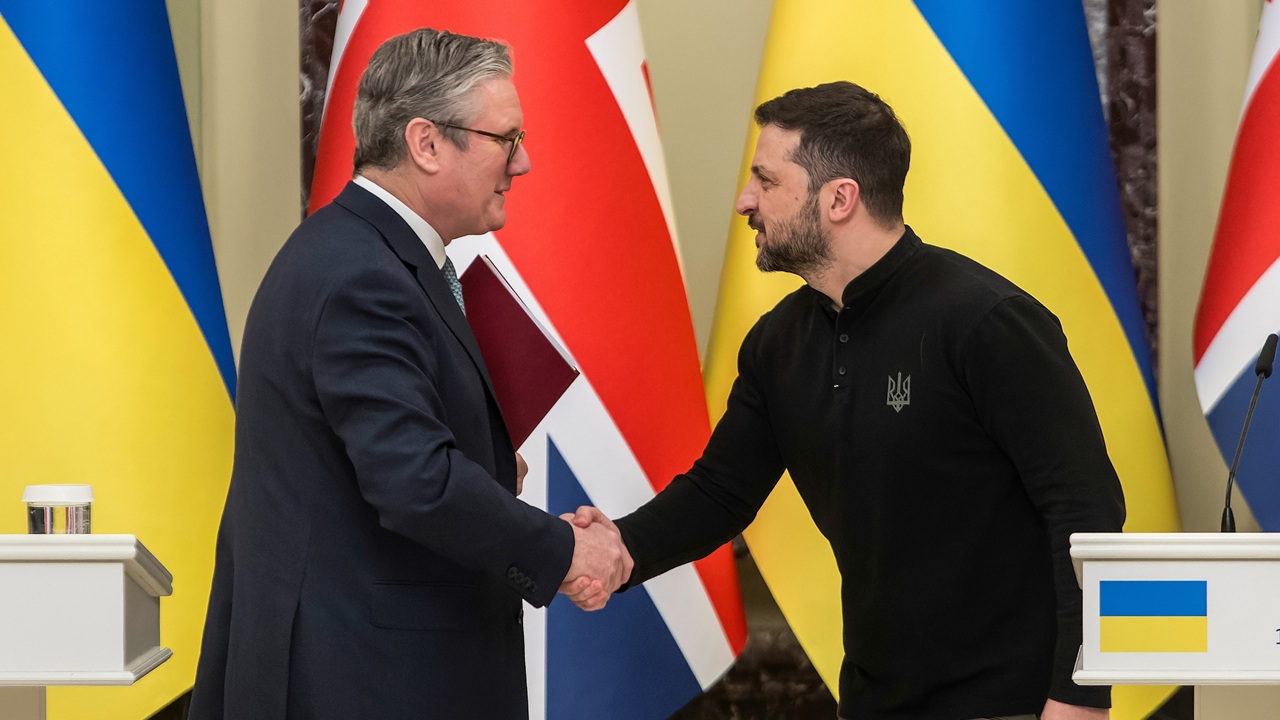
The United Kingdom has no desire to give up on the Ukraine War—but it has signaled a desire for peace as a way to keep America on board.
A strange reversal is underway in the annals of modern British foreign policy. After having been one of the unremitting supporters of the Ukrainian cause, at least since the Russian invasion in February 2022, British pundits and officials are making clear their support for a negotiated settlement that would end the Ukraine War.
Recently, I appeared on Al Arabiya English with Sir Michael Fallon, the former British defense secretary who served during Prime Minister David Cameron’s reign more than a decade ago, in which he explained the need for Ukraine to seek some form of a negotiated settlement.
While not in office, Sir Michael has plenty of connections still with the current British elite. It is unlikely that he was merely speaking for himself. Of course, it should be noted that in our previous panel from this last summer on Al Arabiya English, Sir Michael was adamantly opposed to any form of negotiated settlement with Russia over Ukraine.
How the UK Changed Its Mind About Ukraine—Sort Of
In just a few months, the British have gone from crying “Havoc!” and letting slip the dogs of war against Russia in Ukraine to quietly encouraging Kyiv to embrace a settlement to end the war—no matter how distasteful it might be.
This is less a change of heart and more of a wily wait-and-see approach. The British government does not actually favor a peace deal that would address, as the Russians constantly insist, the “root causes” of the Ukraine War. Instead, London wants to buy time for Ukraine to restore its fighting capabilities and be prepared to reopen hostilities at a more favorable point.
To be clear: the British and the Europeans do not want a permanent peace in Ukraine. They want to essentially wait out the Trump administration, which has around 35 months left in office—and is likely to be hamstrung if the Democrats regain control of one or both houses of Congress after the midterm elections in November 2026.
British Peace Talk Isn’t Really About Peace
Britain and Europe assume that they can spend the next few years restoring Ukrainian fighting capabilities and then reopen hostilities with Russia once a more amenable American president is elected in 2028.
There have also been cogitations at the highest levels of power in Europe and in Britain about the future of Volodymyr Zelensky as president of Ukraine. After suspending constitutionally mandated elections last year, with no return to normal democracy on the horizon, Zelensky has been riding his wartime image to sustain his political legitimacy in a Ukraine that is increasingly ravaged by a seemingly endless war with Russia.
Even Zelensky’s most ardent supporters in Europe and Britain recognize that this is unsustainable. How could they purport to be supporting a besieged democracy if that democracy has suspended constitutional provisions indefinitely and insists on fighting to the last man before any elections can be held?
Valery Zaluzhny Is the West’s Next Big Bet for Ukraine
That is why London has been cultivating the likes of Valery Zaluzhny, the current Ukrainian ambassador to the United Kingdom. A war hero and a man widely believed to be a tough but rational player, Zaluzhny is widely seen as MI6’s man in Ukraine’s leadership.
On another panel I appeared on Al Arabiya English several months ago, I pressed former MI6 spymaster (and notorious dossier author) Christopher Steele on the prospects that Britain was grooming Zaluzhny as a replacement for Zelensky.
Steele is clearly still connected to the British intelligence community. When pressed by yours truly on live television about the relationship between Zaluzhny and British intelligence—and their plans—he did not deny it. His only caveat was that Zaluzhny’s purported rise to the Ukrainian presidency must come after an election.
That’s the play here.
How the West Plans to Change Horses in Ukraine
This is what the Europeans and British really mean when they say they’re taking a more active role in Ukraine as America seeks to step back from the conflict. It isn’t genuine. They’re just going to buy Ukraine more time, ensure that an even more warlike leadership succeeds the oligarchy that currently runs Ukraine, and then restart hostilities once Trump is out of office.
This is precisely what Europe did during the Minsk Protocol negotiations. Indeed, such perfidy was already admitted to after the fact by former German Chancellor Angela Merkel, who once admitted that Europe was never serious about the Minsk protocols—and that they were merely using those negotiations to “buy time” for Ukraine’s military buildup.
With the revelations that the Europeans were not being above-board with the Russians during the Minsk Accord negotiations, and as even the Wall Street Journal recently admitted, Russia has gained the upper hand in the Ukraine War, any appearance of backsliding by the Europeans in terms of a potential peace deal negotiation might end Russia’s involvement in those talks entirely.
All this double-dealing and these machinations for acquiring greater leverage in a conflict that is not only a peripheral concern for the United States and a minor one at best for the UK, shows how badly the European and British elite have miscalculated.
These current talks are not a chance to once more buy their side in the conflict time and to restart the war on more fortuitous footing. This is the last offramp before Russia ends any chance for a viable postwar scenario where at least the majority of Ukraine remains a sovereign entity.
London doesn’t seem to understand this at all—and doesn’t seem to want to. For London and Brussels, war is no longer a means to a strategic end. It’s simply the end; anything to keep the Americans from walking away more fully from NATO and the European project. And the Ukraine War is the great gateway to ensuring permanent American buy-in to this scheme.
About the Author: Brandon J. Weichert
Brandon J. Weichert is a senior national security editor at The National Interest. Recently, Weichert became the host of The National Security Hour on America Outloud News and iHeartRadio, where he discusses national security policy every Wednesday at 8pm Eastern. Weichert hosts a companion book talk series on Rumble entitled “National Security Talk.” He is also a contributor at Popular Mechanics and has consulted regularly with various government institutions and private organizations on geopolitical issues. Weichert’s writings have appeared in multiple publications, including The Washington Times, National Review, The American Spectator, MSN, and the Asia Times. His books include Winning Space: How America Remains a Superpower, Biohacked: China’s Race to Control Life, and The Shadow War: Iran’s Quest for Supremacy. His newest book, A Disaster of Our Own Making: How the West Lost Ukraine is available for purchase wherever books are sold. He can be followed via Twitter @WeTheBrandon.
Image: Shutterstock / paparazzza.
The post Understanding the United Kingdom’s Fake Ukraine Peace Play appeared first on The National Interest.
Источник: nationalinterest.org