
«Данное сообщение (материал) создано и (или) распространено иностранным средством массовой информации, выполняющим функции иностранного агента, и (или) российским юридическим лицом, выполняющим функции иностранного агента»
 Topic: Air Warfare Blog Brand: The Buzz Region: Middle East Tags: Air Defense, Defense Industry, NATO, Steel Dome, and Turkey Turkey Is Putting a $6.5 Billion “Steel Dome” in the Sky December 7, 2025 By: Brandon J. Weichert
Share
Inspired by Israel’s “Iron Dome” and America’s proposed “Golden Dome,” Turkey’s “Steel Dome” is an ambitious investment in its air defense.
Turkey continues its march toward regional military supremacy with their Steel Dome project. A contract inked between the Turkish military and a consortium of Turkish defense contractors—Aselsan, Roketsan, and HAVELSAN—worth around $6.5 billion calls for a massive expansion and serial production of the Steel Dome system. These contracts cover production of new air-defense (AD) systems and upgraded variants of previously fielded systems.
About Turkey’s “Steel Dome” Super Shield
The program was first approved last August by the Turkish government, and it was part of a larger global move toward more robust national AD projects.
Washington has recently announced its Golden Dome. The Israelis have long had their fabled Iron Dome. The Chinese are working on their own system, and other countries are seeking to build their less glamorously named (but no less sophisticated) national air defense systems against a range of aerial threats.
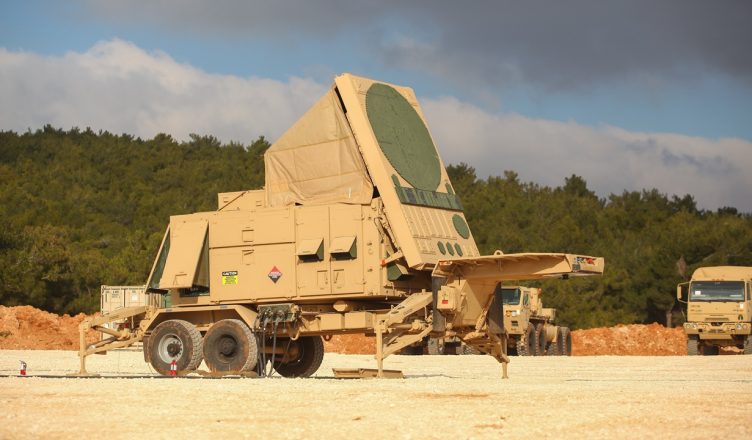
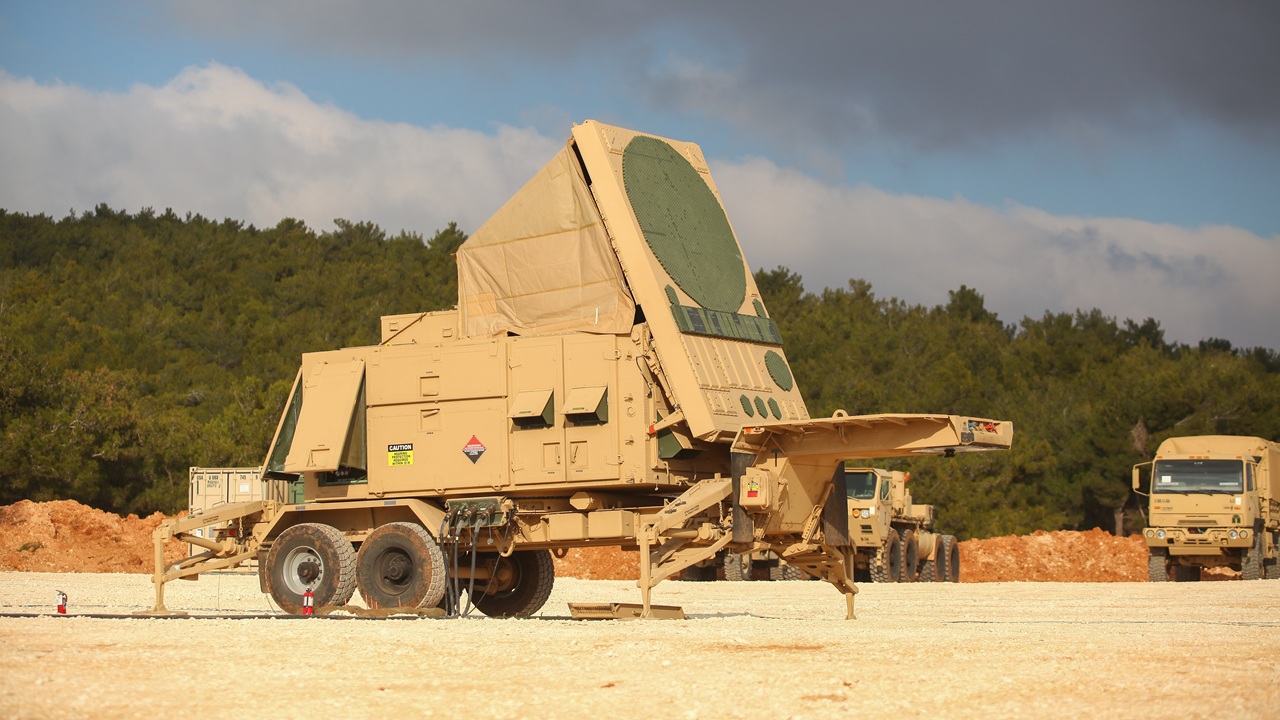
Turkey’s Steel Dome falls into this category. It is a multi-layered, integrated air and missile defense architecture. The multi-layered Steel Dome stitches together a range of radars, missiles, sensors, command-and-control centers, and electronic warfare (EW) tools.
The Steel Dome’s component list includes a who’s-who of domestic Turkish defense systems and contractors. It is built almost entirely with Turkish firms and domestic technologies—reducing Ankara’s reliance on foreign suppliers for air-defense. The integration spans low-altitude threats (such as drones, rockets, cruise missiles) to higher-altitude long-range missiles or aircraft. With multiple overlapping layers, it aims to defend against a broad threat spectrum.
Why Is Turkey Pouring Money into Air Defense?
Turkey’s military wants to create what it is calling a “common air picture” using network-centric architecture—integrating data from sensors and threat detection to feed a unified Command, Control, Communications, Computers, Intelligence, Surveillance and Reconnaissance (C4ISR) backbone.
Initial deliveries began by late August of this year—a year after the initial agreements were made for the system—and Ankara reportedly took delivery of a package including ALP 100-Gs, ALP-300-Gs, as well as several surface-to-air (SAM) batteries (such as the Hisar and SIPER), and EW assets—representing the first tranche of the overall program.
Given rising instability in the broader Middle East in the post-October 7 era, Turkey is intent on hedging against both conventional and asymmetric threats. Recent reporting links these developments with Turkey’s Steel Dome to these geopolitical instabilities.
Turkey already exports armed drones, vehicles, and missiles, and the scale of the Steel Dome, once mature, could make it an exportable integrated AD package for other states—especially those looking for NATO-compatible but non-Western-supplier solutions.
Once fully implemented, the Steel Dome will ensure Turkey has a networked, layered air defense shield covering everything from low-altitude drones/rockets to medium-and-long-range missile threats—a leap beyond the current crop of point-systems or piecemeal SAM batteries that Turkey currently possesses. The system’s integration with radars, EW, sensors, C2, makes targeting and response more flexible, possibly enabling automated or AI-assisted threat detection/response workflows.
Reports suggest the architecture employs “AI-assisted decision support” to optimize which of the layers to deploy (radar, missile, EW) per threat.
Interoperability with NATO, of which Turkey remains a member, is a key design goal, too. Turkey could potentially plug Steel Dome into allied architecture, but the fact that it is designed for domestic use gives Ankara greater independence in doctrine, rules of engagement (ROE), upgrade cycles, and export decisions.
On a regional level, the expansion signals to neighbors and adversaries that Turkey intends to harden its air-defense envelope. This will likely complicate any plans for air or missile strikes by state or proxy actors targeting Turkish territory.
Ambition Meets Reality: Can Erdogan’s Mega-Project Deliver?
Despite the rosy projections and innovative ideas undergirding this ambitious Turkish project, many questions remain as to how feasible the timeline involved in this project is. After all, full operational capability is still many years away. Serial production, fielding, training, integration under different branches of the military—all these take time. Steel Dome might yet not be prepared for showtime anytime soon.
Integrating diverse systems into a coherent, fast-reacting architecture is non-trivial. Mistakes or coordination issues will degrade the overall performance of this complex system of systems. At $6.5 billion, the Steel Dome is a massive investment. Domestic economic and industrial pressures might push Ankara to export parts of the project early, which could draw regional tensions or exacerbate proliferation concerns.
Lastly, emerging threats—such as hypersonic missiles, sophisticated cruise missiles, swarm drones, and cyberattacks—may each evolve faster than the Steel Dome’s design. The project would in turn require continual upgrades, raising its cost and contributing to greater pressure on Turkey’s economy and industrial base.
Still, it’s a necessary step forward for a country like Turkey, which insists on exerting greater control over its region and restoring its historical position as the Neo-Ottoman power in the Middle East. With such lofty ambitions comes a greater target on one’s back. Therefore, the Turks must build out their national defense architecture beyond what they have today.
Plus, the lessons learned from this herculean task will allow for Turkey to potentially have an entirely new family of systems to export to willing customers all over the world who, like Turkey and Israel, dream of creating robust national air defenses that will better protect their homelands from modern threats.
About the Author: Brandon J. Weichert
Brandon J. Weichert is a senior national security editor at The National Interest. Recently, Weichert became the host of The National Security Hour on America Outloud News and iHeartRadio, where he discusses national security policy every Wednesday at 8pm Eastern. Weichert hosts a companion book talk series on Rumble entitled “National Security Talk.” He is also a contributor at Popular Mechanics and has consulted regularly with various government institutions and private organizations on geopolitical issues. Weichert’s writings have appeared in multiple publications, including The Washington Times, National Review, The American Spectator, MSN, and the Asia Times. His books include Winning Space: How America Remains a Superpower, Biohacked: China’s Race to Control Life, and The Shadow War: Iran’s Quest for Supremacy. His newest book, A Disaster of Our Own Making: How the West Lost Ukraine is available for purchase wherever books are sold. He can be followed via Twitter @WeTheBrandon.
Image: Shutterstock / mehmet ali poyraz.
The post Turkey Is Putting a $6.5 Billion “Steel Dome” in the Sky appeared first on The National Interest.
Источник: nationalinterest.org