
«Данное сообщение (материал) создано и (или) распространено иностранным средством массовой информации, выполняющим функции иностранного агента, и (или) российским юридическим лицом, выполняющим функции иностранного агента»
 Topic: Naval Warfare Blog Brand: The Buzz Region: Europe Tags: Atlantic Ocean, Grand Strategy, NATO, Royal Navy, United Kingdom, and United States The UK’s “Atlantic Bastion” Is the Right Strategy for the Wrong Country December 16, 2025 By: Brandon J. Weichert
Share
The United Kingdom’s latest Strategic Defense Review rightly focuses London’s efforts on its most important threats—but there is little chance it will succeed in its aims.
Following the release of the Trump administration’s 33-page National Security Strategy (NSS) memo, the United Kingdom and the rest of Europe have turned hard into the notion that they will be rearming rapidly. This new document from Washington, coupled with the Trump administration’s overall moves in the Ukraine War and its more recent decision not to back Japan up in its recent spat with China, has sent shockwaves through the halls of Europe’s capitals.
Now America’s allies are scrambling as they realize that the Trump administration—which has long voiced its displeasure with America being on the hook for the defenses of all these European and Asian states—makes good on at least some of its campaign promises.
The UK Is Reprioritizing Atlantic Defense
Britain says it will take up the slack of any diminishment of US Navy presence in the Atlantic. London has crafted a new strategy that prioritizes the European theater at the expense of its delusion of returning “East of Suez.” Instead, the Royal Navy wants to create what it’s calling an “Atlantic Bastion” strategy. In essence, London wants an artificial intelligence-powered, hybrid naval force of ships, submarines, aircraft, and unmanned systems to defend the North Atlantic against Russia.
The main goal of this strategy will be to defend the underlying infrastructure embedded throughout the region—notably undersea cables, pipelines, and other important elements that support European civilization. Britain intends to employ advanced, rapid decision-making capabilities made possible by AI and the best sensors in the world.
The “Atlantic Bastion” Strategy Is Too Ambitious
However, if one peels back the bureaucratic lingo that comprises the UK’s 2025 Strategic Defense Review—the document from which this new Atlantic Bastion strategy derives—there’s actually nothing innovative or significant about these pronouncements. All that London is really saying is that it intends to modernize and expand their dying fleet…which is what it has been saying since the Falklands War.
And how realistic is this strategy?
Sure, as a medium-sized regional power undergoing severe demographic shifts, economic decline, and political instability, the British must focus intensely on their near-abroad and not worry about regions farther afield, like the Middle East and the Indo-Pacific. But there is no evidence that London can pull off this otherwise basic, common-sense strategy. Like so many things in the West today, the British government has cobbled together a beautifully written document replete with buzzwords and fantastical notions but with very little achievable metrics involved.
For instance, AI is laced throughout the Atlantic Bastion strategy. But where will Britain get these newfound AI capabilities from? Both the British and European high-tech bases are laughable when compared to those of the United States or even China—especially when it comes down to the AI issue, where both the US and China are lightyears ahead of either Britain or any other country on the continent.
And what do they really mean by AI capabilities? Does London even truly have real AI capacity? What does that look like? The document makes several references to “enhanced decision-making processes,” but is that really AI, or is it just data collection and better search algorithms?
Protecting undersea infrastructure is a legitimate and vital requirement for any modern navy—especially one so near to Russian areas of operation. Again, though, how can the British Royal Navy achieve these sensible strategic goals?
The UK’s Ongoing, Intractable Defense Crisis
After all, Britain is going through a submarine crisis. Yes, platforms like the Astute-class attack submarine, the nuclear-powered Vanguard-class ballistic missile submarines, and the next-generation Dreadnought-class (on track to replace the Vanguards) are all impressive systems technically. But there will never be enough of these submarines to achieve the kind of comprehensive undersea defense that this Atlantic Bastion strategy demands.
That’s because British naval shipyards are an even greater disaster than the current American naval shipyards are. And let us not get started on the recruitment and retention crisis currently plaguing the Royal Navy—with no discernible solution to this long-term crisis. The UK is having difficulty maintaining their two aircraft carriers, and the rest of its surface fleet is a shadow of the once-mighty Royal Navy of even half a century ago.
One area that does show promise is the development of high-tech naval drones. Multiple British firms, as well as European and American drone companies, are competing to build increasingly advanced but relatively affordable drones. This is the surest way that Britain might come close to achieving at least some of their strategic goals when it comes to undersea warfare and defense.
Again, though, Britain’s technology base, as well as that of Europe’s, leaves much to be desired. Even with some of the interesting prototypes the British are developing in unmanned naval warfare, the scalability of these systems remains very much in doubt.
The Strategy Still Relies on America as the Backstop
In other words, the likelihood is great that Britain’s military, which is clearly trying to indigenize capabilities or, at least rely upon European suppliers, will inevitably turn to the Americans—who also might not be able to fulfill British needs, given the scope and scale of Britain’s near-term requirements.
The point is that the overwrought Atlantic Bastion strategy isn’t really a strategy at all. It’s really just a wish list for British and European defense contractors to bilk the British taxpayer. What’s more, it breaks the cardinal rule of all strategy making: it does not marry ends, ways, or means in a reliable and achievable fashion. The intellectual culture of Western defense policymakers is broken; they keep repeating the same mistakes of the last 30 years but with different buzzwords.
The UK’s Atlantic Bastion strategy, as it is currently constructed, is going nowhere. The country simply cannot sustain the kind of military that is required to believably deter Russia. Instead, Europe, the UK, and the United States must reorient their thinking away from viewing Moscow as a perennial adversary and focus on areas of mutual benefit. A ratcheting down of tensions via diplomacy and restored trading ties is the key to avoiding total catastrophe.
That is the one thing that will never happen, of course. So the European capitals will waste valuable time, money, and resources on these flights of strategic fancy—all to prove that they are as tough as their fathers and grandfathers were. The sooner the United States divorces itself from these ideas, the better.
About the Author: Brandon J. Weichert
Brandon J. Weichert is a senior national security editor at The National Interest. Recently, Weichert became the host of The National Security Hour on America Outloud News and iHeartRadio, where he discusses national security policy every Wednesday at 8pm Eastern. Weichert hosts a companion book talk series on Rumble entitled “National Security Talk.” He is also a contributor at Popular Mechanics and has consulted regularly with various government institutions and private organizations on geopolitical issues. Weichert’s writings have appeared in multiple publications, including The Washington Times, National Review, The American Spectator, MSN, and the Asia Times. His books include Winning Space: How America Remains a Superpower, Biohacked: China’s Race to Control Life, and The Shadow War: Iran’s Quest for Supremacy. His newest book, A Disaster of Our Own Making: How the West Lost Ukraine is available for purchase wherever books are sold. He can be followed via Twitter @WeTheBrandon.
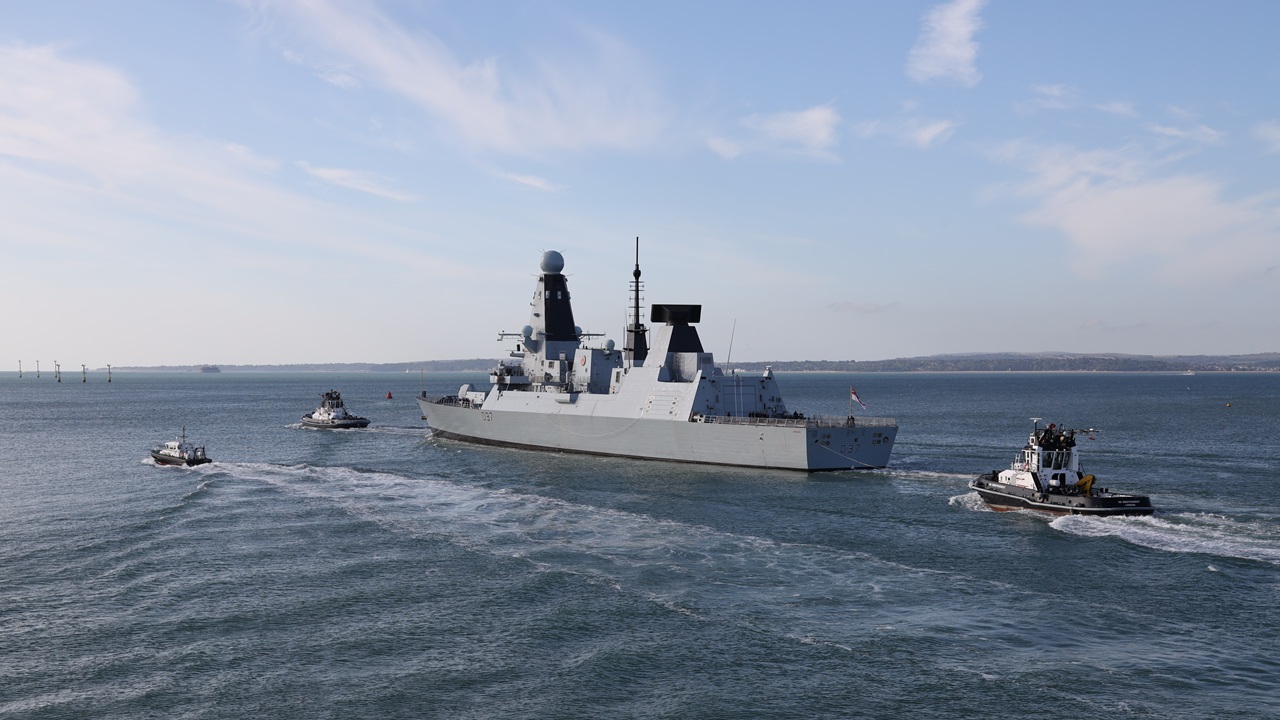
Image: Shutterstock / Kevin Shipp.
The post The UK’s “Atlantic Bastion” Is the Right Strategy for the Wrong Country appeared first on The National Interest.
Источник: nationalinterest.org