
«Данное сообщение (материал) создано и (или) распространено иностранным средством массовой информации, выполняющим функции иностранного агента, и (или) российским юридическим лицом, выполняющим функции иностранного агента»
 Topic: Land Warfare Blog Brand: The Buzz Region: Europe Tags: Eastern Europe, Infantry Fighting Vehicles, NATO, Poland, and Tanks Poland Just Got the First of 111 Borsuk Infantry Fighting Vehicles December 19, 2025 By: Brandon J. Weichert
Share
Poland is the latest nation to succumb to the IFV epidemic sweeping European NATO members—though the vehicles’ effectiveness against actual tanks is far from clear.
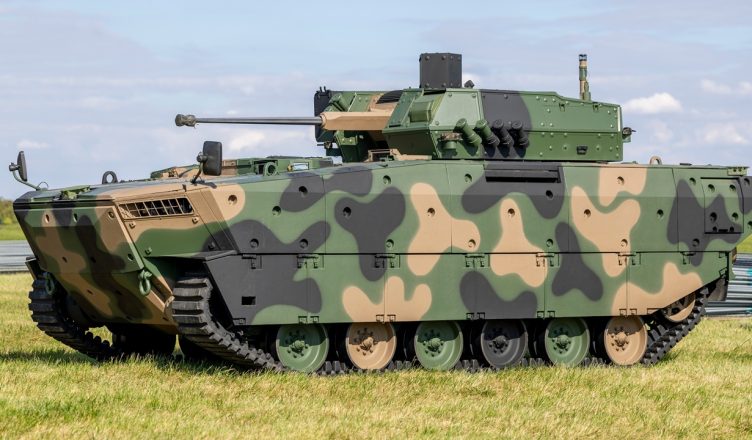
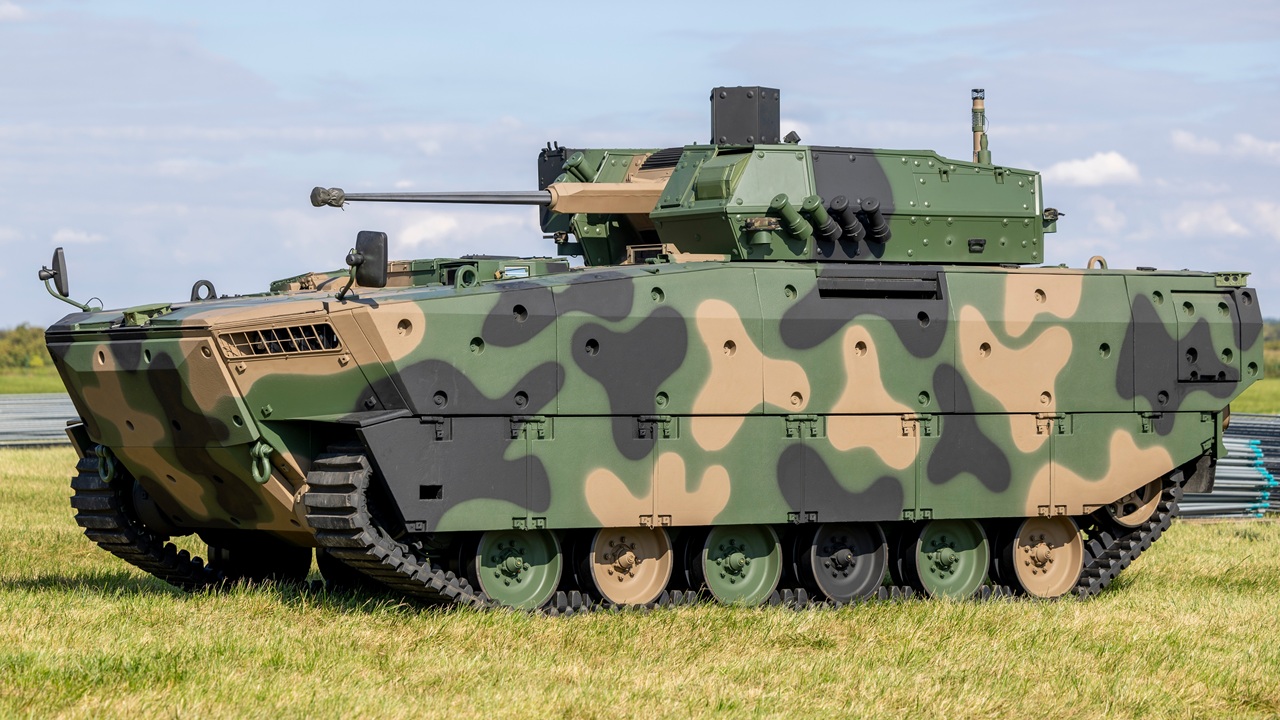
The infantry fighting vehicle (IFV) craze continues to sweep Europe. This time, the Polish Armed Forces is receiving 111 Borsuk IFVs as part of a $1.8 billion contract with Polska Grupa Zbrojeniowa and Huta Stalowa Wola. An amphibious tracked vehicle, this platform is desired because of its emphasis on survivability and versatility—as well as its integration with other forces via advanced computer networks.
Why Are IFVs So Popular in Europe?
The Borsuk acquisition also underscores the importance of IFVs for European armies. The Ukrainians have relied heavily on IFV and lightly armored platforms, such as the Bradley Fighting Vehicle, to make up for a lack of heavy armor in Ukraine’s lines. Footage of Ukrainian Bradleys going head-to-head with Russian tanks has circulated widely on social media. (Less circulated is the fact that the Bradleys often have not fared well in these clashes—so much so that there is supposedly a “Bradley Graveyard” in Ukraine).
In fact, the obsession with IFVs in Europe seems like a dangerous gambit. IFVs have a place in modern militaries, but they are not heavily armored enough to reliably and consistently take on main battle tanks (MBTs). Nor are they adequately defended against drone attacks or anti-tank weapon attacks.
Nevertheless, Poland is committed to this purchase.
The Borsuk IFV’s Specifications
- Year Introduced: 2025
- Number Built: ~20, including prototypes; 100+ ordered
- Length: 7.6 m (24 ft 11 in)
- Total weight, battle ready: 28 tons
- Suspensions: Hydropneumatic suspensions
- Engine: MTU 8V199 TE20 (providing 720 horsepower)
- Top Speed: 65 km/h (40.4 mph) on road
- Range: 550 km (340 mi)
- Armament:
- 30mm Mk 44S Bushmaster II cannon main gun
- 7.62mm UKM-2000C machine gun
- Dual Spike-LR/LR2 anti-tank missile launcher
- Crew: 3 (commander, gunner, driver) + up to 6 infantry
The Borsuk IFV Was Designed with Lessons from Ukraine
In 2017, the initial technology demonstrator of the Borsuk was unveiled at MSPO 2017 defense expo. A year later, designers presented a newer and improved version that included side skirts, specialized armor on the sides, and composite rubber tracks (CRT) in the place of steel links.
By 2019, another improved version was displayed at MSPO 2019. That new prototype included trim vane, revised headlight arrangements, updated add-on armor, and mounting points for multispectral camouflage.
In 2020, Borsuk’s prototype completed military field tests at the Drawsko Training Ground. And, at the Orzysz Training Ground, Borsuk was presented for formal evaluation and familiarization trials by November 2022—nine months after the initial Russian invasion of Ukraine.
The Polish Borsuk (meaning “Badger”) is described as a “next-generation, amphibious fighting vehicle.” It is a replacement for Poland’s Soviet-era BWP-1s.
Borsuk is designed to carry a maximum of six soldiers to and from combat areas. Borsuk is built upon a modular tracked chassis for specialized variants—including command and mortar carrier types.
There is also an automated ZSSW-30 turret on these systems. The ZSSW-30 turret system is described in Defense Post, an industry publication, as a system that “enables precision engagement at various ranges, while the Spike missile launcher allows effective anti-armor operations.”
Clearly, the Poles have studied the kind of combat Ukraine’s various IFVs experienced and made adaptations. Having anti-tank weapons embedded within this platform will allow for the Borsuk to better take on Russian tanks.
Should Poland Be So Committed to the IFV Craze?
Again, though, these systems are still more lightly armored than tanks—meaning that if an enemy tank can return fire accurately, this system might be knocked out of the fight quicker than the Polish military expects.
Of course, this platform’s development precedes the Ukraine War by five years. Yet, even the Polish defense minister has indicated that Borsuk has taken on a level of high importance since the Russian invasion of Ukraine in 2022 and wants future orders to come in faster than this first batch did. As the Polish defense minister indicated, Warsaw is “running out of time” to prepare for what it believes is a pending Russian invasion.
About the Author: Brandon J. Weichert
Brandon J. Weichert is a senior national security editor at The National Interest. Recently, Weichert became the host of The National Security Hour on America Outloud News and iHeartRadio, where he discusses national security policy every Wednesday at 8pm Eastern. Weichert hosts a companion book talk series on Rumble entitled “National Security Talk.” He is also a contributor at Popular Mechanics and has consulted regularly with various government institutions and private organizations on geopolitical issues. Weichert’s writings have appeared in multiple publications, including The Washington Times, National Review, The American Spectator, MSN, and the Asia Times. His books include Winning Space: How America Remains a Superpower, Biohacked: China’s Race to Control Life, and The Shadow War: Iran’s Quest for Supremacy. His newest book, A Disaster of Our Own Making: How the West Lost Ukraine is available for purchase wherever books are sold. He can be followed via Twitter @WeTheBrandon.
Image: Shutterstock / Karolis Kavolelis.
The post Poland Just Got the First of 111 Borsuk Infantry Fighting Vehicles appeared first on The National Interest.
Источник: nationalinterest.org