
«Данное сообщение (материал) создано и (или) распространено иностранным средством массовой информации, выполняющим функции иностранного агента, и (или) российским юридическим лицом, выполняющим функции иностранного агента»
 Topic: Nuclear Energy Blog Brand: Energy World Region: Americas Tags: China, North America, Nuclear Reactor, Russia, Small Modular Reactors, and United States Nuclear Energy, Irrational Exuberance, and National Security December 18, 2025 By: Kenneth Luongo
Share
A nuclear energy boom, driven by AI hype and political urgency, risks repeating past failures that could undermine investor confidence, slow deployment, and weaken US national security objectives.
It is perfectly fine if the creators of a publicly traded small nuclear company become multi-millionaires by selling some of their stock in the conceptual reactor firm. It’s also OK if the founders of a fledgling company promoting President Donald J. Trump nuclear reactors 1-4 become paper billionaires nine months after going public. This is the essence of the market’s power and the risk-taking that is required to resurrect America’s nuclear industry.
But it is not acceptable if an irrationally exuberant nuclear power bubble, or the selected political promotion of flawed technologies that will ultimately fail, causes the nuclear sector to melt down and undermine US national security.
At a recent nuclear finance conference, investors expressed wariness about funding unproven new reactors without a strong US government backstop. Their concerns are the inability to quantify timescale and risk and the rapidly dawning reality that “this is going to take longer…[and] cost more” than nuclear supporters are projecting. This is an emerging and potentially serious flaw in the Trump administration’s approach to resurrecting nuclear power.
Trump’s Nuclear Torrent
There’s not much discernible strategy behind the Trump administration’s expansive nuclear power ambitions, but there is a clear logic—supercharge all possible pathways to success and hope for the best. Like many of the Trump administration’s initiatives, its nuclear energy plan is designed to blast away bureaucratic inertia, wreck perceived regulatory impediments, and render results with the least resistance.
There is a torrent of new programs that cover everything from subsidizing the restart of moribund reactors to supporting new fleet construction to accelerating the deployment of small modular reactors (SMRs). While the Trump approach of pushing full throttle across the board has merit, there does not seem to be a plan for preventing overhyped nuclear Theranos.
Perhaps this is the shock therapy that the nuclear power sector needs to overcome stagnation and spark success. But right now, it seems questionable that the scattershot approach being pursued can meet the vital goal of aggressively scaling power reactors in America.
One example is the Nuclear Reactor Pilot Program. The demand from the President is that something new produce fissionby July 4, 2026, to coincide with the nation’s 250th anniversary. This program includes 11 reactor pilot projects and poses a host of unanswered questions.
All the firms have to provide their own funding with no promise of subsequent support after July. They can’t be located at national laboratories or on federal territory. Eight of the reactors require High-Assay Low-Enriched Uranium (HALEU) fuel. The US government has agreed to provide initial HALEU fuel amounts to the reactor companies, but the production level remains low.
One competitor, Valar Atomics, has publicized its achievement of cold criticality in collaboration with Los Alamos Laboratory, but it’s unclear if that is the fission standard the administration is seeking. For a reactor test to be commercially relevant, the fuel used must be “at least 90% commercial capacity…achieve at least 90% of the power level…[and] operate at full power for 150 hours or more.”
The urgency embedded in this initiative is laudable, but a rushed, gimmicky showpiece is not a stable foundation from which to launch a solid strategy that can produce 300 gigawatts (GW) of new nuclear power by 2050 or result in global nuclear energy domination. That goal requires a medium- to long-term game plan featuring a range of marketable reactor types and power ratings that the administration has not yet created.
The administration also seems to be discounting the unique nature of nuclear energy. This is particularly true for SMRsthat are designed to run on exotic fuels and coolants. High Temperature Gas Reactors (HGTRs) and Molten Salt-Fueled Reactors (MSRs) have great promise but poor operational history.
Then there is the supply of reactor fuel. The ban on Russian fuel imports is pressuring US utilities. And while the US is plowing billions into upgrading the nation’s uranium enrichment capability, it has been slow to develop at scale. Many small reactors run on HALEU fuel, which is not readily available in the US and is in increasing demand.
An additional complication has been introduced through the Department of Energy’s (DOE) decision to make 19.5 metric tons of plutonium available for companies. The catch is that they have to recycle and reprocess it into HALEU nuclear fuel. The question is whether this plutonium plan will fuel progress or create more nuclear white elephants that can’t move to the market.
It is in these circumstances of pushing rapidly beyond the old limits but not fully appreciating the downsides of an “app-influenced” mentality of moving fast and breaking things that nuclear bubble products begin to float to the surface. A scenario of over-promise followed by failure has been a standard in the nuclear energy ecosystem, and repeating that cycle can crater the rising appeal of nuclear power.
Nuclear Power and National Security
The administration has identified nuclear energy as a national security priority, which is an important and welcome decision. But that national security value rests on a set of pillars that are vulnerable to an implosion if the Trump nuclear salvo fails.
Strengthening US and Allied Energy Independence: Energy independence has re-emerged as a vital geopolitical imperative in the wake of the Russian invasion of Ukraine. Russia’s territorial ambitions, use of energy as a political weapon, and its overall belligerence toward a global order it doesn’t control made clear the urgency for Western-allied nations to decouple from Russian energy. This has led to a significant increase in the pursuit of nuclear power, particularly in Eastern Europe. But other nations, including the United Kingdom and Japan, are also moving forward with nuclear power expansion for energy security purposes. A solid consortium of Western nuclear suppliers is essential to maintain this momentum.
Expanding Allies in Emerging Markets: The United States and its allies need to be able to compete in the emerging nuclear markets as well as established Organization for Economic Co-operation and Development (OECD) nations. To realize this opportunity, the United States and its allies must do a better job of preparing these countries for Western technology by finding creative engagement strategies. Russia and China are already working with a vast swath of the Global South on energy and infrastructure. Russia remains the world’s major nuclear energy exporter while China is orchestrating the largest nuclear energy buildout in history. The Trump plan is focused on the technology competition, but it needs a complementary diplomatic strategy.
Winning the Tech Revolution: Winning the artificial intelligence (AI) competition with China is a defining element of Trump’s foreign policy. And the administration’s nuclear power plan is driven by the projected explosion of data centersto feed that industry. But these data centers are enormous, and their power needs are urgent. According to Google CEO, Eric Schmidt, they are “industrial on a scale I have never seen,” and collectively could consume as much electricity as “nearly 16 Chicago’s” by 2030. But nuclear power is not ready for this energy explosion, and the scattershot Trump strategy could create further delays. Even if the construction time for the Westinghouse AP-1000 can be reduced to eight years, none are under contract or construction. And only one American SMR company has received a design certification, yet even with that seal of approval, none have been built. Most other small reactor companies are primarily looking at the mid-2030s for deployment, when data center mania may have passed its peak. One ray of hope is the US military, through microreactor projects, such as PELE and Janus, which may provide a spark that moves the deployment process forward by the end of the decade and could boost commercialization.
Building Nuclear Expansion Guardrails: As nuclear power expands, the international policy framework that ensures the safety and proliferation resistance of these technologies needs to adapt. The pressure of commercial competitiveness, the easy financing that fuels Russia and China’s nuclear offerings, and the lack of preparedness for nuclear reactors in developing economies make it necessary that there be durable guardrails as nuclear power grows. The United States and its allies are best positioned, politically, to develop the adjustments and nuances for this new regime. But historically, the dominant nuclear power operator and exporter has written the rules. And, at the moment, that is Russia and China.
About the Author: Ken Luongo
Kenneth Luongo is the president and founder of the Partnership for Global Security (PGS) and the Center for a Secure Nuclear Future.
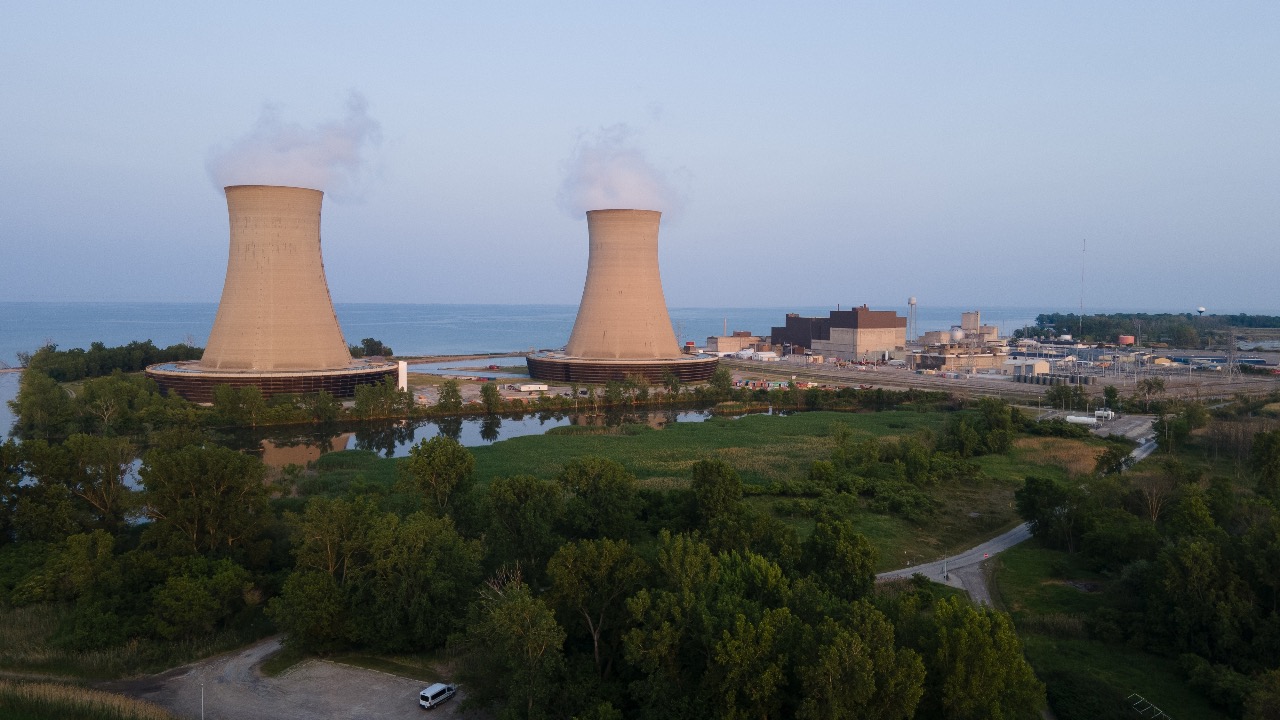
Image: Matthew G Eddy/shutterstock
The post Nuclear Energy, Irrational Exuberance, and National Security appeared first on The National Interest.
Источник: nationalinterest.org