
«Данное сообщение (материал) создано и (или) распространено иностранным средством массовой информации, выполняющим функции иностранного агента, и (или) российским юридическим лицом, выполняющим функции иностранного агента»
 Topic: Air Warfare Blog Brand: The Buzz Region: Americas Tags: A2/AD, Military Budget, Missiles, North America, Northrop Grumman, Stand-in Attack Weapon (SiAW), United States, and US Air Force Northrop Grumman Just Got Another $100 Million for SiAW Missile Enhancements December 17, 2025 By: Brandon J. Weichert
Share
The “Stand-in Attack Weapon” air-to-ground missile is likely America’s best chance to break down China’s advanced A2/AD bubbles in the Indo-Pacific.
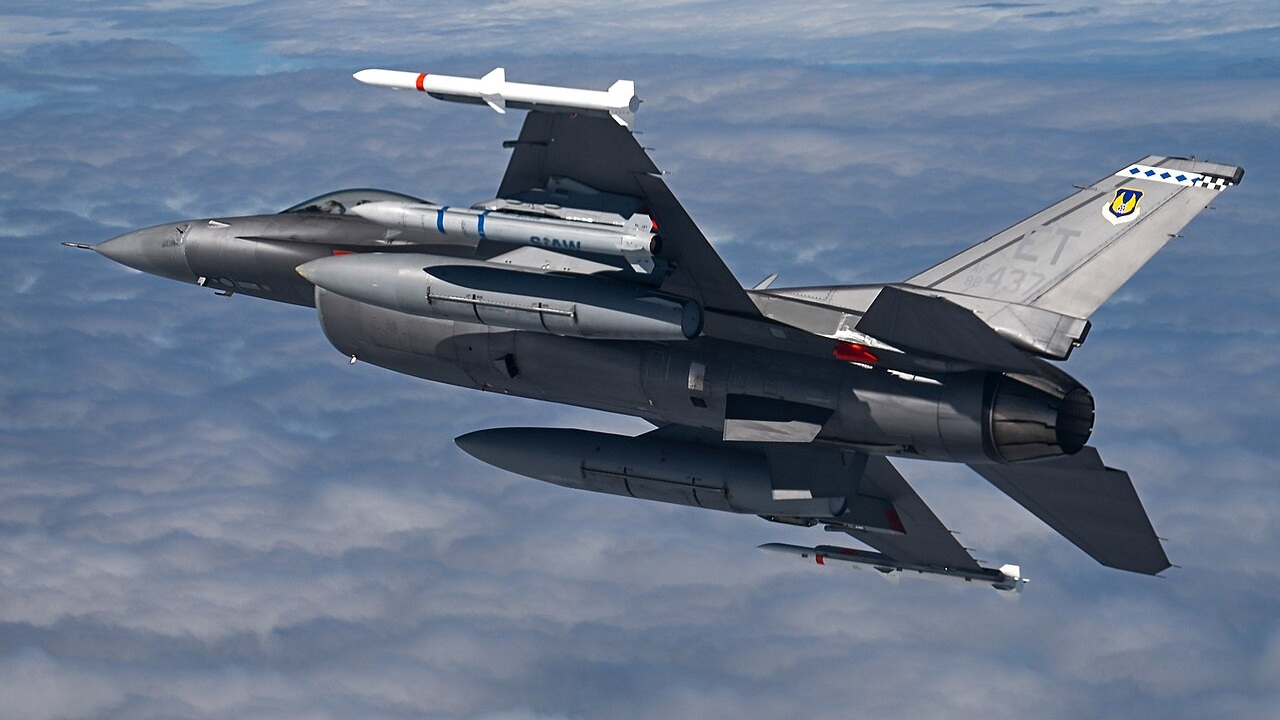
Northrop Grumman has won a $100 million contract to support the United States Air Force’s development of the Stand-in Attack Weapon (SiAW) subsystem. Specifically, Northrop is to assist the Air Force in developing seeker components, test and evaluation support, and science and technology development.
This program is set to take place in Baltimore, Maryland until December 31, 2034, according to Elodie Collins at GovCon Wire, a government contracting news website.
What the Heck Is a Stand-in Attack Weapon?
The Air Force’s Stand-in Attack Weapon subsystem is a next-generation air-to-ground missile that Northrop is already building for the Air Force. It is specifically designed to pierce pesky anti-access/area-denial (A2/AD) bubbles, such as mobile missile launchers, GPS jammers, command-and-control nodes, and anti-satellite (ASAT) systems.
These A2/AD bubbles are among the most problematic threats the American military is faced with today. China, Russia, even Iran and North Korea—possibly even smaller states like Venezuela—have some level of A2/AD capability, which is causing all manner of headaches for the United States as it works to project power in regions that are contested by these powers.
Some A2/AD threats are more serious than others, with China’s being the most comprehensive and complex. Indeed, with tensions roiling between China, Japan, the Philippines, and Taiwan—all of which are American allies—fears abound that the US military might soon have to contend with China’s A2/AD network arrayed throughout the South China Sea (SCS), the Taiwan Strait, and the East China Sea.
By using advanced swarms of missiles, hypersonic weapons, drones, and paired with sophisticated sensor networks, China intends for their A2/AD network to establish the equivalent of bubbles—or shields—that will keep US military forces just over-the-horizon while allowing for China’s numerically superior forces to achieve their objectives while the Americans are still trying to safely project power in places like the SCS or Taiwan Strait.
That’s where the SiAW comes into play.
How SiAW Weapons Can Burst the A2/AD Bubble
Northrop Grumman’s new air-to-ground missile for the USAF is meant to strike high-value targets, such as those aforementioned mobile missile launchers, command posts, and jamming systems that form the backbone of the A2/AD network. These weapons are to be fired from fifth-generation stealth warplanes, like the F-35 Lightning II, to allow for deep penetration into protected enemy airspace.
The SiAW features an impressive open architecture for fast upgrades. The system itself is meant to employ greater speed, range, and superior sensing capabilities to increase its lethality over existing American air-to-ground missiles. It can also be fired from the B-21 Raider stealth bomber still under development for the Air Force, slated to replace the B-2 Spirit within the next decade.
Specifications for the SiAW include a two-way data link for mid-course updates and an advanced seeker that allows for the system to attack moving targets, such as mobile missile launchers that might be on the move.
In late 2023, Northrop won the contract to build the SiAW for the Air Force. The weapon has so far met many of its benchmarks, including two successful inert drops from American F-16 fighters. The program aims for an initial operational capability (IOC) for 2026. In all, the Air Force wants anywhere from 400 to 3,000 SiAW missiles by 2028, for an estimated total cost of $8.4 billion.
Can America’s Broken Defense System Keep Up?
In all likelihood, given the extreme limitations of America’s antedated defense industrial base, that number will be much closer to 400 than 3,000 as 2028 approaches.
It is believed that the additional $100 million contract for Northrop to develop seeker components and other aspects for the SiAW will increase the efficacy of this system. Of course, it is also probably an acknowledgement that the weapon is not ready for showtime—and will more than likely suffer through additional delays along the way.
About the Author: Brandon J. Weichert
Brandon J. Weichert is a senior national security editor at The National Interest. Recently, Weichert became the host of The National Security Hour on America Outloud News and iHeartRadio, where he discusses national security policy every Wednesday at 8pm Eastern. Weichert hosts a companion book talk series on Rumble entitled “National Security Talk.” He is also a contributor at Popular Mechanics and has consulted regularly with various government institutions and private organizations on geopolitical issues. Weichert’s writings have appeared in multiple publications, including The Washington Times, National Review, The American Spectator, MSN, and the Asia Times. His books include Winning Space: How America Remains a Superpower, Biohacked: China’s Race to Control Life, and The Shadow War: Iran’s Quest for Supremacy. His newest book, A Disaster of Our Own Making: How the West Lost Ukraine is available for purchase wherever books are sold. He can be followed via Twitter @WeTheBrandon.
Image: Wikimedia Commons.
The post Northrop Grumman Just Got Another $100 Million for SiAW Missile Enhancements appeared first on The National Interest.
Источник: nationalinterest.org