
«Данное сообщение (материал) создано и (или) распространено иностранным средством массовой информации, выполняющим функции иностранного агента, и (или) российским юридическим лицом, выполняющим функции иностранного агента»
 Topic: Land Warfare, and Terrorism Blog Brand: Middle East Watch Region: Middle East Tags: Ahmed Al-Shara, Bashar al-Assad, Druze, Israel, Kurds, Levant, MENA, Syria, Syrian Civil War, and United States Lingering Challenges in the New Syria December 9, 2025 By: Alexander Langlois
Share
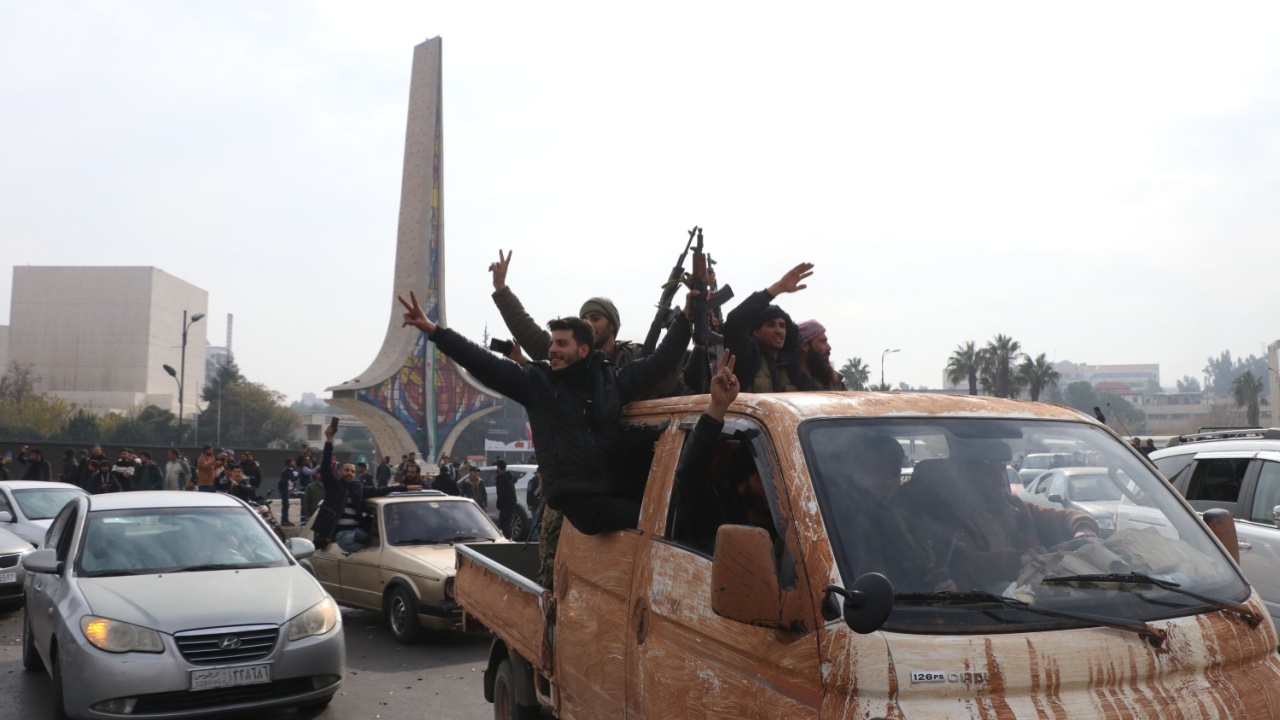
On the anniversary of the country’s liberation from the Assad regime, Syria’s outlook is one of cautious optimism.
As the adage goes, “The past is never dead. It’s not even past.” Nowhere is that simple truth more prominent than in post-conflict societies—including and particularly Syria, just one year after the collapse of the decades-old Assad regime on December 8, 2024. On such an anniversary, the country continues to face both challenges and opportunities amid its difficult transition from one of the most barbaric regimes of the twenty-first century, suggesting its strategic outlook headed into 2026 is a muddled one of both promise and potential horror.
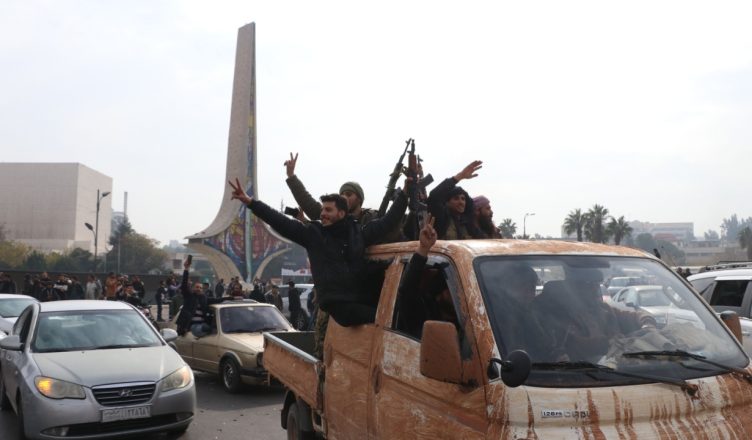
The end of the Assad dynasty in December 2025, following the shocking opposition takeover of the country, spearheaded by the jihadist opposition faction Hayat Tahrir al-Sham (HTS), shocked the world. In mere days, Assad went from a leader who was slowly regaining his footing regionally and globally despite his litany of crimes to a fugitive on the run from his people. Syrians—who had for years watched their society fray along brutal ethnic and political lines as the de facto partition of the country hardened between competing warring factions—widely united in rejection of the family that had led them down a path of destruction and misery.
Considering the impact of the war on their country, Syrians were ecstatic. At least 500,000 people were killed in the fighting, which included regime chemical weapons attacks, the rise of the Islamic State (ISIS), the enforced disappearance of nearly 177,000 people, and widespread destruction of Syria, to name but a few of the terrible highlights of the conflict. Millions were displaced internally and externally as a humanitarian crisis of epic proportions devoured and impoverished the country. Key domestic and international stakeholders largely fueled and prolonged the crisis through support for armed actors, sanctions, and perceived interests that hardly considered the needs or dreams of Syrian civilians caught in the middle.
The moment of joy in Syria upon recognition that this tragedy was ending was short-lived, however, as the dividing lines of the war quickly caught up with a nation reeling under the painful realities of conflict. As the country’s new leaders—led by former HTS head and Interim President Ahmed al-Shara and his closest HTS allies—consolidated power and began efforts to rebuild and unify the country, violence and sectarian tensions slowly expanded. The result, to be expected, was horrendous: brutal sectarian massacres in the Alawite-dominant coastal regions in March and similar violence to the country’s south, in the Druze-dominant Suwayda Governorate.
Unfortunately, these moments have come to define Syria’s first year free of the Assad regime. Since the early days of the conflict, there remained few to no actors with a clean record in Syria, including at the time of the collapse. Thus, those with power across the country filled vacuums left by the regime, expanding their influence through revenge killings and efforts to position themselves within the “new” Syria. Still, the responsibility for these atrocities rightly fell on the state, which not only contains elements who played a role in atrocities before and after Assad’s fall, but also now holds the responsibilities for governance in the country, including and particularly such horrific failures.
But Syria’s new leaders can also cite numerous victories in their first year of rule. In this regard, Damascus achieved historic sanctions relief from the United States, once its sworn enemy and occupier. It has fully re-entered the regional and international fold, even amid serious Western skepticism of HTS and al-Shara’s past connections to Al Qaeda and regional leaders’ fears of any entity even remotely resembling a form of political Islam. While still seriously lacking, the state is managing to improve the country’s economic outlook and the daily lives of its citizens, including by improving electricity production essential to economic recovery and reconstruction.
That al-Shara joined the Global Coalition to Defeat ISIS (Daesh) in November presents yet another major success for Syria’s new leaders, especially given their past. Security coordination with the West will be a boon for Damascus, even as it hedges—like its Arab neighbors—between great powers to improve its security situation. Such efforts will go a long way to remove remaining sanctions on the country, not limited to the US State Sponsor of Terrorism designation that has helped cripple the country since 1979, especially in the shadow of HTS and al-Shara’s terror designation revocation in November.
That said, Syria’s economic and security situation remains its most pressing challenge headed into 2026, and particularly on the latter front. Internally, jihadist groups within and outside of the government present a real threat to the transitional authority’s power and control. Specifically, former Syrian National Army (SNA) factions continue to commit violations, hold territory, and operate criminal enterprises in clear violation of international law. Many of these factions remain sanctioned by major Western players, and merely folding them into the military has not sufficed in addressing these issues. Questions of transitional justice—not just for regime allies, but all human rights violators—must advance for Syria to have any chance at a real transition from conflict.
That issue remains central with respect to Syria’s minorities, some of which have moderate to total control of large swathes of sovereign Syrian territory out of fear of the transitional authority’s past and present beliefs. Druze and Kurdish militias, alongside the Alawite community and regime elements opposed to the new authorities, will continue to draw support for breakaway projects or autonomy so long as the central state fails to address their concerns. The question of unification in talks between the transitional authority and the Syrian Democratic Forces (SDF) presents the greatest challenge in this regard, especially as northeast Syria is the country’s breadbasket and oil barrel—necessary resources for a true Syrian recovery.
Indeed, the risk of Syria’s balkanization or some return to full civil conflict remains high, especially amid foreign interests disinclined to build up a strong, unified Syrian state or its new rulers. In this regard, Israel and Iran present the greatest external threat to the country’s transition today and in 2026.
Both countries desire a weak Syria in which they can advance their interests—namely, competing for greater relative power in their long-running, not-so-shadowy war. Israel’s ongoing and illegal occupation of sovereign Syrian territory, alongside its demands for a buffer zone, is and should be a non-starter. Tehran’s desire to re-arm Lebanese Hezbollah through Syria, similarly, is rightly rejected by Damascus but is also difficult to contain.
In this regard, while the US strategy in the country has largely been sound, it has failed to rein in Israel. That said, Washington’s focus on sanctions relief and securing support for Damascus—alongside regional leaders with a greater stake in the country—was a prudent move well within its regional interests. Similar efforts to end the US military operation in the shadow of Syria’s increased efforts to fight violent extremism reflect the recognition in Washington that the deployment must end. Still, that withdrawal has not happened fast enough, likely due to the slow nature of Damascus-SDF talks, which the United States has a massive role and interest in seeing through.
Ultimately, Syria can successfully move on from its horrific conflict with proper levels of support that recognize the value in building a new Syria devoid of the conflicts of old. It will not be simple and has not been thus far. Still, the alternative—a return to brutal, sectarian war—is flatly unacceptable due to the internationalization of the crisis and the external impacts it has had and continues to have on the Middle East and broader globe.
With many questions surrounding reconstruction, political unification, societal reconciliation, and constitutional reform, Syria’s 2026 outlook is one of cautious optimism. Whether the country can shake the past that currently defines the present will strongly dictate its direction in the next year.
About the Author: Alexander Langlois
Alexander Langlois is a foreign policy analyst, the senior editor at DAWN, and a contributing fellow at Defense Priorities. He is focused on the geopolitics of the Levant and the broader dynamics of West Asia. Langlois holds a Master of Arts degree in International Affairs from American University. He has written for various outlets, including The Carnegie Endowment for International Peace’s Sada, the Atlantic Council’s MENASource, the Lowy Institute, the Gulf International Forum, the New Arab, the Nation, and Inkstick. Follow him on X: @langloisajl.
Image: Mohammad Bash / Shutterstock.com.
The post Lingering Challenges in the New Syria appeared first on The National Interest.
Источник: nationalinterest.org