
«Данное сообщение (материал) создано и (или) распространено иностранным средством массовой информации, выполняющим функции иностранного агента, и (или) российским юридическим лицом, выполняющим функции иностранного агента»
 Topic: Trade Blog Brand: Silk Road Rivalries Region: Eurasia Tags: Central Asia, Economic Development, Kazakhstan, Kyrgyzstan, Tourism, and Uzbekistan How Kyrgyzstan Is Leading Central Asian Tourism December 8, 2025 By: Michael Rossi
Share
The post-Soviet republic seeks to diversify its economy beyond raw materials and portray itself as an adventure destination.
Central Asia has gained increasing global attention over the last decade. As a region that had remained largely obscure to the Western world opens up to international business, transnational trade, and “multivector diplomacy”, countries like Kazakhstan, Uzbekistan, and Kyrgyzstan are also attracting a number of tourists eager to discover the next great “off the beaten path” destination before the rest of the world finds out.
As part of a collective effort by Central Asian countries to present a positive brand image, Kyrgyzstan has made significant strides in investing in its tourism industry. The country is promoting some of its greatest attractions in open exploration, nature, mountain hiking, horseback riding, camping, and long-distance driving. Though Kyrgyzstan is a largely unknown former Soviet Union country that attracts a handful of tourists willing to explore an area that is both unknown and unheard of, there is significant potential for growth and development.
In January 2025, Kyrgyzstan’s Cabinet of Ministers approved a new Five-Year Strategic Plan: Program for Sustainable Tourism Development. The aim, beyond enhancing the country’s tourism sector, is to link it to regional development and environmental preservation.
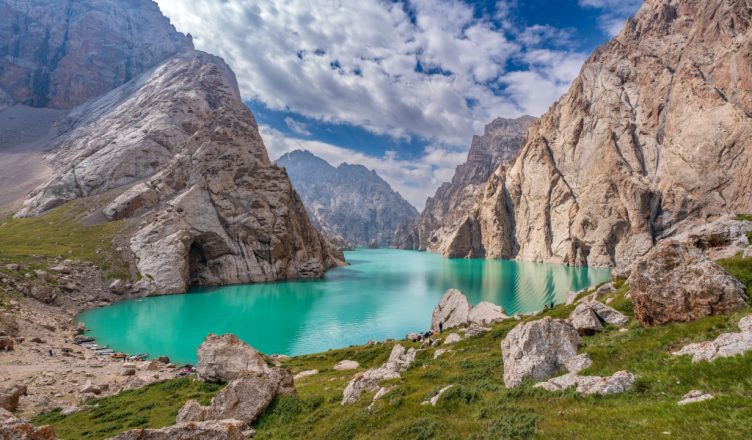
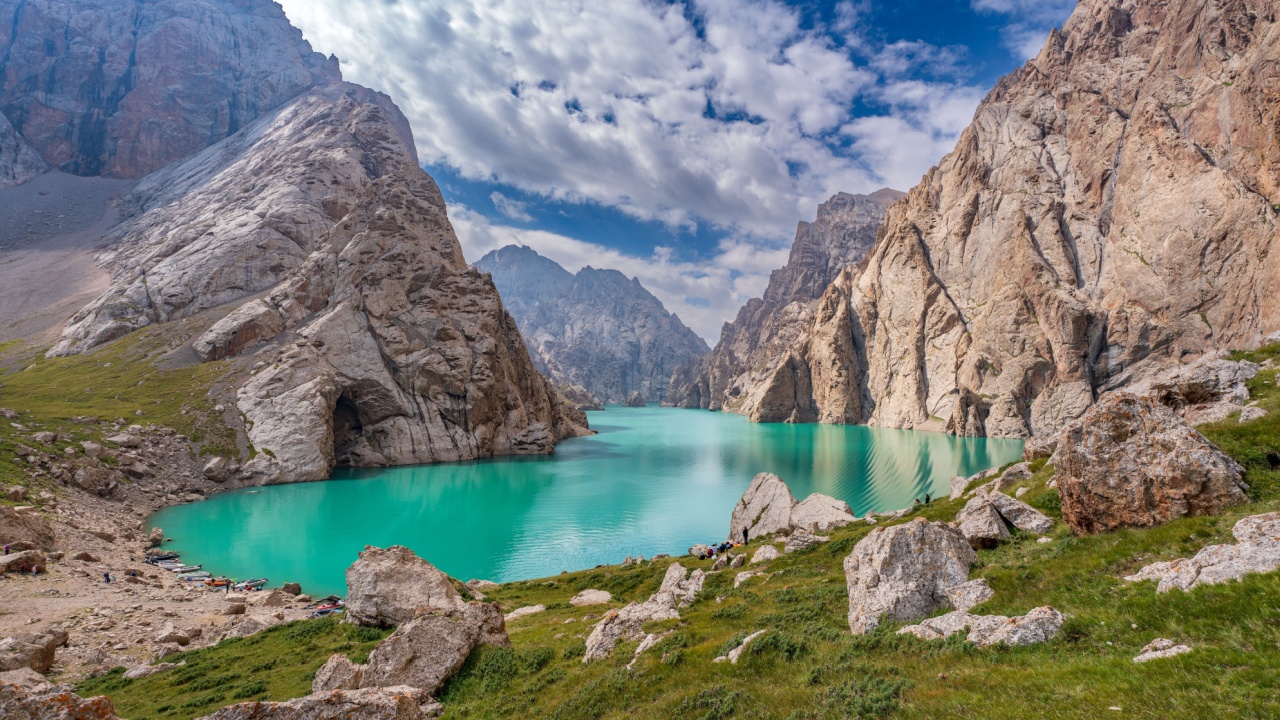
Tourism and hospitality have long remained mainstays in a country’s “nation-branding.” As the Central Asian region grows in importance, social media travelogues on nature, history, culture, art, and most importantly, food, will make it a sought-after destination. Endowed with mountains and lakes resembling the Alps, a nomadic lifestyle that offers exceptional camping experiences, and a historical heritage that connects it to the fabled Silk Road, Kyrgyzstan is a country that can hold even the most seasoned traveler in awe.
It is only recently, however, that the country’s Ministry of Tourism has begun to leverage these assets to contribute to job creation, economic diversification, regional development, and broader sustainable growth. If the ultimate goal of nation branding is to foster a positive image of the country and its people for the larger world to do business with, much of that image begins with tourism and marketing, which, in turn, begins with accessibility. Kyrgyzstan is one of the easiest countries in Central Asia for citizens of Europe and North America to visit without a visa for up to 60 days.
The merits of this opening up of the country are numerous. First and most importantly are the immediate economic merits of tourism expansion. Kyrgyzstan gained an estimated $345 million in revenue in 2024. Second, tourism necessitates new jobs and local economic development through the construction of modern hotels, transportation services, multilingual guides, restaurants, and artisanal handicrafts.
While not directly related to the tourism industry, the Kyrgyz government recently modernized and expanded the A365 highway, which offers excellent access from Manas International Airport just north of the capital, Bishkek, through the country’s eastern and southern regions and offers spectacular views of the Tian Shan mountains that frequently tempt one to pull over and photograph the beauty.
Third, an invested tourism industry offers opportunities for growth and development of smaller towns and rural areas. The A365 highway passes through many such rural locations on its way to destinations such as the glacial lake Issyk Kul, the mountain trails of Barskoon, or the remote caravanserai of Tash Rabat. More than simply enabling these smaller localities to offer guests nightly room and board, it connects these towns to a larger infrastructure that improves both transportation and digital access and communication, much of which is still rudimentary outside of Bishkek.
Fourth, a growing tourism industry helps diversify Kyrgyzstan’s economy, which, like much of the rest of Central Asia, has traditionally been reliant on extractive industries like mining and agriculture. This model of long-term economic modernization has already been undertaken in Kazakhstan and Uzbekistan, both of which have recently counted tourism as an important source of income. As tourism grows, there is significant room for foreign direct investment in the tourism infrastructure, like hotels, health resorts at natural springs and spas, and recreational camps.
During the Soviet period, Kyrgyzstan was known as a prime destination for health spas and sanatoriums. The famed Soviet cosmonaut Yuri Gagarin spent time at the resorts between Issyk Kul and Barskoon. The Sustainable Tourism Program has identified the potential in health and niche tourism, all of which not only build on Kyrgyzstan’s natural beauty but also further the potential to extend health infrastructure to locals.
Fifth, Kyrgyzstan’s Sustainable Tourism Program has set a five-year goal of reaching the top 50 in the World Economic Forum’s Travel and Tourism Competitive Index. With visa liberalization, Kyrgyzstan has the potential to position itself as a prime destination for the surrounding mountains of Central Asia and Silk Road sites, thereby strengthening its image as a destination for hospitality and exploration.
Lastly, tourism development, when appropriately managed, aligns with broader UN-sponsored Sustainable Development Goals (SDGs) that improve working conditions, reduce urban-rural inequalities, and emphasize environmental protection. When linked to the tourism industry, the SDGs can help invest in cultural infrastructure that promotes nomadic traditions in outdoor recreation, restore and maintain historical Silk Road sites, and improve the quality of life in rural towns and communities.
Currently, tourism accounts for about 2.7 percent of Kyrgyzstan’s GDP. The Sustainable Tourism Program aims to increase that to at least 7 percent by 2030. These goals are certainly not without risks, as an increase in tourism adds stress to the environment, deepens socio-economic inequalities between tourist-focused areas and the rest of the country, and requires intensified spending in infrastructure and safety standards. Nevertheless, it is an investment the country is committed to, and signals that Kyrgyzstan is open for business, willing to cooperate with regional and international partners, and serious about modernizing for tourism. This type of nation branding has the potential to empower both the private sector and foreign investor confidence.
To make Kyrgyzstan’s growing tourism industry sustainable, local participation is necessary for hotels, camps, and resorts. Skill-building for tour guides, hoteliers, and eco-preservationists helps local economies and ensures environmental safeguards. While the Russian language is widely spoken throughout Kyrgyzstan and the region, language training in English and Chinese is also essential.
Tourism has the potential to transform Kyrgyzstan’s economy and infrastructure. By generating significant foreign revenue, there is funding for good-paying jobs to uplift rural communities, diversify the economy beyond a few resource-dependent sectors, promote environmental stewardship and sustainable development, and position Kyrgyzstan as a prime destination for adventure and immersive nature-tourism in Central Asia.
About the Author: Michael Rossi
Michael Rossi is a lecturer in Political Science at Rutgers University of New Jersey, United States, and a visiting professor at Webster University, Tashkent.
Image: Siarher Daroshka / Shutterstock.com.
The post How Kyrgyzstan Is Leading Central Asian Tourism appeared first on The National Interest.
Источник: nationalinterest.org