
«Данное сообщение (материал) создано и (или) распространено иностранным средством массовой информации, выполняющим функции иностранного агента, и (или) российским юридическим лицом, выполняющим функции иностранного агента»
 Topic: Leadership Blog Brand: US Politics Tags: America First, Donald Trump, Iran, Isolationism, Israel, MAGA, North America, Republicans, Russia, Tucker Carlson, Ukraine, Ukraine War, and United States Foreign Policy Doesn’t Win Elections, But It Could Decide the GOP’s Fate December 12, 2025 By: Joseph Epstein
Share
President Donald Trump must corral the conservative movement to prevent the isolationist wing from undermining his own agenda.
The dictum that foreign policy doesn’t win elections has long been a part of the conventional wisdom of American politics. Yet as the Republican Party enters an ideological civil war, with the MAGA movement splintering into competing factions, foreign policy has become a major battlefield.
At the center of the new divide, which will determine what MAGA will stand for after Trump, is Tucker Carlson, who has positioned himself as the leader of an isolationist, grievance-driven bloc. Mixing conspiracy theories, antisemitic tropes, and sympathetic treatment of authoritarian governments hostile to the United States, Carlson has repeatedly worked to undermine Trump-aligned foreign policy goals.
The struggle is less about specific policies, however, than about who will ultimately control the movement. Trump built MAGA and remains its most powerful figure, yet by not policing his message, he has left space for Carlson to shape the narrative. Although Trump once called him “Kooky Tucker Carlson” in response to Carlson’s hysterical warnings that bombing Iran could trigger World War III, he has largely avoided confronting him directly. Carlson has been open about his intent, saying after a recent interview with white nationalist Nick Fuentes, “What happens after Trump goes? That’s what this is about.” If Trump does not draw clear boundaries, he risks allowing the movement he built to be defined by its most extreme elements.
Foreign policy is where Carlson has made his most aggressive push to reshape MAGA. He has repeatedly targeted Israel, blaming “Israel firsters” and “Zionists” for the supposed failures of US global engagement. He has floated baseless blood libels—including claims that Israel was behind the killing of conservative activist Charlie Kirk and that Jeffrey Epstein (no relation) was acting on behalf of Israel. These statements not only grab headlines but risk turning a key American ally into a political wedge issue within the Republican base.
Carlson’s brand of America First extends further than Israel. Amid escalating tensions with Venezuela, Carlson has defended Nicolas Maduro—an unpopular, socialist authoritarian responsible for economic collapse and mass repression—calling him “socially conservative” and framing the US pressure campaign as a “globalhomo” attack on “one of the most conservative countries in the Americas.” After Trump helped secure a peace agreement between Azerbaijan and Armenia, Carlson hosted the nephew of Kremlin-affiliated, Armenian-Russian oligarch Samuel Karapetyan, who had been imprisoned in June for allegedly plotting a coup, giving him a platform to accuse a pro-US leader of “repressing Christians.”
The interview inflamed tensions as Trump works with the Azerbaijani and Armenian leaders to establish the Trump Route for International Peace and Prosperity, a trade corridor crucial to US interests. In Ukraine, he interviewed an advocate for a Moscow-controlled church faction and claimed that Ukrainian president Volodymyr Zelensky—an ethnic Jew whom Carlson has called “shifty” and “rat like”—was using “secret police to extinguish traditional Christianity.”
Carlson has conducted softball interviews with Iranian president Masoud Pezeshkian and Russian president Vladimir Putin, the latter noting afterward that Carlson did not ask a single “sharp question.” Rather than challenging US adversaries, Carlson amplifies and ideologically launders them.
This push comes at a precarious moment, as the Trump administration just unveiled its 2025 National Security Strategy, which codifies a vision of American power that is muscular yet restrained and focused on core interests like economic dominance, border security, and hemispheric stability. The NSS explicitly endorses “responsible competition” with rivals like China and Russia, while shifting military resources toward the Western Hemisphere to counter threats such as Venezuelan instability and drug trafficking—directly aligning with Trump’s pressure campaign on Maduro that Carlson decries.
It reaffirms commitments to key allies, including Israel, as a bulwark against Iranian aggression, and outlines initiatives like the Armenia-Azerbaijan trade corridor to boost US prosperity through regional partnerships, not withdrawal. Far from Carlson’s grievance-fueled retreat, the strategy warns that unchecked adversaries would erode America’s wealth and influence, urging a “Trump Corollary” to the Monroe Doctrine to deny foes footholds in the Americas. By undermining these priorities, Carlson isn’t just critiquing policy; he’s actively sabotaging the blueprint Trump has laid out for MAGA’s post-presidency legacy.
While many on the right like Matt Walsh and Megyn Kelly warn against “infighting” or “canceling” fellow conservatives, Carlson is the one sowing division. The architects of the modern Conservative movement, like William Buckley, understood the need to cordon off radicals and bigots. Calling out someone for platforming extremists, spreading hate, or knowingly pushing propaganda is not an attack on free speech; it shows moral clarity and is a defense against internal collapse.
Conservatives understandably bristle at the term “canceling.” It was not long ago that many on the left used their cultural dominance to punish dissent on issues ranging from skepticism about the source of COVID-19 to opposition to puberty-blocking treatments for children. But the left’s experience should serve as a warning: when fringe activists set the agenda, and the leadership refuses to intervene, the movement self-destructs. Democrats saw moderates alienated, and elections tightened or lost. Prominent Democrats such as Senator Chris Murphy (D-CT) and Seth Moulton (D-MA) have since openly acknowledged the political damage caused by preachy policy and forced adherence to a “strict ideological purity test.”
Standing up to Carlson would be in line with Republican values. Only 16 percent of Republicans see Russia favorably. Just 11 percent want the United States to reduce support for Israel. And a whopping 64 percent of Republicans see antisemitism as a serious issue. Carlson’s nightly audience is loud and online, but a shrinking minority inside the actual GOP coalition.
Trump’s apparent reluctance to confront Carlson may stem from fear of a backlash from the most politically active and hyper-online segment of the base. But most Americans do not embrace this degree of radicalism and hate, and most Republican voters do not want their party defined by extremism or conspiracy. Trump still has the ability—and the responsibility—to set the direction of the movement he created. With one firm statement, he could reassert what MAGA stands for and prevent it from being hijacked. Allowing the extremist domination risks handing the future of the Republican Party to forces that are openly hostile to its principles.
The president should bear in mind that Carlson’s vision is not merely an ideological camp within Trumpism but a direct challenge to his leadership. By trying to redefine the core principles of MAGA and rallying supporters around a vision that rejects major elements of Trump’s foreign policy, Carlson is attempting to claim ownership of the movement. Foreign policy may not “win elections,” but today it threatens to determine the GOP’s future. Trump built the biggest tent in Republican history. If he doesn’t police the clowns and the kooks at the edges, the whole thing collapses—and the clowns inherit the rubble.
About the Author: Joseph Epstein
Joseph Epstein is the director of the Turan Research Center, a senior fellow at the Yorktown Institute, and a research fellow at the Begin Sadat Center for Strategic Studies at Bar Ilan University. He also sits on the advisory board of the Alekain Foundation, a nonprofit dedicated to providing education to women and girls in Taliban-controlled Afghanistan. He specializes in Eurasia and the Middle East, and his work has been featured in various outlets such as Newsweek, The Wall Street Journal, The Hill, the Atlantic Council, Novaya Gazeta, RFE/RL, Foreign Policy, and others.
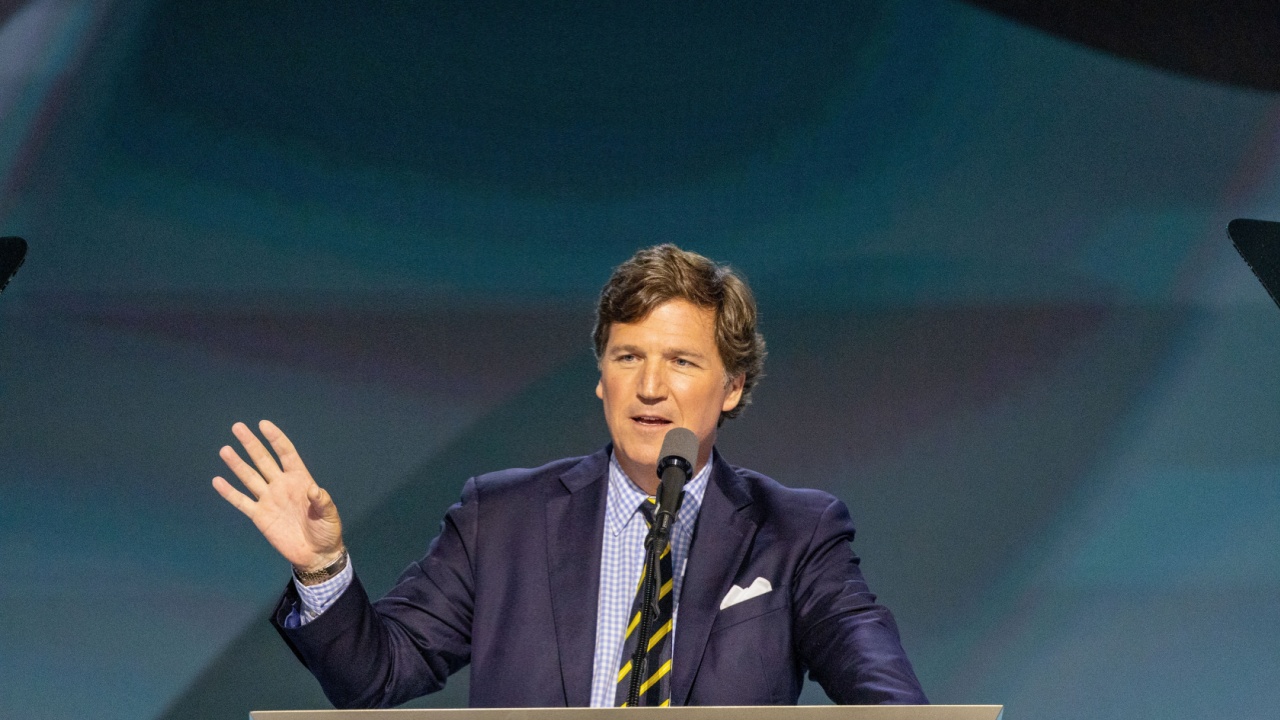
Image: Maxim Elramsisy / Shutterstock.com.
The post Foreign Policy Doesn’t Win Elections, But It Could Decide the GOP’s Fate appeared first on The National Interest.
Источник: nationalinterest.org