
«Данное сообщение (материал) создано и (или) распространено иностранным средством массовой информации, выполняющим функции иностранного агента, и (или) российским юридическим лицом, выполняющим функции иностранного агента»
 Topic: Air Warfare, and History Blog Brand: The Buzz Region: Asia Tags: Bomber Aircraft, Christmas, Operation Linebacker II, Richard Nixon, United States, Vietnam, and Vietnam War Did Nixon Order a “Christmas Bombing” of North Vietnam in 1972? Not Exactly December 25, 2025 By: Brandon J. Weichert
Share
Though Nixon initiated Operation Linebacker II, a bombing campaign against North Vietnam coinciding with the Christmas holiday, he suspended bombing operations on Christmas Day for humanitarian reasons.
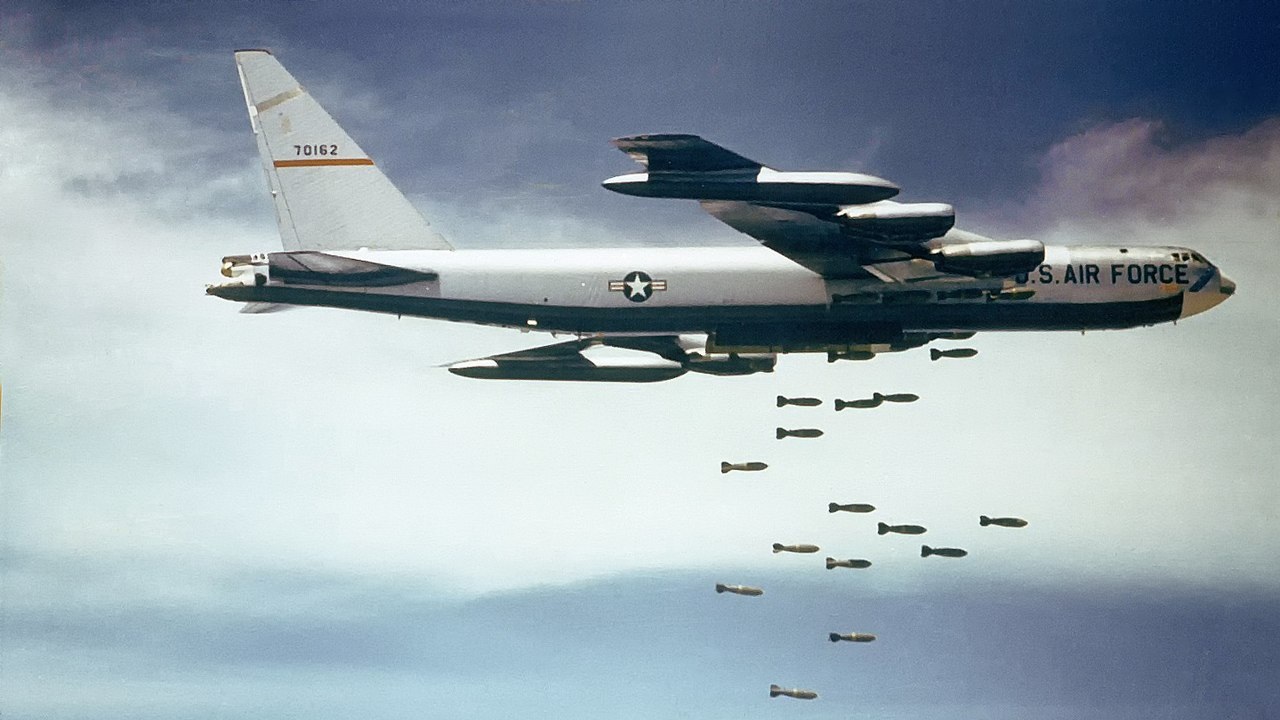
The “Christmas Bombings,” otherwise known as Operation Linebacker II, were a massive and concentrated US strategic bombing campaign directed against North Vietnam during the brutal Vietnam War. Those bombings took place from December 18 to December 29, 1972.
Ordered by President Richard Nixon, this was in response to what was then the breakdown in negotiations in Paris between representatives from the American government and North Vietnam, to end the war.
Why Nixon Launched “Operation Linebacker II”
Nixon’s primary goal was to pressure Hanoi to come back to the negotiating table in Paris by demonstrating to the North Vietnamese that continued resistance was useless.
Over 11 days, American forces—including B-52 Stratofortress heavy bombers, fighter-bombers, and naval aircraft—unleashed thousands of tons of bombs on the jungle below.
The campaign targeted military and industrial infrastructure, especially around Hanoi and Haiphong (North Vietnam’s political heart and major port). Estimates suggest that around 20,000 tons of ordnance were dropped during the operation.
During the bombing campaign, American aviators faced some of the most intense air defense action of their entire careers. Notably, US bombers faced extensive surface-to-air missiles (SAMs) and anti-aircraft fires. Both sides ultimately claimed different tallies for aircraft losses, but American forces did lose multiple B-52s and tactical warplanes. North Vietnamese air defenses persisted.
American planes attacked heavily populated areas around Hanoi and Haiphong, contributing to high civilian casualties and the destruction of sensitive civilian infrastructure in those areas. Many critics of the Nixon administration have maintained that the bombings were pointless at best, and possibly war crimes at worst. In Nixon’s defense, it should be noted that the bombings were designed to seek a greater peace—to end the war sooner—rather than an attempt to expand or decisively defeat the North Vietnamese through protracted warfare.
There remains further debate about the efficacy of the bombings. After all, Nixon engaged them to force North Vietnamese leaders to return to the Paris Peace Talks and negotiate in good faith. Hanoi’s leaders claimed the bombings never once impacted their strategy and calculations in terms of the Paris Peace Talks. Still, at the end of the day, the talks did resume shortly after the bombings.
The “Christmas Bombing” Didn’t Take Place on Christmas
Operation Linebacker II was the largest concentrated strategic bombing campaign of the Vietnam War and one of the most intense uses of heavy bombers since World War II. According to official sources, more than 1,600 civilians were killed in North Vietnam (mainly in Hanoi and Haiphong) by the American bombings. About 15 B-52s and several other American warplanes were lost, with dozens of crews as casualties.
An interesting tidbit: the bombing campaign, initiated on December 18, 1972, was paused on Christmas Eve of that year. It is a common misnomer, because of the nickname, that Operation Linebacker II took place over Christmas in 1972. It did not. The Nixon administration ordered the bombings paused on the evening of Christmas Eve and did not resume until December 26.
Why not? For one thing, Nixon wanted to maintain moral legitimacy. At this time, Washington still adhered to the concepts of norms, symbolism, and restraint. American culture in 1972, despite being in flux, remained generally Christian. Nixon, a conservative, wanted to be seen as upholding some semblance of Christian norms. So even as he was engaged in a maximum escalation against North Vietnam with Operation Linebacker II, these self-imposed moral red lines were not crossed by the Americans.
It is interesting that, despite the ferocity of the bombardment, the amount of ordnance dropped on civilian targets, and the death toll involved, the Americans would have even cared to pause these bombings in recognition of the Christian holiday of Christmas. This shows the potency of Christmas even in the crucible of war.
About the Author: Brandon J. Weichert
Brandon J. Weichert is a senior national security editor at The National Interest. Recently, Weichert became the host of The National Security Hour on America Outloud News and iHeartRadio, where he discusses national security policy every Wednesday at 8pm Eastern. Weichert hosts a companion book talk series on Rumble entitled “National Security Talk.” He is also a contributor at Popular Mechanics and has consulted regularly with various government institutions and private organizations on geopolitical issues. Weichert’s writings have appeared in multiple publications, including The Washington Times, National Review, The American Spectator, MSN, and the Asia Times. His books include Winning Space: How America Remains a Superpower, Biohacked: China’s Race to Control Life, and The Shadow War: Iran’s Quest for Supremacy. His newest book, A Disaster of Our Own Making: How the West Lost Ukraine is available for purchase wherever books are sold. He can be followed via Twitter @WeTheBrandon.
Image: Wikimedia Commons.
The post Did Nixon Order a “Christmas Bombing” of North Vietnam in 1972? Not Exactly appeared first on The National Interest.
Источник: nationalinterest.org