
«Данное сообщение (материал) создано и (или) распространено иностранным средством массовой информации, выполняющим функции иностранного агента, и (или) российским юридическим лицом, выполняющим функции иностранного агента»
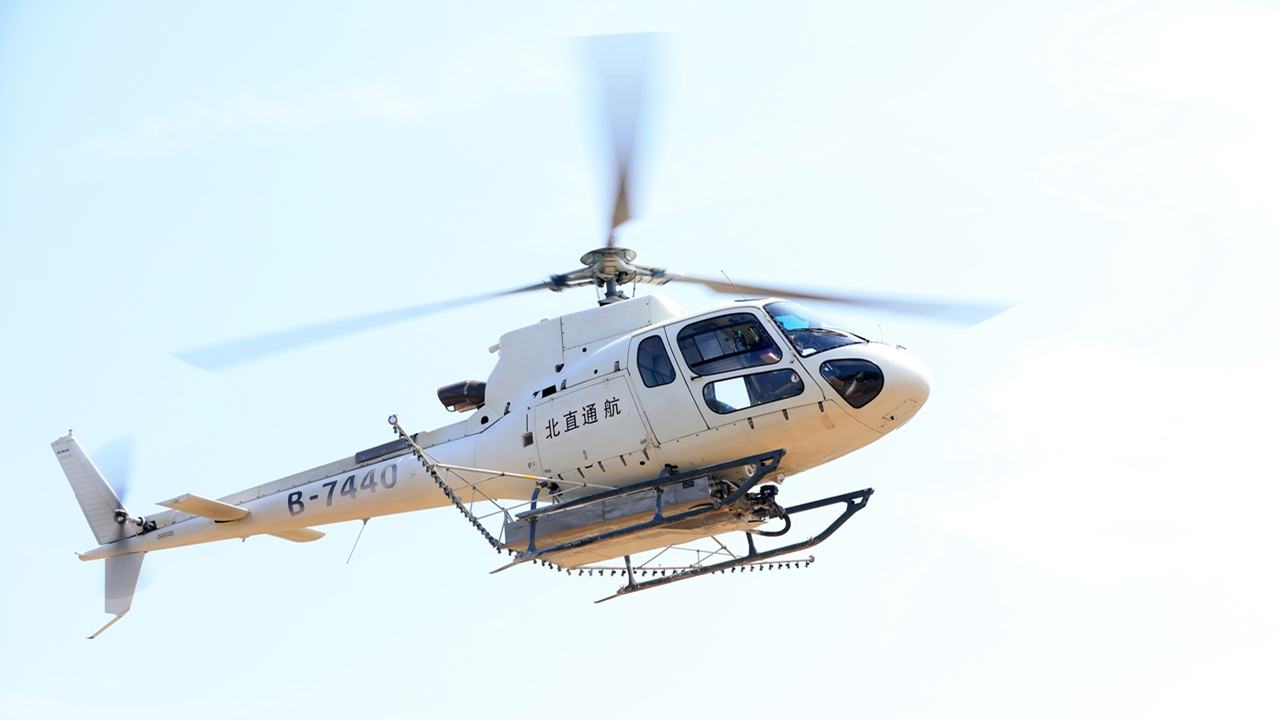 Topic: Air Warfare Blog Brand: The Buzz Region: Asia Tags: China, Drones, Helicopters, Himalayas, India, and People’s Liberation Army China’s New Killer Drone Helicopter Could Rewrite the Next War December 7, 2025 By: Brandon J. Weichert
Share
The Meyu Arrow has been designed specifically for operations at high altitudes—giving China a critical edge over India at the top of the world.
China is quietly building the tools it needs to dominate the world’s highest battlefields. Its newest addition—an unmanned, armed, high-altitude helicopter known as the Meyu Arrow—isn’t just another exotic drone. It’s a warning shot across the bow for China’s adversaries—one that the West seems to be ignoring.
Beijing is preparing to fight, and win, in places where human pilots can barely breathe. Hence the potency of this niche rotor-wing drone, the Meyu Arrow.
Understanding the Meyu Arrow Helicopter Drone
- Year Introduced: Not yet introduced (prototype phase)
- Number Built: Unknown
- Length: 7.87 m (25.8 ft)
- Rotor Diameter: 6.4 m (21 ft)
- Weight: Unknown
- Engines: Unknown
- Top Speed: ~178 km/h (110 mph) at 4,500 m
- Range: ~8 hours’ endurance
- Service Ceiling: ~7,000 m (23,000 ft)
- Loadout: Unknown payload capacity; can carry guided missiles (use confirmed in recent test)
Developed by Tengden Technology, the Meyu Arrow is described as a “plateau-type” aircraft—a rotor-wing drone built specifically for operations in thin air and extreme terrain. In essence, it is a purpose-built drone for the Himalayas, the Tibetan Plateau, and any mountainous battleground where most drones would struggle to stay aloft. Thanks to its vertical takeoff and landing (VTOL) ability, the Arrow can operate from narrow ridgelines, makeshift pads, or high-elevation valleys where conventional drones and helicopters simply cannot.
This drone fills a niche that Western planners have completely ignored. While the United States and its partners remain fixated on fixed-wing UAVs and loitering munitions, Beijing is expanding into high-altitude rotary-wing unmanned warfare—a domain that could prove decisive in future border clashes or a Taiwan invasion scenario.
China insists its massive construction and development push across Tibet is primarily economic. But much of that activity—roads, power stations, communications networks—fits neatly into China’s Military-Civil Fusion (MCF) strategy, in which “civilian” projects double as military infrastructure.
The Meyu Arrow has already completed successful live-fire tests. At present, it already has the ability to carry guided missiles that can strike both moving and fixed targets. Future upgrades include satellite communication links that would allow operators to control the craft from far behind the front lines, turning the Arrow into a true beyond-line-of-sight hunter.
Scale matters, too. No country can mass-produce drones like China. If Beijing is satisfied with the Arrow’s test results, expect hundreds of them to appear across the Tibetan Plateau in short order.
A Nightmare Scenario in the Next India-China Himalaya War
Imagine another Ladakh-style confrontation between China and India. These clashes erupt periodically, and for this reason, China and India have agreed to prohibit guns along their contested border, keeping the conflicts from escalating. But the absence of firearms does not mean that the border is safe; in May and June 2020, dozens of soldiers on both sides were killed following brutal melees.
During the next border crisis, instead of unarmed patrols shoving each other on icy ridgelines, China could quietly deploy a company of Meyu Arrow drones to forward bases on the plateau.
These drones begin quietly mapping Indian positions—forward posts, supply depots, artillery emplacements, fuel points, even the flight paths of Indian helicopters struggling to operate at altitude. The Arrows don’t fire. They watch, hover, orbit, and build a detailed kill picture.
Then a clash breaks out.
China moves quickly to impose a fait accompli: a nighttime infantry push across a contested ridgeline, supported by a stacked formation of Meyu Arrows operating between 4,000 and 6,000 meters. When India attempts to reinforce or evacuate its positions, the trap springs shut.
Arrows strike from above, dropping down from the plateau instead of rising from the valleys. They pick off convoys, artillery tractors, and helicopters trying to land on precarious mountain LZs. A handful of the drones shift into hunter-killer mode against Indian air defenses.
Within 24 hours, Indian frontline posts are cut off. Casualties mount as helicopter evacuation becomes suicidal. China offers a ceasefire based on “new realities on the ground.” New Delhi faces two choices: escalate to major air and missile strikes—or give in to Beijing and watch another slice of the rooftop of the world slip away.
Taiwan’s Mountain “No-Fly” Trap
The same drone becomes even more lethal over Taiwan.
Taiwanese defense strategy assumes that if China ever invades, surviving units would retreat into the island’s Central Mountain Range to wage a guerrilla campaign. But if Meyu Arrow squadrons enter the fight, that mountain sanctuary becomes a vertical kill box.
The Arrow’s endurance and altitude give it the ability to hover behind peaks, monitor east–west movement corridors, and ambush convoys, mobile SAMs, special forces, and supply helicopters as they attempt to move through tunnel mouths or narrow passes.
One drone, firing a single missile, could collapse a key bridge or choke point. A pair could halt an entire battalion.
Hovering overhead, these drones would relay targets to Chinese rocket artillery and ballistic-missile units. What should be Taiwan’s maneuver depth becomes a deadly cage—filled with unmanned helicopters that never tire, never lose oxygen, and don’t fear night flights or sudden downdrafts.
A Warning the West Isn’t Hearing
The Meyu Arrow is more than a drone. It’s a doctrinal shift—a Chinese push toward full-spectrum unmanned rotary-wing warfare, a field in which the West is years behind.
In both the Himalayas and Taiwan scenarios, victory doesn’t come from overwhelming firepower. It comes from operational paralysis—from making movement so dangerous that defenders are forced to choose between escalation and surrender.
Once Chinese drones start knocking helicopters out of the sky at 18,000 feet, the political will of India, Taiwan, or even the United States may collapse faster than their force structures can adapt.
This is how future wars will be fought. And unless the West wakes up, it’s also how they’ll be lost. That’s why the recent successful field tests of the Meyu Arrow helicopter-drone should be paid close attention to by Western observers and analysts.
About the Author: Brandon J. Weichert
Brandon J. Weichert is a senior national security editor at The National Interest. Recently, Weichert became the host of The National Security Hour on America Outloud News and iHeartRadio, where he discusses national security policy every Wednesday at 8pm Eastern. Weichert hosts a companion book talk series on Rumble entitled “National Security Talk.” He is also a contributor at Popular Mechanics and has consulted regularly with various government institutions and private organizations on geopolitical issues. Weichert’s writings have appeared in multiple publications, including The Washington Times, National Review, The American Spectator, MSN, and the Asia Times. His books include Winning Space: How America Remains a Superpower, Biohacked: China’s Race to Control Life, and The Shadow War: Iran’s Quest for Supremacy. His newest book, A Disaster of Our Own Making: How the West Lost Ukraine is available for purchase wherever books are sold. He can be followed via Twitter @WeTheBrandon.
Image: Shutterstock / chinahbzyg.
The post China’s New Killer Drone Helicopter Could Rewrite the Next War appeared first on The National Interest.
Источник: nationalinterest.org