
«Данное сообщение (материал) создано и (или) распространено иностранным средством массовой информации, выполняющим функции иностранного агента, и (или) российским юридическим лицом, выполняющим функции иностранного агента»
 Topic: Air Warfare Blog Brand: The Buzz Region: Asia Tags: Air Defense, China, HQ-9, India, Pakistan, S-300, and South Asia China’s HQ-9B Air Defense System Is a Piece of Junk December 11, 2025 By: Brandon J. Weichert
Share
Over the past half-decade, China promised Pakistan that its HQ-9B air defense systems were just as good as Russia’s S-300s. The recent India-Pakistan war demonstrated otherwise.
2025 was a bumper harvest year for China’s arms industry. When India and Pakistan went to war for four days, the Indians were disappointed with the lackluster performance of their Western-supplied (mostly French) missiles and warplanes. The Pakistanis, who were slated to lose the conflict on paper, were astonished with how well their Chinese-made warplanes and PL-15 air-to-air missiles performed against India’s Air Force.
Ultimately, the conflict was a draw—thanks in large part to the forceful diplomatic intervention of President Donald Trump, who got both sides to stand down. That conflict still simmers just beneath the geopolitical surface. Yet despite the impressive display of the Chinese-made warplanes and missiles, Pakistan’s performance was still a mixed bag—complicating any future attempts by Islamabad to restart it.
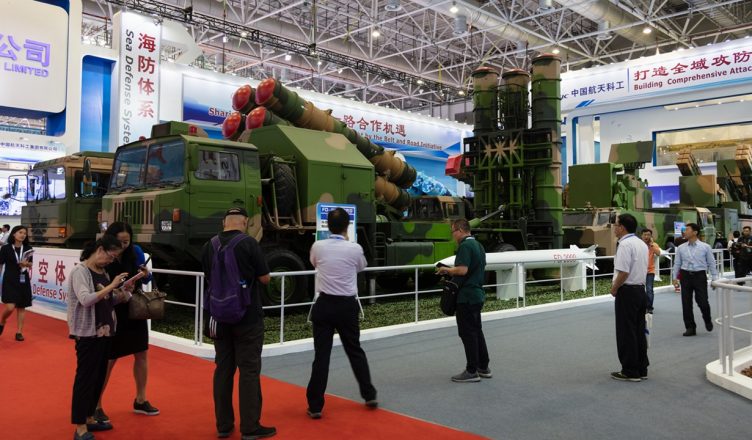
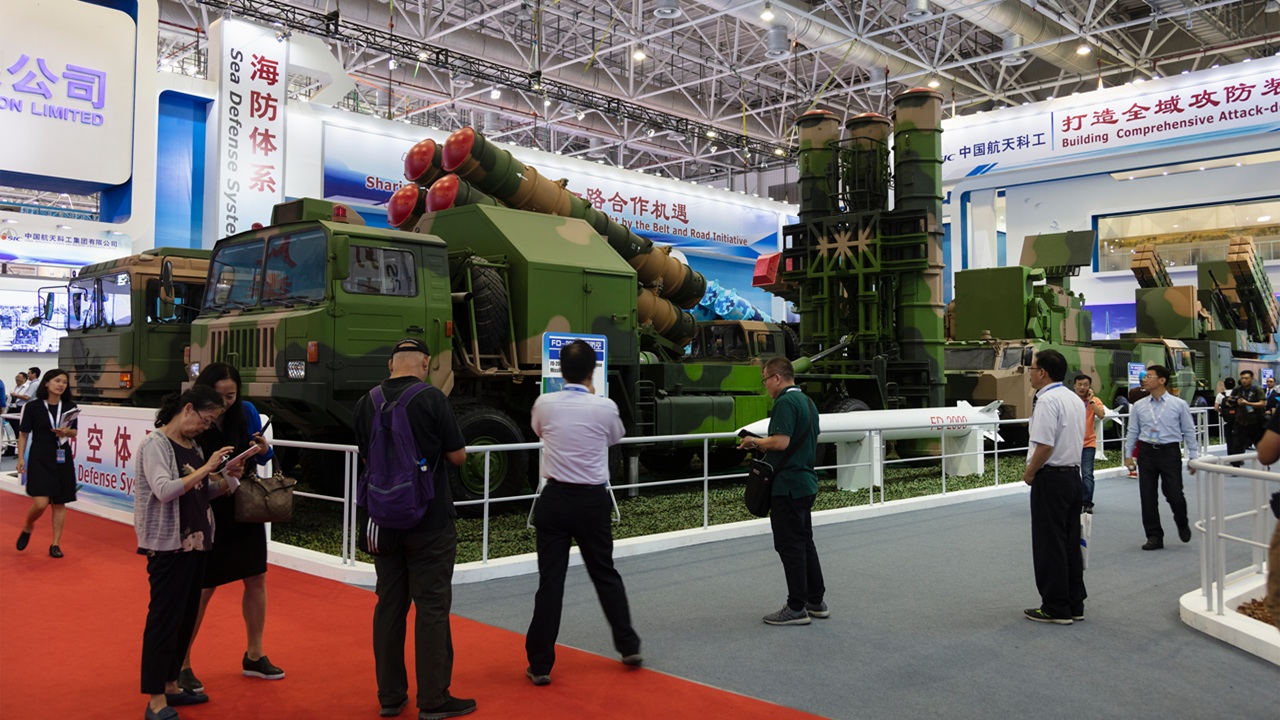
In the run-up to the conflict, China provided Pakistan with a number of HQ-9B air defense systems, which are based upon the design specifications of Russia’s mighty S-300 air defense system. It is widely believed that China purchased the S-300 from Russia at some point and reverse-engineered the system to create for itself an indigenous long-range air defense system. Over time, the Chinese also incorporated parts from Russia’s more advanced S-400, and may have inserted some pilfered American and Israeli components into the system to make it more competitive on the global arms market.
China’s HQ-9B Missile Defense System Is a Frankenstein’s Monster
Alas, this Chinese-made Frankenstein’s Monster of an air defense system was outshone in the four-day war by India’s Russian-made S-400s.
The fact of the matter is that China’s HQ-9B air defense systems are untested. While they are based upon the Russian S-300 system, they are not the S-300. My colleague Andrei Martyanov, a Russian military expert, told me on my podcast that he had assessed China’s HQ-9B was a poor knockoff of the superior Russian system. According to Martyanov, the HQ-9Bs “performed abysmally in Pakistan. They cannot intercept anything supersonic—or even anything subsonic!”
This is the real reason behind why the Indian government was so excited to have access to the full breadth of the BrahMos missile system. That system, unlike the Chinese-made HQ-9Bs, was extremely effective. Martyanov told me that the Indian BrahMos system “blew out” Pakistan’s Chinese-made HQ-9Bs during the conflict.
Pakistan had initially purchased the HQ-9B from China in 2021 and systematically upgraded it in 2024. Beijing has long marketed the HQ-9B as a cheaper but otherwise equivalent version of the S-400. Pakistan was no doubt tempted to buy the real thing, but Western sanctions on Russia would have meant political fallout for any arms deal with Moscow—and the Kremlin was not keen on selling to Pakistan in any case, given their longtime special relationship with India. So Islamabad turned to the Chinese instead.
But war is the ultimate teacher. And it makes for an excellent proving ground for all manner of tactics and technologies. Pakistan’s HQ-9Bs fell woefully short of their expectations. These Chinese-made systems were positioned in high-priority sites near Lahore and Sialkot.
The HQ-9B reportedly failed to intercept a single Indian missile, drone, or loitering munition.
Then, the HQ-9B’s HT-233 radar system was shut down by more effective Indian electronic warfare (EW) and jamming methods. All that resulted in several lost launchers and command strikes in Indian strikes, indicating very poor survivability and even poorer integration with wider Indian defensive systems.
Pakistan Determines China’s HQ-9B to Be Awful
In the aftermath of the May conflict, Pakistan quietly performed a postmortem on the HQ-9Bs. Sources indicated that they determined the HQ-9B’s semi-active radar homing essentially painted a giant bull’s eye on the HQ-9Bs arranged in defensive formations around Lahore and Sialkot.
Not only did this mean the Indian Air Force had clear line-of-sight targeting on these air defense systems, but it meant that Indian forces could deploy a variety of attacks against the HQ-9Bs in Pakistan—which led to their ultimate destruction.
That’s to say nothing of the fact that Pakistan possessed an insufficient number of HQ-9B batteries—only between 12 and 18 launchers. For comparison, India’s air defense network had more than 40 S-400 Triumf launchers.
Predictably, the Chinese blamed their Pakistani clients for poor training. But both Indian and Pakistani commentators assessed that the HQ-9Bs didn’t even stop slow-moving drones sent over from neighboring India!
Pakistan Might Turn to Turkey for Air Defense Instead
As a result, Pakistan’s confidence in Chinese air defense technology has disappeared. Islamabad is now looking at Turkey’s SİPER Block 1/2, which allegedly has better EW countermeasures than does the HQ-9B. Interestingly, Islamabad is also apparently looking at China’s HQ-19 as a possible replacement for the failed HQ-9B—although that might just be to keep Beijing placated while Islamabad ditches Chinese air defense systems in favor of better ones.
Once those HQ-9Bs were rendered useless, that was when things got bleak for the Pakistanis. Yes, Pakistan’s air force performed far better than expected against the Western-supplied IAF. But the loss of those air defense systems provided by China created a gaping hole for the Indians to exploit—and they did.
China needs to work assiduously to produce better air defense systems for export to the global market if Beijing wants that technology to sell as well as their missiles and warplanes will sell on the global market.
About the Author: Brandon J. Weichert
Brandon J. Weichert is a senior national security editor at The National Interest. Recently, Weichert became the host of The National Security Hour on America Outloud News and iHeartRadio, where he discusses national security policy every Wednesday at 8pm Eastern. Weichert hosts a companion book talk series on Rumble entitled “National Security Talk.” He is also a contributor at Popular Mechanics and has consulted regularly with various government institutions and private organizations on geopolitical issues. Weichert’s writings have appeared in multiple publications, including The Washington Times, National Review, The American Spectator, MSN, and the Asia Times. His books include Winning Space: How America Remains a Superpower, Biohacked: China’s Race to Control Life, and The Shadow War: Iran’s Quest for Supremacy. His newest book, A Disaster of Our Own Making: How the West Lost Ukraine is available for purchase wherever books are sold. He can be followed via Twitter @WeTheBrandon.
Image: Shutterstock / testing.
The post China’s HQ-9B Air Defense System Is a Piece of Junk appeared first on The National Interest.
Источник: nationalinterest.org