
«Данное сообщение (материал) создано и (или) распространено иностранным средством массовой информации, выполняющим функции иностранного агента, и (или) российским юридическим лицом, выполняющим функции иностранного агента»
 Topic: History, and Land Warfare Blog Brand: The Buzz Region: Asia Tags: China, Chosin Reservoir, Korean War, People’s Liberation Army, United States, and US Marine Corps China Rejects Christmas Eve to Celebrate the Battle of Chosin Reservoir December 24, 2025 By: Brandon J. Weichert
Share
The Battle of Chosin Reservoir—known in China as the Battle of Lake Changjin—is notable because both sides continue to claim victory.
Christmas in the United States, Canada, and Europe is marked by celebration, gift-giving, and, for Christians, commemoration of the birth of Jesus Christ. However, in China, the government is attempting to bestow a new meaning on December 24—specifically to urge public remembrance of the major battle at Chosin Reservoir (or “Lake Changjin”) in 1950, during the Korean War. The decision is unusual, as that battle had ended by mid-December, well before the date commonly associated with Christmas Eve in the West.
Understanding the Battle of Chosin Reservoir
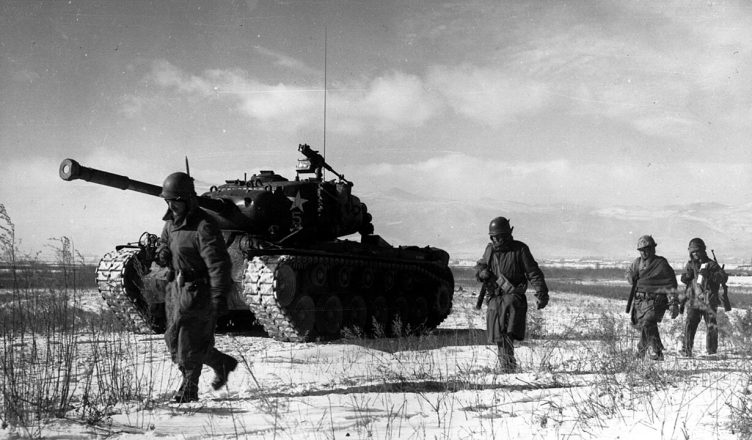
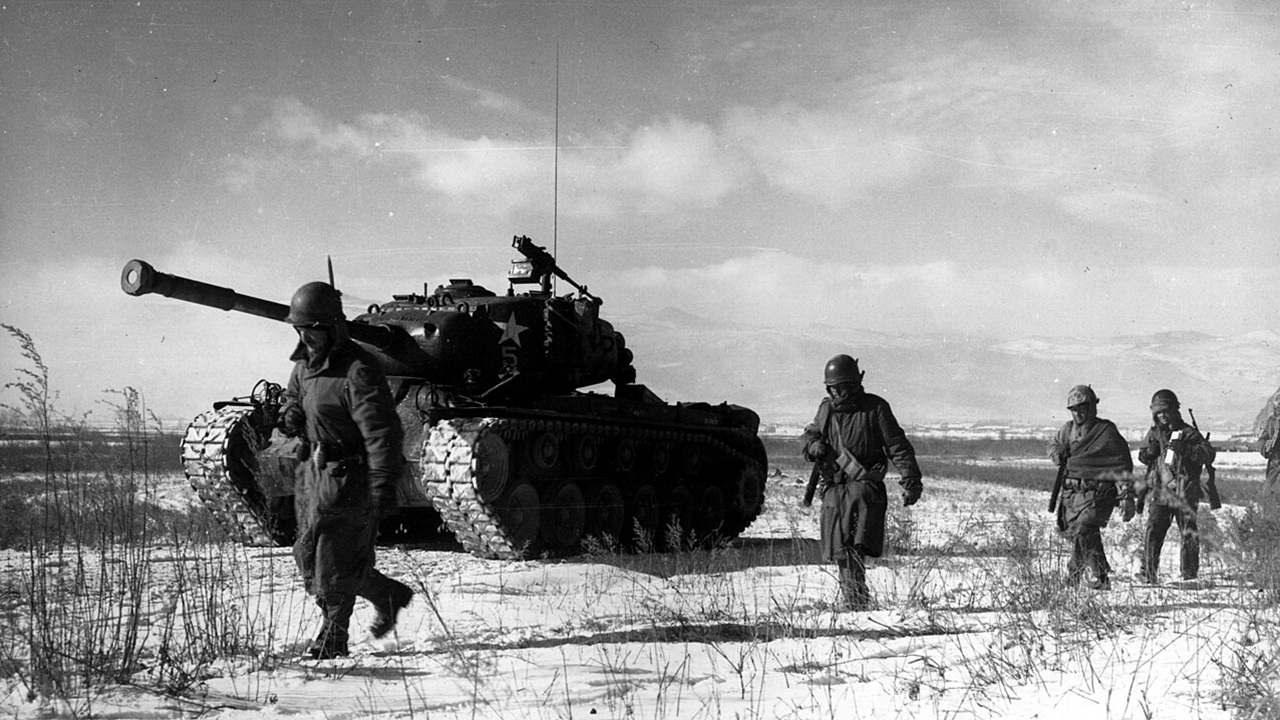
The Battle of Chosin Reservoir occurred between November and December 1950. That battle pitted the United Nations forces, notably the US Marine Corps, against massive Chinese intervention forces—in what historians recount as being Arctic-level winter conditions.
After the successful UN landings at Inchon, the US-led United Nations force sped northward under the command of US Army General Douglas MacArthur. The UN force approached the Yalu River along the Chinese border, prompting a ferocious response from the Chinese People’s Volunteer Army (PVA). Beijing would not countenance what it perceived to be a hostile force along its border with North Korea, and Mao Zedong, China’s communist ruler at the time, ordered a force of hundreds of thousands of Chinese troops into Korea.
The UN force at Chosin Reservoir included the US First Marine Division, several US Army units, British Royal Marines, and South Korean troops. The Chinese PVA troops numbered around 120,000 and consisted of light infantry with minimal logistics. PVA forces had poor logistics, but massive manpower.
Chinese forces, using their numerical superiority, threw themselves at the UN positions in wave upon wave of night raids—using bugles and whistles to coordinate assaults. Using its past experience against the Japanese during World War II, and the Kuomintang forces during the ensuing Chinese Civil War, the PVA’s goal was to encircle the UN force at the Chosin Reservoir rather than a frontal annihilation. China’s forces achieved operational surprise at the battle and successfully managed to cut supply lines.
Ultimately, UN forces, especially the Marines, executed a successful fighting withdrawal over 70 miles to the port of Hungnam. In the process, they destroyed multiple Chinese divisions, evacuated 105,000 troops, saved 98,000 Korean civilians, and moved all heavy equipment that could be moved. The Hungnam Evacuation became one of the largest sea evacuations in military history.
Who Really Won at Chosin Reservoir?
After the smoke cleared, there were roughly 17,000 casualties on the UN side and 30,000 to 50,000 on the Chinese side. But the Americans and their allies retreated—and the evident result was that the Chinese PVA had stopped the American juggernaut in its tracks on its way to China. (Though the United States has insisted that it had no intention of expanding the war beyond Korea, Douglas MacArthur was openly encouraging then-President Harry Truman to give him permission to expand the war into China.)
Interestingly, the Battle of Chosin Reservoir remains a point of contention between the Americans and the Chinese today. The US side remembers the battle as a heroic fighting withdrawal that was mostly successful. The Chinese, on the other hand, portray the episode as a decisive Chinese victory over the American imperialists.
US Marines today are taught to remember Chosin as a textbook example of discipline, cohesion, and leadership. China believes that the battle proves that mass infantry and communal sacrifice for the larger strategic objective can defeat even technologically superior forces.
Ultimately, both sides can agree that the Battle of Chosin Reservoir occurred the way it did because the United States seriously underestimated their adversaries (the Chinese), as well as the hardships of the terrain.
China Is Replacing Christmas Eve with a Military Commemoration
That is why now Chinese state media is urging Chinese citizens today to remember December 24 not as Christmas Eve, but as a night of war in which the Chinese defeated the Americans in combat…and a reminder that China may yet have to fight the Americans again.
One reason that some in China’s elite strive to reorient focus on December 24 away from Christmas Eve and toward a military memorial day is because Christmas itself is seen as a Western construct that the Chinese Communist Party (CCP) is desperate to divorce its country from.
Fundamentally, the CCP’s rulers don’t like commemorating Christmas anyway, considering it is a religious holiday celebrating the arrival of the Christian messiah. China’s government doesn’t believe in this, and frowns on its people holding such beliefs.
Some Chinese elites writing for the Chinese media have gone a step further, supporting the notion that China’s relative peace and security today are not gifts from Santa or a foreign culture. They are instead guaranteed by the People’s Liberation Army (PLA). This is a narrative that elevates China’s own military history over imported holiday symbolism.
The CCP shapes collective memory. It highlights Chinese battlefield successes against Western forces, downplays and redirects the celebration of Western cultural holidays, and reinforces the centrality of the PLA in national security and pride. This fits within the context of broader state media campaigns which seek to define specific dates as key moments in modern Chinese history rather than as opportunities for secular, Western-framed festivity.
This move is a further demonstration of how serious Beijing is in differentiating itself from the West, especially as tensions with Washington and US-backed Chinese neighbors reach all new levels. The CCP wants to demonstrate it is separate from the West and that China’s holidays are worth celebrating every much as are American ones.
Make no mistake: this is yet another example of China moving toward a war-footing against the Americans and their allies.
About the Author: Brandon J. Weichert
Brandon J. Weichert is a senior national security editor at The National Interest. Recently, Weichert became the host of The National Security Hour on America Outloud News and iHeartRadio, where he discusses national security policy every Wednesday at 8pm Eastern. Weichert hosts a companion book talk series on Rumble entitled “National Security Talk.” He is also a contributor at Popular Mechanics and has consulted regularly with various government institutions and private organizations on geopolitical issues. Weichert’s writings have appeared in multiple publications, including The Washington Times, National Review, The American Spectator, MSN, and the Asia Times. His books include Winning Space: How America Remains a Superpower, Biohacked: China’s Race to Control Life, and The Shadow War: Iran’s Quest for Supremacy. His newest book, A Disaster of Our Own Making: How the West Lost Ukraine is available for purchase wherever books are sold. He can be followed via Twitter @WeTheBrandon.
Image: Wikimedia Commons.
The post China Rejects Christmas Eve to Celebrate the Battle of Chosin Reservoir appeared first on The National Interest.
Источник: nationalinterest.org