

«Данное сообщение (материал) создано и (или) распространено иностранным средством массовой информации, выполняющим функции иностранного агента, и (или) российским юридическим лицом, выполняющим функции иностранного агента»
 Topic: Trade Blog Brand: Silk Road Rivalries Region: Eurasia Tags: Central Asia, China, European Union (EU), Kazakhstan, Middle Corridor, Russia, Ukraine War, United States, and Uzbekistan Can the West Bump Russia Out of Central Asia? December 9, 2025 By: Giorgio Cafiero
Share
Despite its focus on the war in Ukraine, Russia shows no signs of letting go of its legacy influence in Central Asia.
Embracing multi-vector foreign policies, Central Asian states have sought to balance external powers. While welcoming engagement from both the European Union and the United States, these former Soviet republics are navigating the geopolitical shifts caused by the Ukraine War as they seek to avoid overdependence on any single external power, particularly Russia and China.
Nonetheless, while regional governments seek greater autonomy from Moscow, they are not turning away from Russia entirely. In fact, Central Asian republics have deepened cooperation with Moscow in select areas in recent years. As a result, Western efforts to challenge Russia in the region will face significant challenges, even as Central Asian countries pursue a broader range of foreign policy options.
Central Asia’s ties to Russia are deeply rooted in the region’s Soviet past, with these nations maintaining strong connections in areas such as energy, trade, defense, and migration. With a military presence in Kazakhstan, Kyrgyzstan, and Tajikistan, Russia remains the primary security guarantor for the Central Asian republics. The Collective Security Treaty Organization (CSTO)—a military alliance that includes Russia and the Central Asian republics except Turkmenistan and Uzbekistan—reinforces this influence.
The Eurasian Economic Union (EAEU), which includes Russia, Kazakhstan, and Kyrgyzstan, with Uzbekistan as an observer, serves to strengthen economic ties between ex-Soviet republics. Through this ambitious economic integration project, the presence of Russian companies in Central Asia has grown significantly in recent years. The EAEU’s objectives mirror those of the EU, aiming to create a common market by coordinating economic policies, removing non-tariff trade barriers, harmonizing regulations, and modernizing the economies of its five member states. Ultimately, the EAEU serves as a key instrument in Moscow’s efforts to assert its influence over the former Soviet space.
The Commonwealth of Independent States (CIS) is an intergovernmental organization formed in the aftermath of the Soviet Union’s implosion. Today, it includes Russia and all five Central Asian Republics as full-fledged members. This institution operates through consensus-based decision-making, with key decisions made by the Council of Heads of State and Government. It is governed by various agreements and protocols covering cultural, economic, and security cooperation, as well as committees and working groups that oversee specific initiatives.
The CIS supports joint programs and projects, fostering collaboration in areas such as infrastructure, research, and humanitarian aid, and interacts with international organizations like the UN and the Organization for Security and Co-operation in Europe to address common challenges.
How the Ukraine War Redefined Russia-Central Asia Relations
The nearly four-year war in Ukraine has undeniably affected Central Asian nations, diminishing Moscow’s influence in the region and prompting uncertainty about the future of Russia’s foreign policy toward its former Soviet neighbors. Western sanctions, imposed in response to Russia’s invasion, have curbed Moscow’s economic reach in Central Asia. At the same time, the ongoing conflict has stretched Russia’s resources thin, leaving Moscow with less focus on the region.
Politically, Central Asian states have not aligned themselves with Russia’s stance on Ukraine.
Not a single Central Asian republic openly supported Moscow’s “special military operation” in February 2022. Public opinion also reflects widespread disagreement with Russia’s conduct, with polls showing minimal backing for the invasion. In Kazakhstan, for instance, only 15 percent of the population supported Russia, while a significantly larger proportion either sympathized with Ukraine or embraced a non-aligned position. Furthermore, no Central Asian country has formally recognized the self-declared “independent” republics in Eastern Ukraine.
With public opinion at home not too supportive of Russia’s invasion of Ukraine, the conflict put the Central Asian governments in an “awkward spot” amid a time of growing polarization, noted Dr. Luca Anceschi, a Professor of Eurasian Studies at the University of Glasgow. Yet, despite such challenges, the Central Asian states “managed to carve for themselves a fairly interesting space of geopolitical comfort zone in which they are able to side not too much with Russia, but not to side too much with Ukraine or to be anti-Russian in that sense,” explained Dr. Anceschi, who described this equilibrium as a “very difficult balancing act.”
At the same time, the conflict has undeniably benefited Central Asian countries geopolitically and economically. One important factor is that the war in Ukraine has prompted Moscow to become increasingly reliant on Central Asian states. With Western markets closed off, Russia has turned its focus to countries to the south, including those in Central Asia. As a result, these republics have gained greater leverage in their interactions with Moscow, enabling them to capitalize on Russia’s diminished influence in the region.
“Undoubtedly, the Ukrainian campaign has changed the rules in the region. On the one hand, the role of partners among the Central Asian states has increased for Russia, both in terms of parallel imports and the restructuring of logistics trade chains,” explained Dr. Anton Mardasov, a non-resident expert at the Russian International Affairs Council (RIAC) and a non-resident scholar at the Washington-based Middle East Institute, in an interview with this author.
“For Moscow, the western direction for full-fledged interaction is closed. In order to open up the southern direction from a logistical point of view, it is necessary to use connections in Central Asia, so Russia is also interested in Central Asia improving its transport links with the main sales markets,” he added.
Against this backdrop, not only Western nations but also China, the Gulf Cooperation Council (GCC) members, and Turkey have expanded their influence in Central Asia, aligning with the region’s “multi-vector” foreign policy orientation as these states strive for greater autonomy from Moscow. For Central Asian countries, this push for independence represents a profound redefinition of their economic direction and cultural identity.
In charting this course, regional leaders are crafting a diplomatic language that reflects their own developmental aspirations, while simultaneously preserving the historical ties to Russia. Together, these shifts mark Central Asia’s transformation from a passive “geopolitical object” to an active “geopolitical subject” for the first time in the post-Soviet era. No longer fully tethered to Moscow’s influence, the region has evolved into a dynamic space where multiple power centers intersect, and states engage with one another on their own terms. This evolution in turn means that the region is moving from a “passive buffer” to a strategic and influential “balancing actor” in the face of an increasingly polarized global order.
“Central Asia is finding itself at the epicenter of these two major axes of trade and has nothing to do but to welcome foreign investors who demonstrate more interest in working with this region than they used to do before February 2022,” Michaël Levystone, the co-founder of the New Eurasia Observatory, told this author.
Greater Western Engagement in Central Asia
Since 2023, Western statesmen have made high-level visits to Central Asia with increasing frequency, seeking new avenues for cooperation. The EU now stands as the region’s top foreign investor and Kazakhstan’s largest trade partner. Looking ahead, the future of European-Central Asian trade will be shaped by the development of supply chain hubs and renewable energy.
The Trans-Caspian International Transport Route (TITR), or Middle Corridor, is rapidly emerging as the most viable alternative for China-Europe Railway Express (CRE) trains, offering a multimodal route that bypasses Russia and more deeply anchors Europe in Central Asia.
Reflected in a dramatic surge of cargo volumes and the proliferation of block trains, the TITR’s growing use demonstrates how Central Asian and South Caucasus states are becoming indispensable connectors in Eurasian trade. As China expands its Belt and Road Initiative to include greater participation in the TITR, and as Western institutions like the World Bank forecast major efficiency gains, the corridor is increasingly viewed as a bridge capable of transforming Europe–Central Asia relations.
For Europe, the TITR offers not only a shorter, faster, and geopolitically safer route but also a strategic opportunity to diversify supply chains and reduce dependence on Russian and maritime chokepoint routes, despite formidable logistical and regulatory hurdles—from Caspian bottlenecks to customs misalignments—the ongoing investments, modernization programs, and coordination platforms across Kazakhstan, Azerbaijan, Georgia, and Turkey reveal a shared commitment to elevating the corridor’s capacity. Ultimately, TITR’s expansion promises to convert Central Asia from a peripheral transit zone into a vital partner for Europe, strengthening interregional connectivity, enhancing economic resilience, and reshaping the architecture of Eurasian trade.
A pivotal moment in EU-Central Asia relations came with the first EU-Central Asia summit in Samarkand, Uzbekistan, on April 3 and 4, 2025. EU leaders and the presidents of the five Central Asian states gathered to forge a new path for collaboration. At the summit, the EU unveiled a €12 billion investment package, building on the €10 billion pledged earlier in 2024 under the Global Gateway Strategy.
Kazakhstan reported a 62 percent increase in container transport this year, and the EU aims to expand the route’s capacity to 10 million tons annually by 2027. Central Asia’s vast reserves of critical raw materials, vital to Europe’s economy, were a key focus, with part of the new funding allocated to their development. The package also directs vast resources toward hydropower, renewable energy, and climate resilience projects.
The Washington C5+1 Summit on November 6 brought US President Donald Trump together with the leaders of all five Central Asian states for the first-ever meeting of its kind at the White House. The summit centered on strengthening US-Central Asia economic relations, resulting in new agreements covering critical raw materials, investment, transport, water management, and emerging technologies.
The meeting served as a clear signal from Washington of its intent to compete more assertively with China and Russia in a region increasingly critical for its mineral wealth and growing role in Eurasian connectivity. For Central Asian governments, the United States presents an attractive partner for diversifying foreign relations, particularly as they seek to reduce dependence on Moscow in the wake of the war in Ukraine and balance China’s expanding economic influence.
Trump’s announcement that Kazakhstan would join the Abraham Accords underscored a broader effort to elevate political ties, though it remained largely symbolic. The United States’ shift toward a more pragmatic, investment-focused approach, avoiding pressure for political reform, resonated with regional leaders, resulting in several high-value commercial commitments.
The summit followed a significant shift in Washington’s focus on Central Asia, which began in September 2023 when President Joe Biden met with regional leaders on the sidelines of the United Nations General Assembly. Biden described that meeting as a “historic moment” for the countries involved, marking years of “cooperation that is grounded in our shared commitment to sovereignty, independence, territorial integrity.” During his discussion with Kazakh president Kassym-Jomart Tokayev, the two leaders emphasized “strengthening cooperation to address security challenges, including threats such as cybersecurity, terrorism, extremism, illegal migration, and drug trafficking.”
In the lead-up to the C5+1 Summit, Trump’s second administration built on this momentum, securing major trade deals with Central Asian states worth a total of $12.4 billion. The largest of these was an $8 billion agreement between Boeing and Uzbekistan Airways, which Trump claimed would create more than 35,000 jobs in the United States. Another significant deal was a $4.2 billion agreement between Wabtec (a US locomotive parts manufacturer) and Kazakhstan.
Russia’s Strategic Reassertion in Central Asia
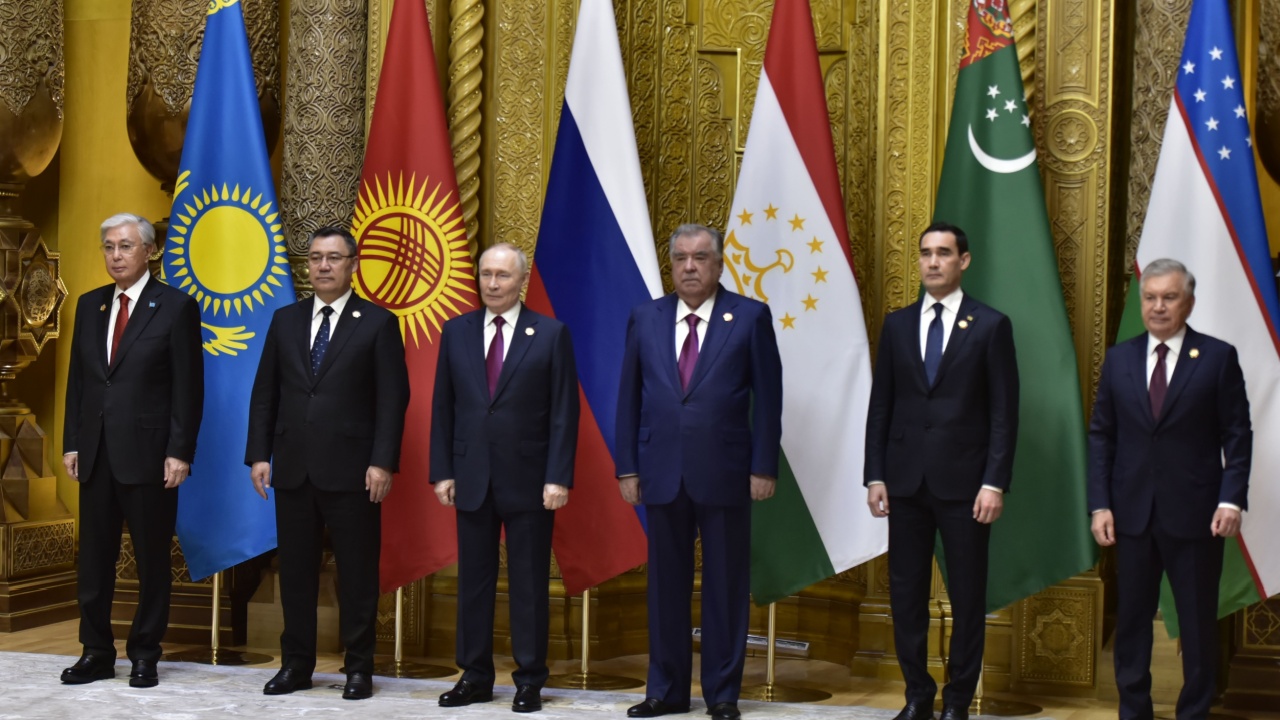
From October 8–10, Russia hosted the Second Central Asia-Russia Summit in Dushanbe, Tajikistan, three years after the first was held in Astana, Kazakhstan. The three-day summit aimed to solidify Moscow’s influence in the region while strengthening Central Asia-Russia trade relations. The Kremlin viewed the outcome positively, as it reaffirmed Russia’s role as the closest partner to the Central Asian states, highlighting the depth of integration and cooperation both within various international organizations and on bilateral levels.
In his address to the heads of state of the five Central Asian republics, Russian president Vladimir Putin reaffirmed Moscow’s strong commitment to bolstering its relationships with states in the region through closer political, economic, and cultural ties. He also highlighted the progress already made, noting that trade between Russia and the Central Asian republics surpassed $45 billion in 2024—up from $35.8 billion in 2021.
Nonetheless, Putin emphasized the significant potential for further expanding trade between Russia and the Central Asian states. Pointing out that Russian-Belarusian trade had reached $50 billion that year, despite Belarus’s population being just a quarter of Uzbekistan’s and similar to Tajikistan’s, Putin conveyed a sense of disappointment, signaling his desire for a stronger Russian presence and influence in Central Asia.
The summit’s final communique emphasized a mutual commitment to institutionalizing multilateral cooperation between Russia and the Central Asian republics in the economic, security, and humanitarian spheres. Yet, the language of the document suggests that it is not just a declaration of partnership, but a strategic blueprint for Moscow’s ambition to reassert itself as the central force in shaping a new Eurasian order.
Multipolarity, a cornerstone of the Kremlin’s foreign policy, lies at the heart of this vision, which seeks to counterbalance the West’s dominant position in the global arena. By championing a multipolar world order, Moscow aims not only to challenge Western hegemony but also to position Eurasia as the nucleus of a new global paradigm, grounded in the principles of “diversity of development models” and “indivisibility of security.”
This rhetoric aligns with Russia’s broader aim to cultivate a “civilization-based order” that prioritizes political and economic systems distinct from Western values, embodying its doctrine of “sovereign democracy.” Moscow envisions stability in Eurasia as attainable only through a security framework independent of Western influence, with regional institutions aligned under Russia’s leadership.
In this context, Russia seeks to cement its regional dominance not only through military and economic power but also through institutional integration, aligning organizations like the CSTO, EAEU, and CIS into a cohesive Eurasian framework. Cultural diplomacy is equally pivotal, exemplified by efforts to establish the International Russian Language Organization, which strengthens Russia’s vision of a unified Eurasian identity.
The Kremlin also aims to reinforce its ideological ties with Central Asia by emphasizing a shared historical heritage, notably through the commemoration of the 80th anniversary of the Great Patriotic War. Yet, despite the breadth of Moscow’s Eurasian vision, it faces challenges on the ground. As Central Asian nations grow more independent, they interpret the concept of multipolarity through the lens of their own national interests, complicating the Kremlin’s efforts to unite the region under Russian leadership.
The Limits of Western Inroads into Central Asia
Although the West seeks to build on its momentum in Central Asia, significant obstacles remain, complicating efforts by Washington and European capitals to pull the region’s states away from Russia. Economic, political, security, and geographical factors ensure that Central Asian republics will remain closely tied to Moscow and Beijing in ways that the West cannot alter.
At the same time, the West is far from monolithic, and the differences between the European Union and the United States cannot be overlooked. Levystone observed that the EU’s emphasis on democratic movements and reform agendas in Central Asia has proven “detrimental” to efforts to shift the region more decisively toward Europe, particularly among Central Asia’s political elites.
In contrast, Washington under Trump is a more reassuring partner, as the current US administration has made no secret of its intent to avoid human rights issues. However, in the broader competition between the EU and Russia, this dynamic works in Moscow’s favor, as Russia and the region’s governments share an interest in preventing “color revolutions,” as seen in Kyrgyzstan in 2005 and Kazakhstan in 2022.
Yet the Trump administration’s foreign policy toward Central Asia, unlike that of Moscow and Beijing, is highly transactional. “To my mind, this transactionality applied to the issue of critical minerals, I think, is very much anti-Chinese rather than pro-Central Asian. So, in that sense, if you keep behaving in that way, you’re not going to be able to have the kind of influence that you want,” commented Dr. Anceschi.
“There should be a different way of engagement which treats Central Asia as a region itself for itself, and no longer an appendix to an Afghan policy or a China policy, but a region where the US imprint is visible,” he added.
Additionally, a key factor in ensuring Russia’s strong foothold in Central Asia’s security architecture is the uncertain situation in post-occupation Afghanistan. While Western states have withdrawn from the country following the chaotic exit of US and NATO forces in August 2021, Moscow has taken a leading role in navigating the situation in Kabul and coordinating Afghan policies with Central Asian states.
Rather than aligning with the West, Central Asian nations, for the most part, share Moscow’s view that engagement with the Taliban regime is essential, given the reality of its rule. Moreover, as violent extremist groups, particularly ISKP, target Central Asia, the growing security threats are likely to foster increased defense cooperation between these former Soviet republics and the Kremlin.
Central Asia’s Multipolar Future
Ultimately, Central Asia’s shifting geopolitical landscape highlights the region’s growing agency in navigating its foreign relations, balancing the interests of Russia, the West, China, and other global powers. While Moscow retains substantial influence, particularly in security and economics, the ongoing war in Ukraine has exposed vulnerabilities in Russia’s position, prompting Central Asian countries to seek a more diversified range of partnerships.
The West has seized this opportunity, strengthening its economic and strategic ties through investments, trade agreements, and infrastructure projects like TITR. However, these efforts face significant challenges, as Central Asian states remain closely linked to Russia by historical, political, and security ties.
Russia, for its part, is committed to preserving its dominant role in Central Asia by leveraging both hard and soft power, reinforcing regional security frameworks like the CSTO, promoting economic integration through the EAEU, and fostering cultural diplomacy. Yet, Moscow’s vision of a multipolar Eurasian order faces resistance from increasingly assertive Central Asian leaders who prioritize their sovereignty and autonomy.
As the region continues to emerge as a pivotal player in Eurasian geopolitics, it is clear that while Western engagement is growing, the balance of power in Central Asia will remain largely shaped by the intricate interplay of competing interests and the region’s quest for independence. This dynamic will shape not only the future of Central Asia but also its role in an evolving global order.
About the Author: Giorgio Cafiero
Giorgio Cafiero is the CEO of Gulf State Analytics, an Adjunct Assistant Professor at Georgetown University, and an Adjunct Fellow at the American Security Project. He is a frequent contributor to Al Jazeera, Gulf International Forum, The New Arab, Responsible Statecraft, Stimson Center, and Amwaj.Media. Throughout Mr. Cafiero’s career, he has consulted many public and private sector entities, briefed diplomats of various countries on Gulf affairs, and worked as a subject matter expert for multinational law firms. Mr. Cafiero holds an M.A. in International Relations from the University of San Diego. Find him on X: @GiorgioCafiero.
Image: Rdaxtiyor1234 / Shutterstock.com.
The post Can the West Bump Russia Out of Central Asia? appeared first on The National Interest.
Источник: nationalinterest.org