

«Данное сообщение (материал) создано и (или) распространено иностранным средством массовой информации, выполняющим функции иностранного агента, и (или) российским юридическим лицом, выполняющим функции иностранного агента»
 Topic: Land Warfare Blog Brand: The Buzz Region: Asia Tags: BM-21, Cambodia, Rocket Artillery, Southeast Asia, and Thailand Cambodia’s Rocket Saturation Attacks on Thailand Are an Abomination December 18, 2025 By: Brandon J. Weichert
Share
Lacking modern missiles, Cambodia has instead relied on brute-force rocket attacks by ancient Soviet BM-21 systems—indiscriminately annihilating Thai border villages and killing dozens of civilians.
The much-ballyhooed US-backed ceasefire between Cambodia and Thailand has collapsed. Thailand blames Cambodia. Cambodia naturally blames Thailand. Regardless of who is at fault, the situation is escalating, and it is unlikely that another ceasefire will end this conflict anytime soon—both because Thailand has said all previous ceasefires are now voided and because Thailand and Cambodia no longer believe they can trust each other. So armed clashes—if not a full-scale invasion of one country by the other—will be the norm for the time being.
The Thailand-Cambodia Conflict Escalates
An ABC News article reported that Cambodia “deployed truck-mounted BM-21 rocket launchers with a range of 19-25 miles.” The report noted that each launcher could fire up to 40 rockets at a time, but the rockets were “dumb-fire” projectiles without the ability to strike precisely—making it necessary to fire dozens at once. “They have landed largely in areas from where most have been evacuated,” ABC News observed.
Still, more than two dozen people on both sides of the Thai-Cambodia border are reported as having been killed in the renewed round of fighting. More than half a million people have been displaced.
Sisaket Province’s Kantharalak District was reportedly hit by rockets fired from Cambodia’s truck-mounted BM-21 rocket launchers. A Thai civilian named Don Patchapan was mortally wounded in the BM-21 attack, and the Thai Army reports that his killing was the result of Cambodian forces purposely firing into civilian areas.
It should be noted that many of the deaths that have been reported by the Thai Army since the fighting restarted with Cambodia “had underlying health issues and died during an evacuation,” ABC News claimed.
While Cambodia has been lobbing loads of artillery into nearby Thailand—and it is doing immense damage to the civilian life of the country—the Thailand Royal Air Force has been deploying their superior Western-provided warplanes and annihilating targets from the air throughout Cambodia. Both sides are killing each other at an increasing scale.
Cambodia’s B-21 Grad Launcher Shows Its Limitations in War
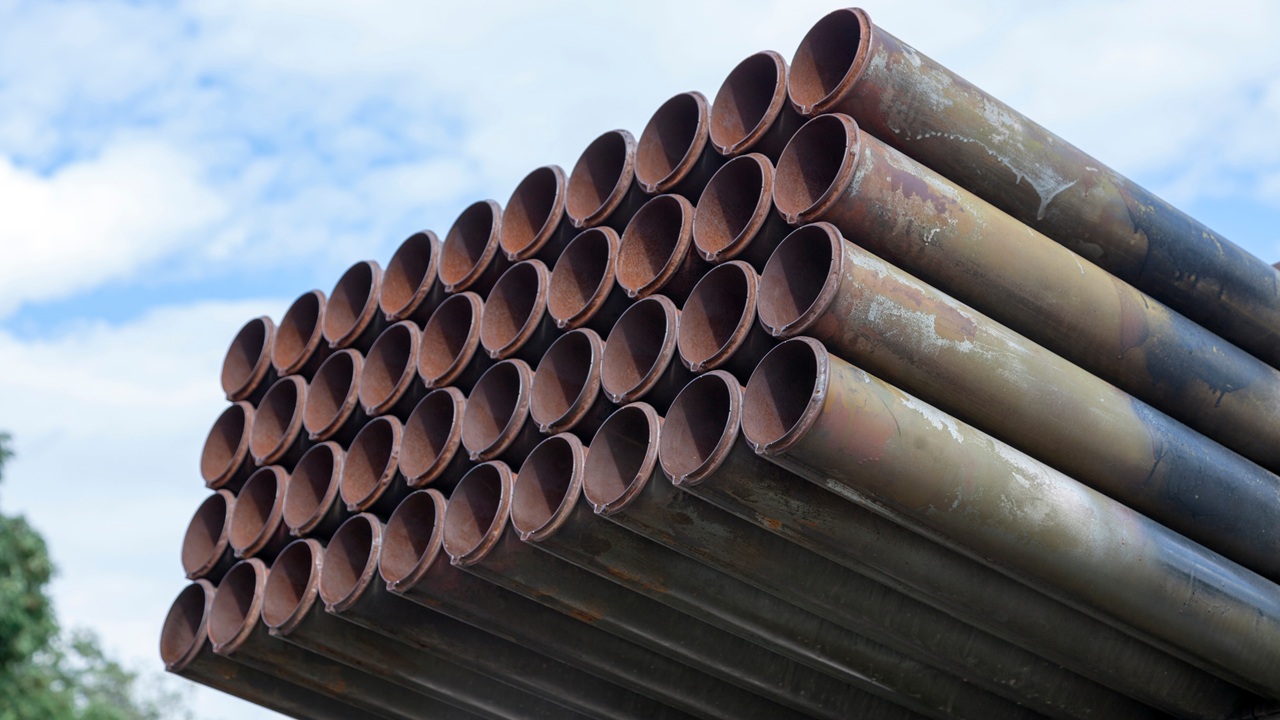
Cambodia’s BM-21 Grad is a Soviet-era 122mm multiple rocket launcher system, replete with 40 barrels on a truck chassis. The weapon can fire a variety of different warheads from its launchers, including both traditional high explosive (HE) projectiles and mine-dispersing systems such as the 9M22 HE warhead and the 9M28 unguided distant Anti-Tank (AT) mine-laying rocket projectile. The BM-21 needs a crew of three to operate effectively.
Because the BM-21 lacks accuracy, it must engage in saturation tactics. That’s why the Cambodians have been blasting apart Thai towns indiscriminately. And the BM-21 can pop off 720 rockets in what’s known as a “battalion volley” to saturate a targeted area.
On top of the Russian-made BM-21 launchers, Cambodia’s military utilizes the Chinese-made PHL-81 derivative as well, which fires the same 122mm rockets as the BM-21.
Yet Cambodia’s tactics are indicative of its lack of military sophistication—particularly when compared to the far more modern US-backed Thailand military. Phnom Penh’s saturation rocket systems are both ancient and notoriously inaccurate. So far, they have done virtually no military damage to the Thai Army, but have indiscriminately killed Thai civilians—a fact that will certainly not work in Cambodia’s favor in terms of international public opinion.
Given the drastic imbalances in military capabilities between Cambodia and Thailand, it begs the question as to why the Cambodians would have torn up their ceasefire with Thailand and risked the kind of military defeat they appear to be on track for. Did the Cambodians, in fact, break the ceasefire as the conventional narrative suggests?
That is a question that will plague analysts for many years to come. But one thing we can be sure of is that Cambodia’s tactic of saturation bombing Thai targets with old Soviet-era BM-21s is a bad move.
About the Author: Brandon J. Weichert
Brandon J. Weichert is a senior national security editor at The National Interest. Recently, Weichert became the host of The National Security Hour on America Outloud News and iHeartRadio, where he discusses national security policy every Wednesday at 8pm Eastern. Weichert hosts a companion book talk series on Rumble entitled “National Security Talk.” He is also a contributor at Popular Mechanics and has consulted regularly with various government institutions and private organizations on geopolitical issues. Weichert’s writings have appeared in multiple publications, including The Washington Times, National Review, The American Spectator, MSN, and the Asia Times. His books include Winning Space: How America Remains a Superpower, Biohacked: China’s Race to Control Life, and The Shadow War: Iran’s Quest for Supremacy. His newest book, A Disaster of Our Own Making: How the West Lost Ukraine is available for purchase wherever books are sold. He can be followed via Twitter @WeTheBrandon.
Image: Shutterstock / BreizhAtao.
The post Cambodia’s Rocket Saturation Attacks on Thailand Are an Abomination appeared first on The National Interest.
Источник: nationalinterest.org