

«Данное сообщение (материал) создано и (или) распространено иностранным средством массовой информации, выполняющим функции иностранного агента, и (или) российским юридическим лицом, выполняющим функции иностранного агента»
 Topic: Air Warfare Blog Brand: The Buzz Region: Americas Tags: Aircraft, Drones, ME-11B High Accuracy Detection and Exploitation System (HADES), North America, United States, and US Army The US Army Is Getting a New ISR ‘Mothership’ Aircraft April 23, 2026 By: Stavros Atlamazoglou
Share
The ME-11B HADES aircraft could pair with advanced drones, helping to vastly extend the Army’s battlespace awareness.
The promise behind autonomous, semi-autonomous, and remotely operated technology is opening opportunities in unlikely places.
The US Army, for example, is aiming to pair its future-generation intelligence, surveillance, and reconnaissance (ISR) aircraft with extremely long-range drones.
Meet the ME-11B HADES
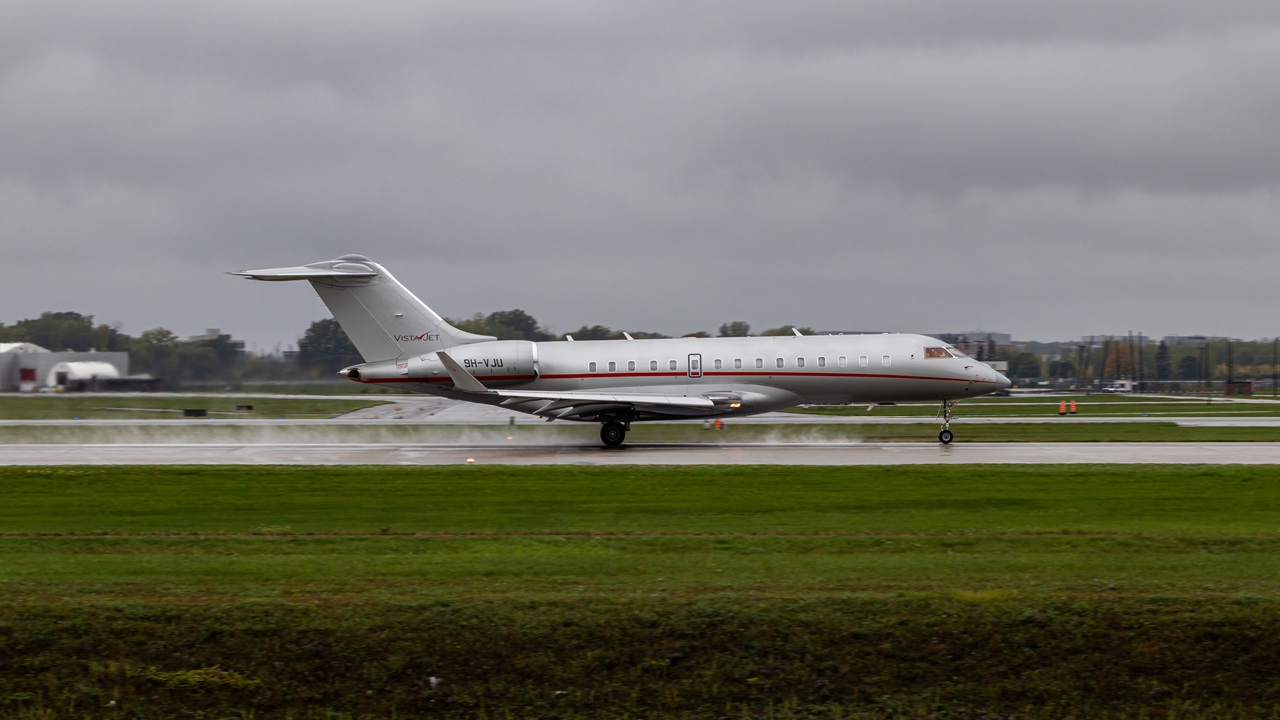
The utility of unmanned aerial systems increases on a daily basis. The war in Ukraine, in particular, has encouraged innovation in drone warfare. Army officials now seek to use the forthcoming ME-11B High Accuracy Detection and Exploitation System (HADES) aircraft, a heavily modified Bombardier Global 6500 business jet, as a mothership for extremely long-range ISR drones.
“There will be nothing in the world that we can’t touch with a combined range of HADES and what we can launch off of this thing,” Andrew Evans, Director of Strategy and Transformation with the Office of the Deputy Chief of Staff of the Army, or G-2, told media organizations this week during the Army Aviation Association of America’s (AAAA) 2026 Warfighting Summit. “I don’t think anybody’s safe in the future from a sensing perspective.”
The idea is for the ME-11B to conduct its ISR mission and utilize unmanned aerial systems when it approaches non-permissive and semi-permissive environments to ensure that it remains protected from enemy air defense systems. The Army envisions the drones to have a range of 1,000 kilometers (roughly 620 miles) or more, essentially creating a penetrating aerial intelligence-gathering capability.
The Army has not specified whether the ME-11B HADES will be able to recover any drones launched.
The Army came to the conclusion that a similar aircraft was needed after considering the issue of survivability in a potential near-peer clash with China or Russia.
“In 70 or 80 years, there would be 0.1 percent of the time when you wouldn’t be able to fly ISR [missions] because you would be afraid of the threat, potentially, or the threat would be too high to fly,” Evans said. “That means that 99.9 percent of the time of a life of the system, it is a useful system for deterrence, for building pattern of life, target development, and so on and so forth. So we’re building a system that can be used for 99.9 percent of the useful life of the system.”
Although it might seem odd for the Army—fundamentally a ground force that relies on the Navy and Air Force for air support—to fly planes, the service does operate a small fleet of fixed-wing aircraft for logistics and ISR roles. This capability is a leftover from when the Army and the Air Force split into two different services in the late 1940s.
Why ISR Matters for the US Army
ISR is one of the most important mission sets in the US Army. Done correctly, it enables the Army to accurately target enemy forces, as well as providing key information to tactical and operational commanders.
War is chaos. And the fog of war is notorious for clouding the decisions of military commanders and policymakers. ISR platforms help troops on the ground by providing a clearer picture of the battlefield—and having a better picture of the situation than your adversary can often mean the difference between victory and defeat. Indeed, the US Army’s superb intelligence-gathering capabilities have been a major boon on conventional battlefields, although applying the same skill set to counterinsurgency missions such as Vietnam or Iraq has been somewhat more difficult.
About the Author: Stavros Atlamazoglou
Stavros Atlamazoglouis a seasoned defense journalist specializing in special operationsand a Hellenic Army veteran (national service with the 575th Marine Battalion and Army HQ). He holds a BA from the Johns Hopkins University and an MA from the Johns Hopkins’ School of Advanced International Studies (SAIS). His work has been featured in Business Insider, Sandboxx, and SOFREP.
The post The US Army Is Getting a New ISR ‘Mothership’ Aircraft appeared first on The National Interest.
Источник: nationalinterest.org