

«Данное сообщение (материал) создано и (или) распространено иностранным средством массовой информации, выполняющим функции иностранного агента, и (или) российским юридическим лицом, выполняющим функции иностранного агента»
 Topic: Oil and Gas, and Terrorism Blog Brand: Middle East Watch Region: Middle East Tags: China, Iran, Iran War, Iraq, Kurdistan, MENA, and United States Iran’s War on Iraq’s Oil Industry April 21, 2026 By: Bridget Toomey
Share
Iran-aligned militias in Iraq have been attacking the country’s oil sector while the world’s attention focuses on the Strait of Hormuz.
Iran sponsors a network of armed groups in Iraq that operate under an Iraqi security institution despite professing loyalty to Iran’s supreme leader. At its core are six US-designated terror organizations that promote the Islamic Republic’s interests and take the lead in confronting the American presence in the country and the region.
These militias have conducted hundreds of attacks in Iraq and against neighboring countries during the war between the United States, Israel, and Iran. Many of these attacks focused on Iraq’s energy sector, the revenue of which accounts for 90 percent of the Iraqi federal budget in their own country.
Even once these attacks stop, it will take years to repair the damage and to reassure investors. A disruption in American and Western investment would be devastating for the Iraqi energy sector, which needs support to develop and modernize. It also means a lost opportunity for American companies and preserving Iraq’s energy dependence on Iran.
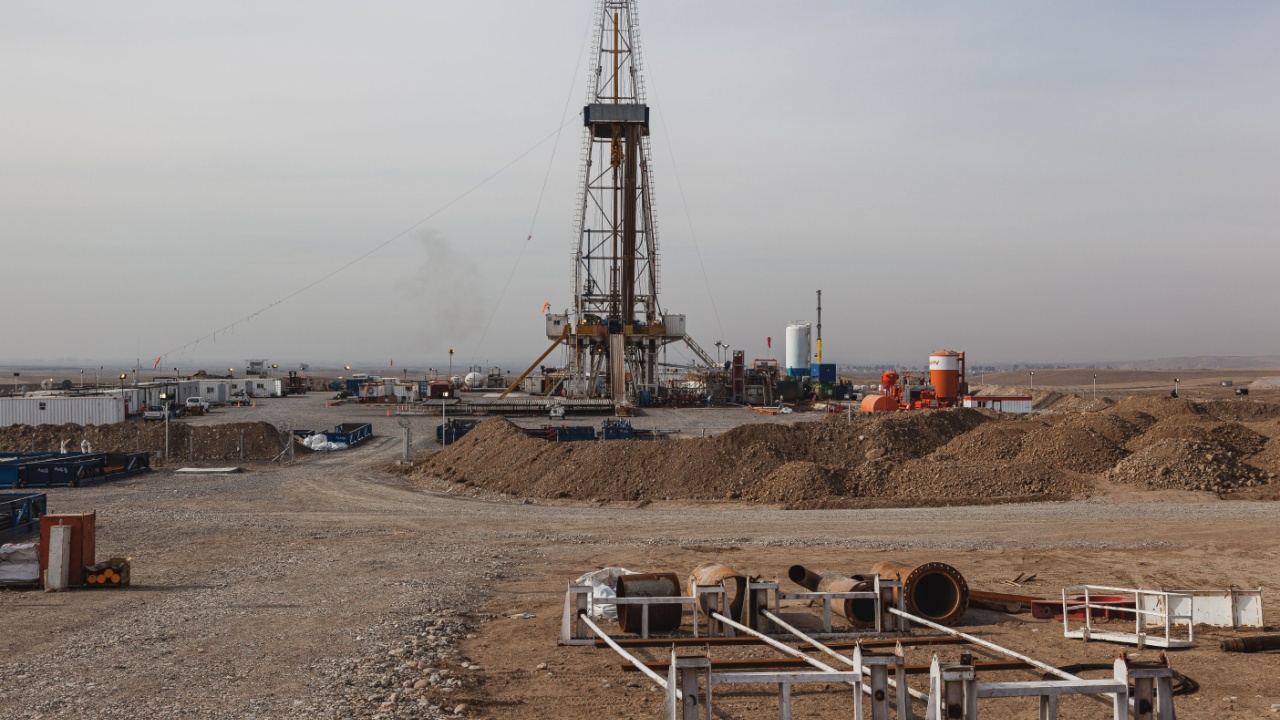
Militia drones struck Sarsang, a major field in Iraq’s semi-autonomous Kurdistan region operated by the American company HKN Energy, in early March and again in early April. Due to the security situation, HKN suspended production at Sarsang beginning on March 2 and is investigating damage from the attacks.
Iran’s militias in Iraq routinely target Iraqi Kurdistan and energy facilities inside the Kurdistan Regional Government’s (KRG) jurisdiction, with which they have distrust for its ties to Washington. They struck Lanaz Refinery, a facility majority owned by members of Iraqi Kurdistan’s political elite.
Iran’s terror proxies not only threaten the KRG territories. In one attack, a drone crashed near the state-owned Baiji refinery, the country’s largest oil refinery. On April 4, a coordinated drone attack struck oil facilities in Federal Iraq (Iraq minus Iraqi Kurdistan), seemingly homed in on the offices and infrastructure of foreign operators. At least two of the fields had been targeted previously.
Western companies haven’t been the only ones impacted by these attacks. A drone crashed near a facility belonging to PetroChina, an arm of China’s state-owned oil and gas conglomerate, in late March. Another attack struck storage facilities at Buzurgan oilfield, where a Chinese state-owned company leads development under a technical service contract. Both projects with Chinese involvement are in Federal Iraq.
Mohammed Shia al-Sudani, the Iraqi prime minister currently serving in a caretaker capacity as the next government is formed following November 2025 elections, sought expanded Western—particularly American—investment and partnerships in Iraq’s energy sector. Sudani has aimed to reassure foreign companies that the government in Baghdad can provide security by assuring Iraq’s neutrality in regional conflicts and keeping Iran’s militias in check.
After the 12-Day War in June 2025, he touted Iraq’s success in staying out of the conflict. None of Iran’s proxies in the country openly joined the fighting between the Islamic Republic and Israel despite a small number of largely unclaimed drone attacks. The current war has pulled back the curtain on Sudani’s claims and may, at least for the time being, unravel an investment drive that has barely taken off.
Currently, multiple major investment deals with American companies are on the table. ExxonMobil signed a nonbinding agreement in October 2025 to explore the development of the Majnoon oilfield, one of the world’s largest, as part of Iraq’s effort to increase production from 4 million barrels per day (bpd) to 6 million bpd by 2029. However, the company has not yet started operations.
Another major opportunity is the acquisition of Lukoil’s Iraqi assets after the Russian oil giant was forced to declare force majeure in November 2025 due to American sanctions. This put 75 percent of the West Qurna-2 oilfield, which accounts for nearly 10 percent of Iraq’s total production, on the market, and American buyers are interested. Chevron entered exclusive talks to acquire the stake, with the aim of doubling West Qurna-2’s output, just days before the February 28 start of the war.
These deals would be a win for American energy companies, who stand to profit substantially, and they would benefit Iraq by enabling modernization in its oil industry and expanded production. On top of that, Western investment would help wean Iraq off its reliance on Iran for energy, which currently provides around 30–40 percent of Iraq’s energy needs, by improving Iraq’s domestic capabilities. The Trump administration has included Iraqi energy independence as part of its maximum pressure campaign on Iran.
If Baghdad wants to attract more American investment, it will need to assure companies that their facilities and personnel will be safe. If the militias continue to act with impunity across Iraq, Americans will think twice. The United States should support partners in Iraq in ensuring the next government, which is currently being formed, does not include militia affiliates in its highest levels.
A government amenable to cooperation with the United States and committed to Iraqi stability and security is a prerequisite to addressing the militia threat and realizing the country’s potential for Western investment and partnership.
About the Author: Bridget Toomey
Bridget Toomey is a research analyst at the Foundation for Defense of Democracies (FDD), focusing on Iranian proxies, specifically Iraqi militias and the Houthis. Prior to joining FDD, she was a Fulbright fellow in Israel, where she completed an MA in security and diplomacy at Tel Aviv University. During her undergraduate studies, she interned for the American Enterprise Institute’s Critical Threats Project, focusing on jihadi terror groups, and for the Senate Foreign Relations Committee. She holds a BA in government with a minor in modern Middle Eastern studies from Harvard University.
The post Iran’s War on Iraq’s Oil Industry appeared first on The National Interest.
Источник: nationalinterest.org